


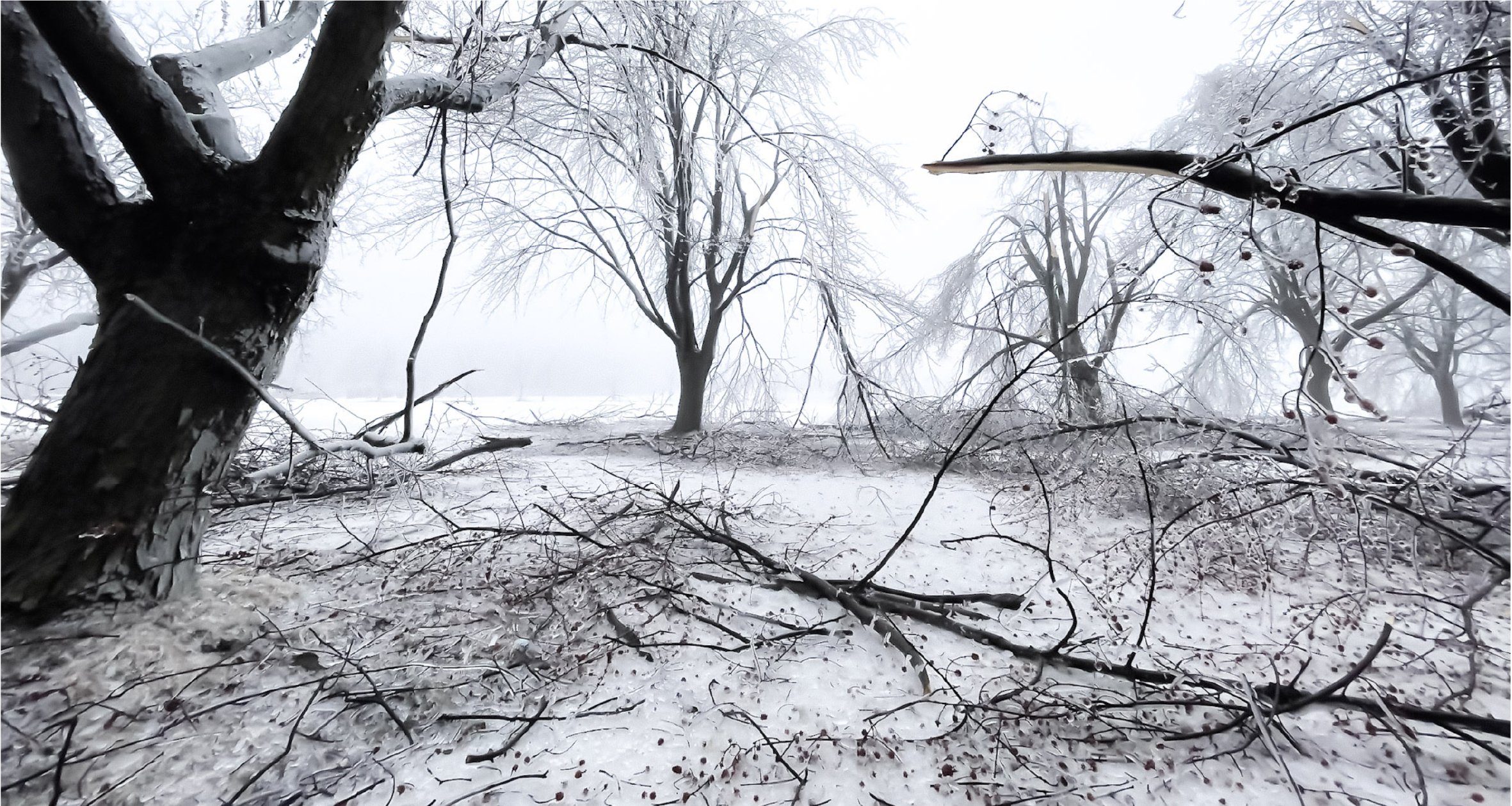
Through Lines & Heartbeats (Lignes et Battements), Joëlle També positions herself as a sort of urban flâneuse of stillness. Her photographs explore Montreal’s overlooked spaces — the liminal zones where nature and city intertwine — revealing a subtle dialogue between decay, resilience, and renewal.
Presented at Galerie Erga alongside the work of Joanna Tyan, a Lebanese-born photographer who arrived in Montreal three years ago, the exhibition Lines & Heartbeats juxtaposes two ways of seeing the city. Tyan’s lens gravitates toward the pulse of urban life — subway passengers, street murals, and fleeting chromatic details — while També’s gaze withdraws into silence, tracing the persistence of nature through branches, water, and ice. Together, their works create a layered portrait of Montreal: one of narratives and reverberation, another of pause and stillness.
On a cold November evening, Galerie Erga opened its doors to Joëlle També’s new exhibition, Lines & Heartbeats— a delicate, meditative journey through Montreal’s hidden rhythms.
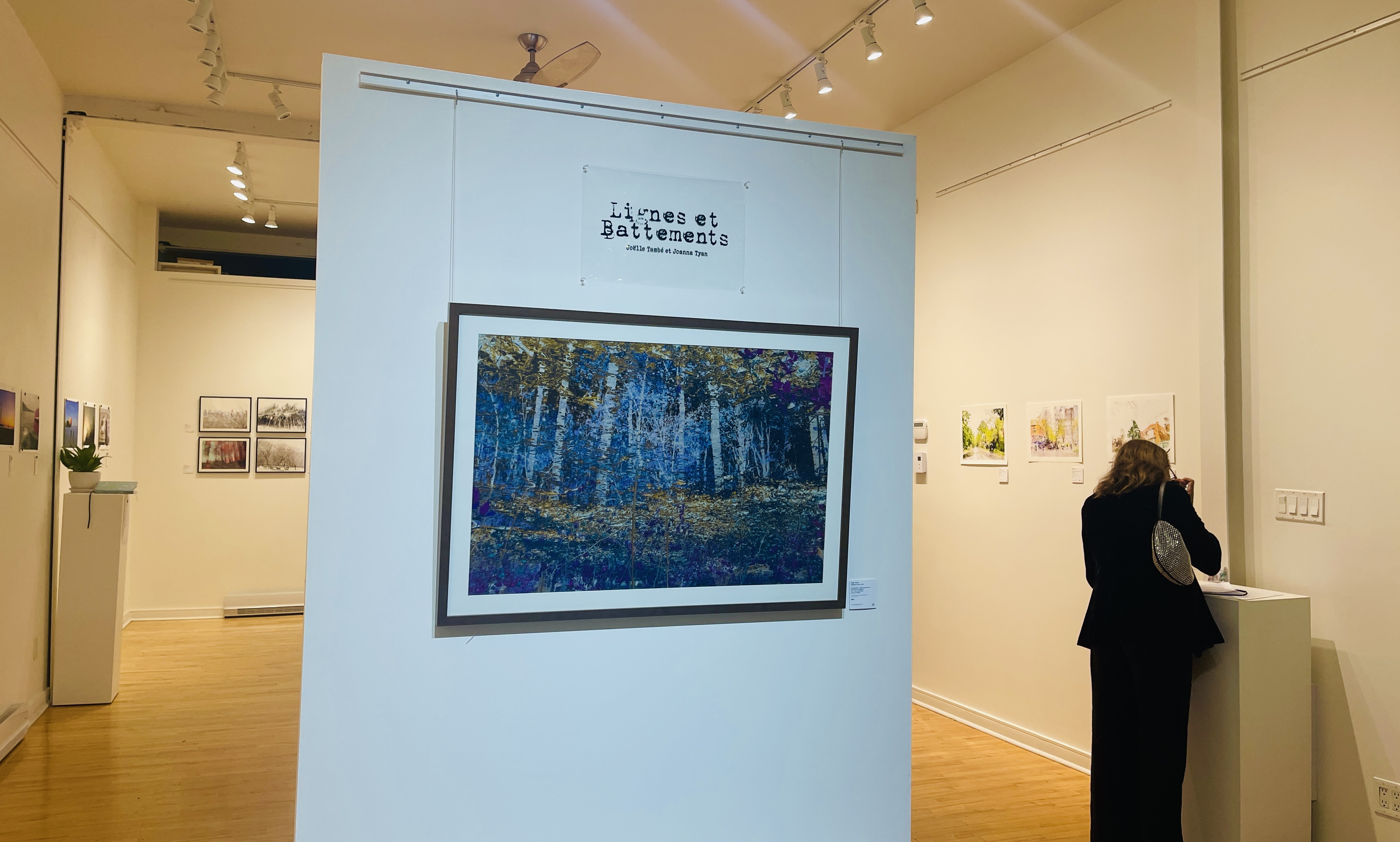
An assistant at the exhibition signs the guest book on the opening night of the Lines & Heartbeats exhibition, a cold and rainy but emotional evening in Montreal.
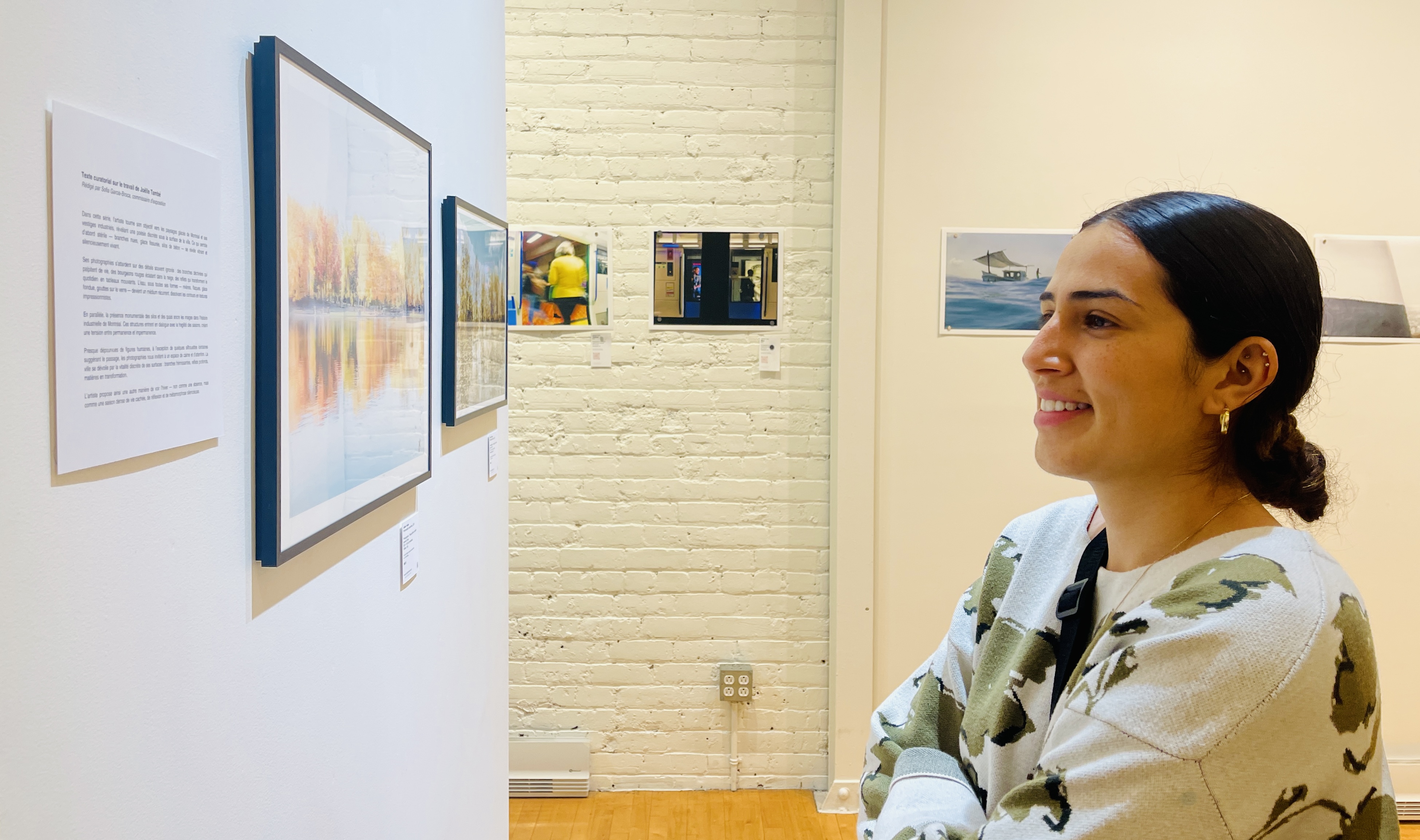
Another assistant observes and reads the beginning of Joëlle També's part of the duo exhibition.
Born in Syria, raised in Saudi Arabia, and settled in Montreal at age twelve, També calls this city her own. It is here that she studied, worked, and wandered — camera in hand — discovering the quiet beauty that hides in plain sight. She walks through Montreal not as a street photographer, but as a post-modern flâneuse: an urban wanderer attentive to chance encounters with the non-subjects and unnoticed details. Yet Tambe’s practice departs from the traditional notion of the flâneur, often associated with the origins of street photography — with its fascination for crowds, the mass ornament, fashion, and the choreography of urban life.
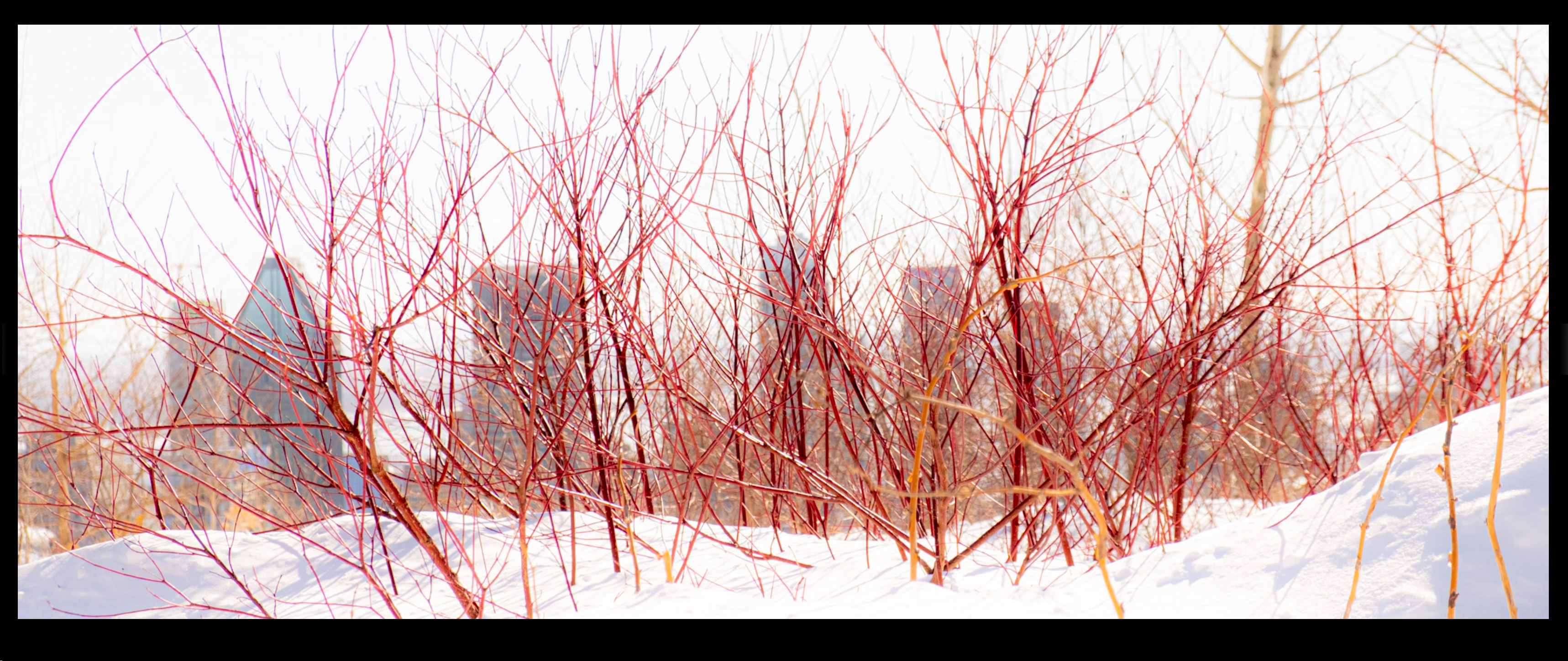
She is a different kind of observer: one who seeks the organic within the urban, the fragile traces of nature that persist amid industrial landscapes. Her gaze turns not toward human gestures, but toward branches, puddles, ice, and reflections — toward spaces where the city’s pulse continues even in the absence of people.
In her images, there are no crowds, no street performers, no architectural landmarks. Instead, we find branches split by the verglas, puddles reflecting a gray sky, and trees that resemble hands reaching through snow. The artist is drawn to what most of us overlook: the slow transformations of water, ice, and bare branches stretching out — the organic life that endures the city’s extremes.
“When I photographed the massive natural phenomenon of verglas (in 2023),” she recalls, “it felt like capturing a battlefield — branches torn and fallen everywhere. It was magnificent, but also sad.”
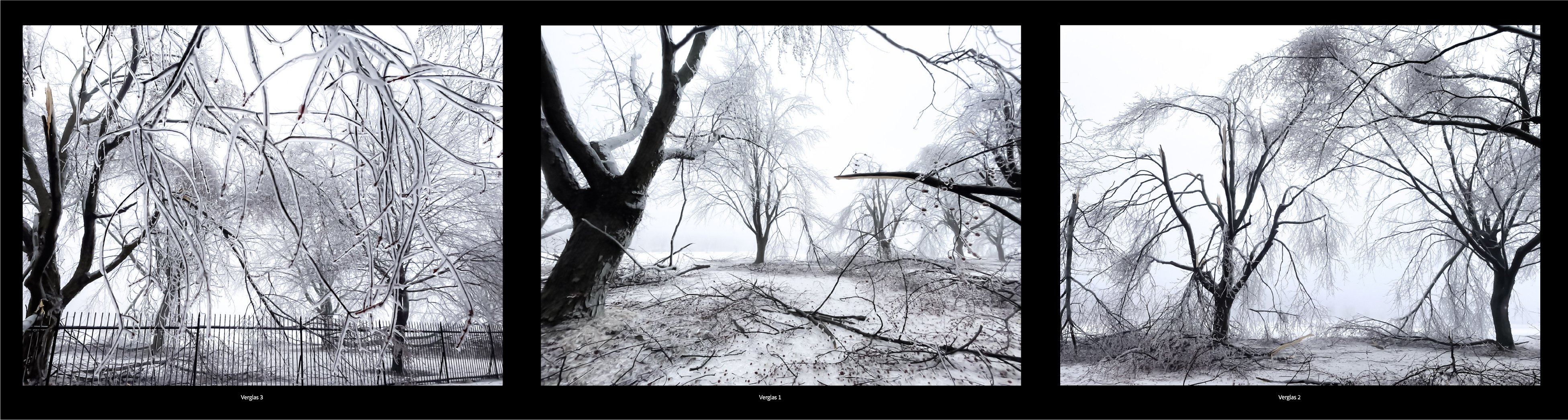
També’s sensibility lies in this tension: between fragility and endurance, ruin and renewal. Her work traces the emotional pulse of a city that breathes through its winters. Rather than monumental skylines or modern glass towers, she turns to forgotten docks, silos, and frozen rivers — places where nature and structure still converse.
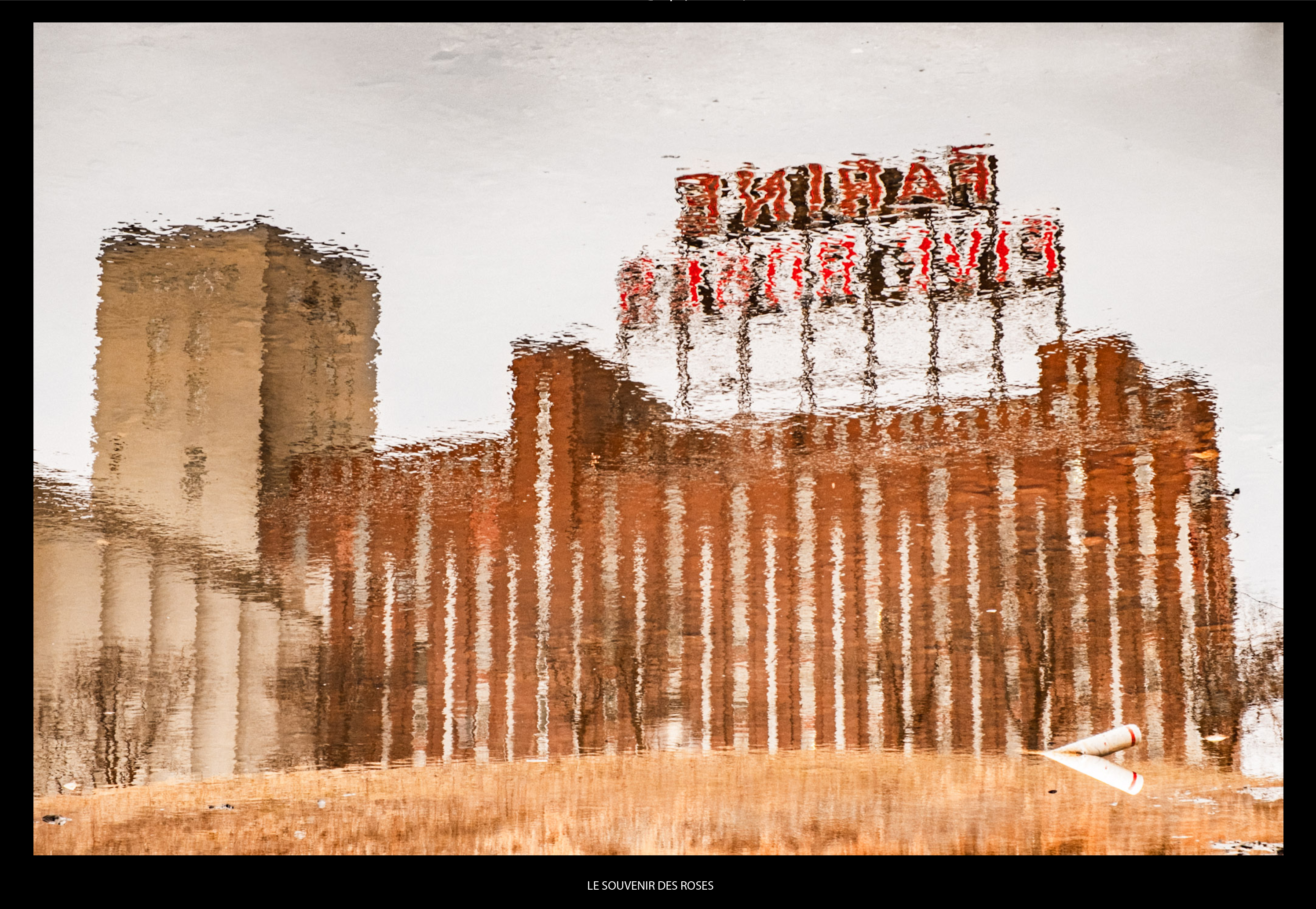
Her photographs are meditations on attention. In a world that moves too fast to notice small things, she pauses — and teaches us to pause with her. The heartbeats in her images are not human, but elemental: the rhythm of melting ice, the whisper of wind through bare trees, the reflection of a fleeting cloud.
També began photographing at fifteen, but it was during the pandemic that she truly found her voice. She began sharing one photo a day on Instagram — a daily practice that, she says, helped her evolve and refine her visual language. She encourages young photographers to “shoot as often as possible, and to show their work without fear.”
When asked by Orbita Popular director Frida Velarde where she sees herself in 2025, Joëlle També smiles:
“I’m still on my path,” she says. “Maybe I’ll start introducing a few more people into my photos — a bit more ‘life’ — but honestly, I don’t know. I’ll go where life takes me.”
For now, that path continues through the silent landscapes of Montreal — where brittle lines and heartbeats intertwine, and where Joëlle També finds her own visual poetry in transmutable autumns and frozen rivers. Perhaps her next step is not to populate her images with 'subjects', but to keep delving into the quiet rhythm that already animates them — a rhythm that reveals the living pulse of a city in stillness.
The exhibition is open until Sunday, November 9.
* * *
Photographs of the exhibition by Sofia Garcia-Broca.
Courtesy of the artist, photographs by Joëlle També for Orbita Popular.
The artist reserves all rights to her photographs.