
Richard Avedon at the Musée des beaux-arts de Montréal
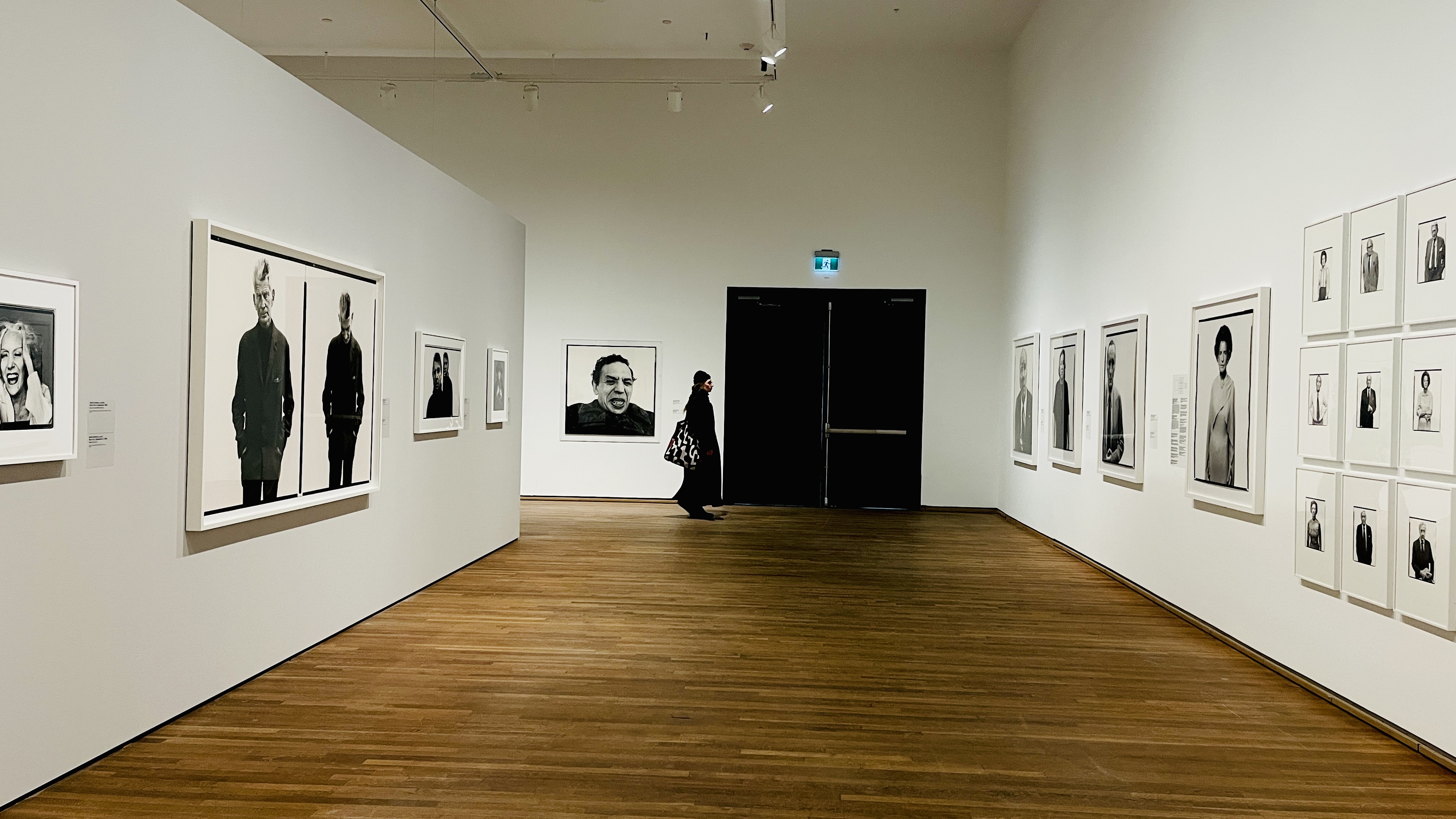
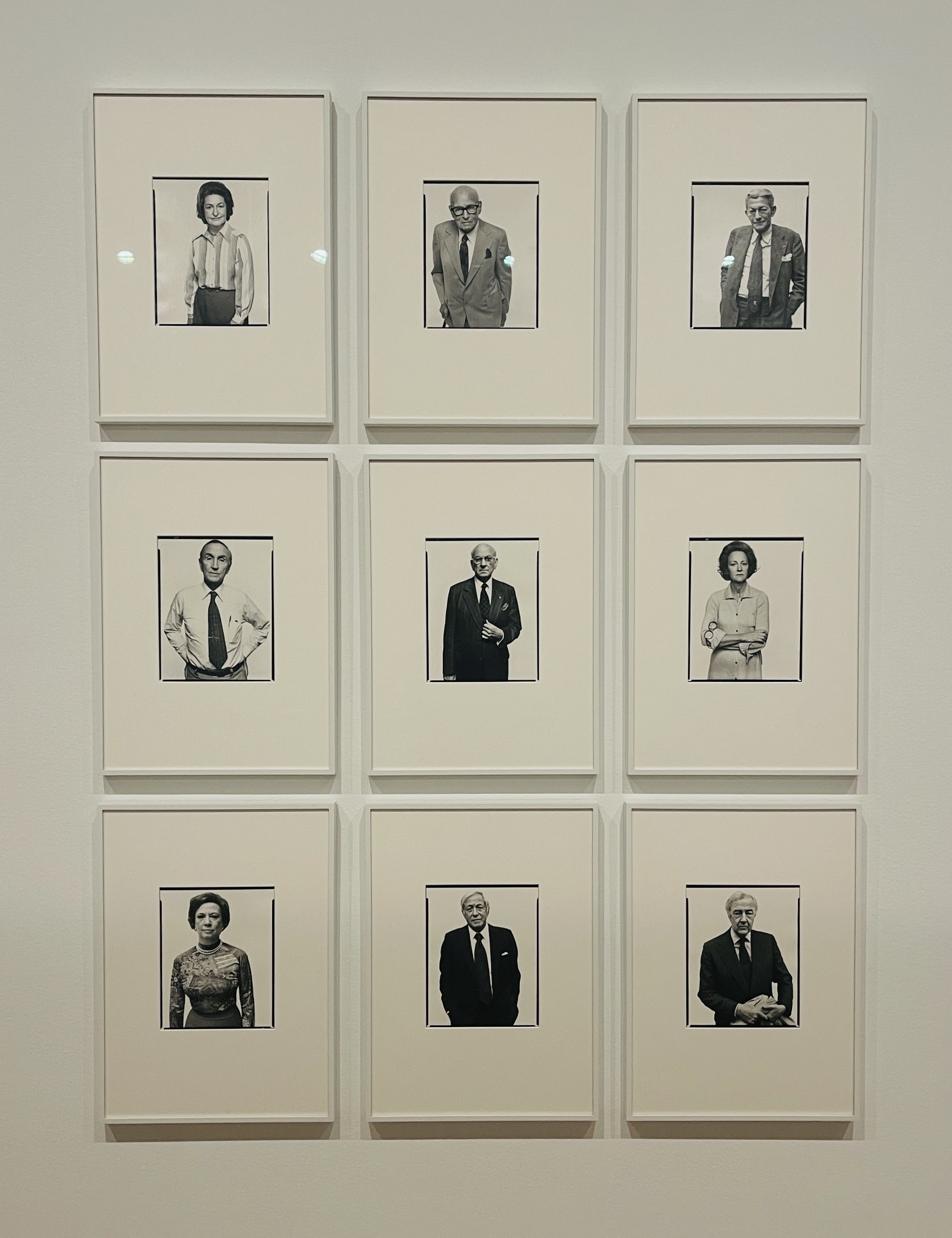
Nearly one hundred portraits by Richard Avedon (1923–2004) line the museum’s pale gray walls, their white mats and frames suspended above coffee-colored parquet floors. Together, they form more than a retrospective: they assemble a visual chronicle of the second half of the twentieth century written on skin. The photographs (mostly vertical, some large-scale and others mid-sized) unfold in a spacious, quiet gallery that neither imposes solemnity nor demands slow contemplation; it is the viewer who decides how long to hold each gaze. And here, to hold that gaze is an act of confrontation.
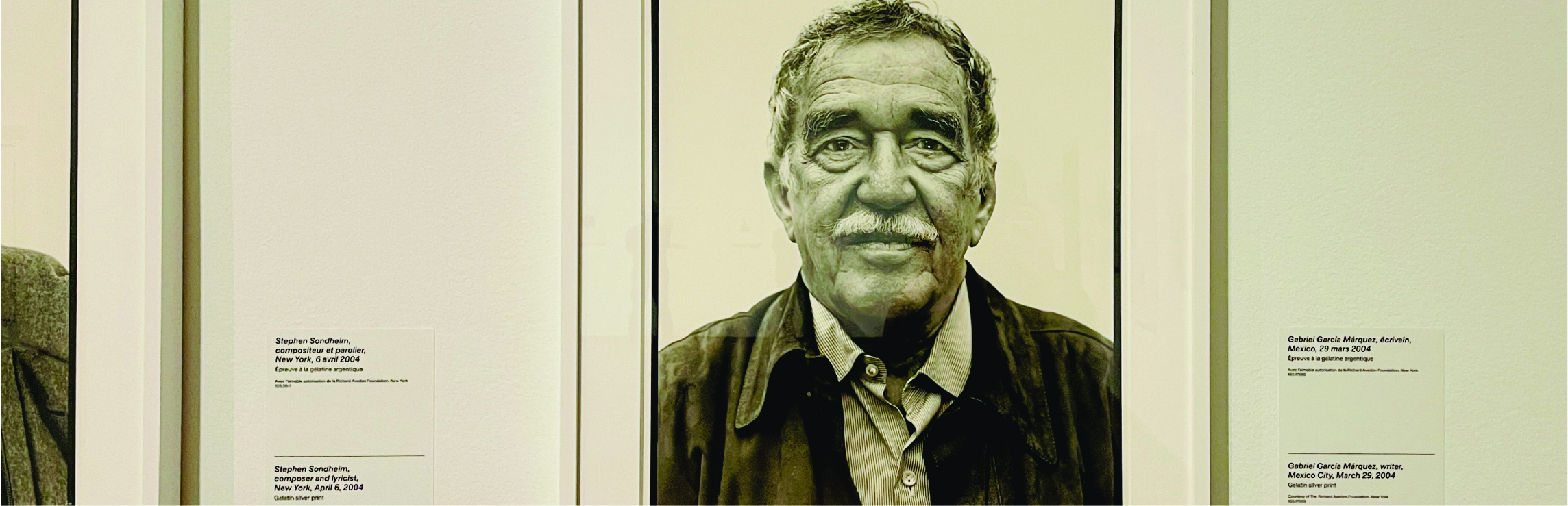
Stripped of context and positioned frontally against an absolute white background, figures who shaped the cultural and political imagination of the last century pass before us: Ronald Reagan, Marguerite Duras, Jorge Luis Borges, Jean Renoir, Duke Ellington, Gabriel García Márquez, Samuel Beckett, Truman Capote, Patti Smith, John Ford, Gloria Swanson, Edward VIII alongside Wallis Simpson, Marian Anderson, Francis Bacon, and Willem de Kooning, among many others.
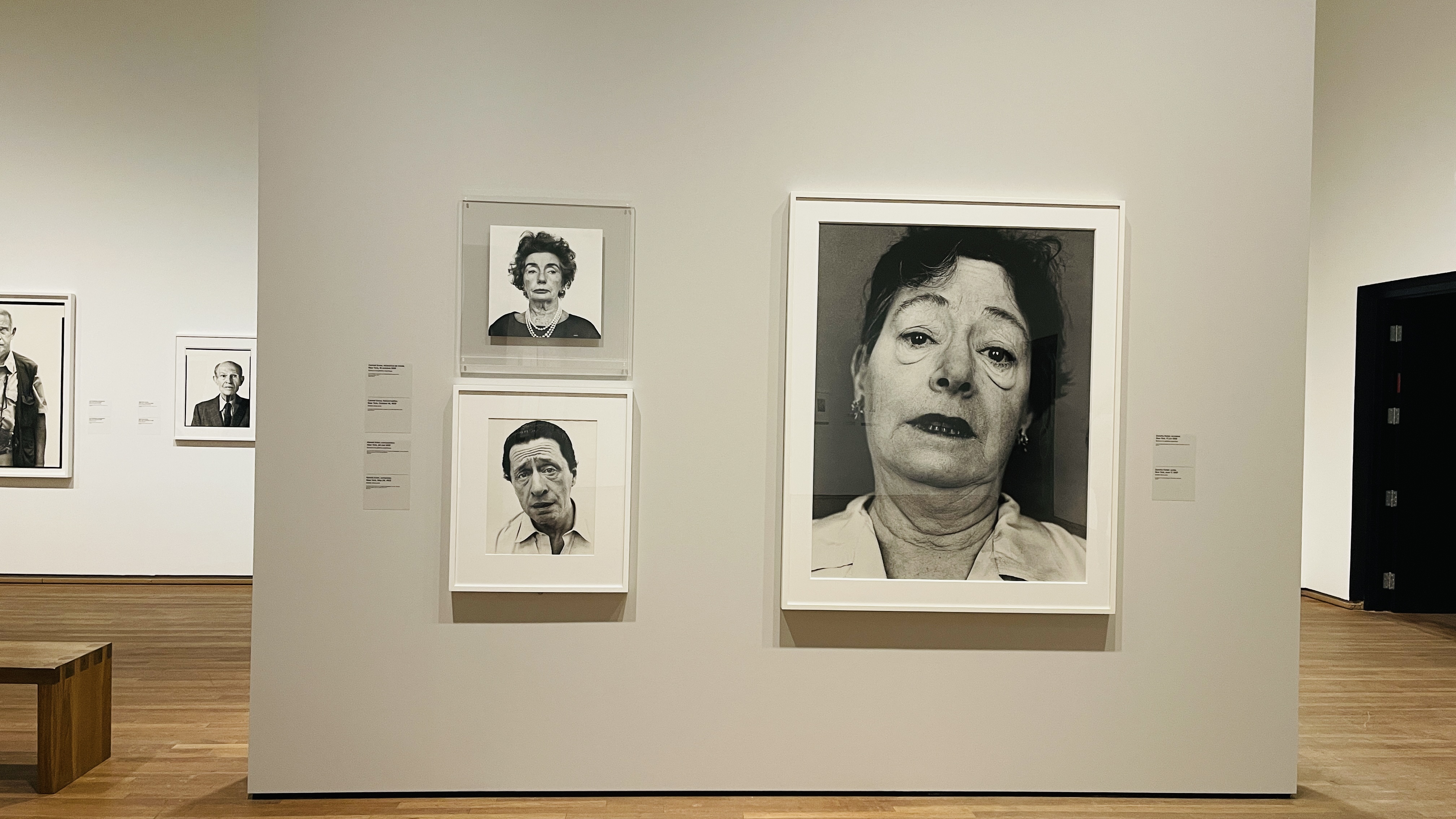
Yet before the camera they all seem to undergo the same process: the symbolic dismantling of status. Without setting or attributes, without the visual apparatus that typically sustains authority, the president, the Nobel laureate, the cinema icon, or the aristocratic myth are reduced to the evidence of their bodies. Cultural hierarchy is suspended, and what emerges is not the public persona but a shared vulnerability. Against the white ground, power becomes flesh, wrinkle, weary gaze.
Avedon worked with an 8 x 10 large-format camera, positioning his subjects directly before a seamless white backdrop. That technical choice was also conceptual. In Richard Avedon Portraits (2002), he asserted that there is an element of sexuality in every portrait: the moment one pauses to look, one becomes implicated. Portraiture permits an intensity that social life forbids; to stare for minutes at the face of someone powerful would be unthinkable outside the museum. What he sought was a confrontational quality erotic not in a sensual sense, but in the tension between gazes: not voyeurism, but encounter. The viewer does not spy; instead, the viewer holds and is held by the image.
This relentless frontalism turns skin into territory and archive. It is as if Avedon were drawing a cartography of time: the face transformed into a map of bifurcations, losses, and persistences, where each crease functions like a topographical line and each shadow like sedimented experience. Wrinkles are not softened; sagging is not disguised; spots and hollows remain. Fame dissolves before the material evidence of wear. The exhibition thus operates as chronicle, archive, and silent reportage of an era in which the face replaces the event and biography inscribes itself in the furrows of the skin.
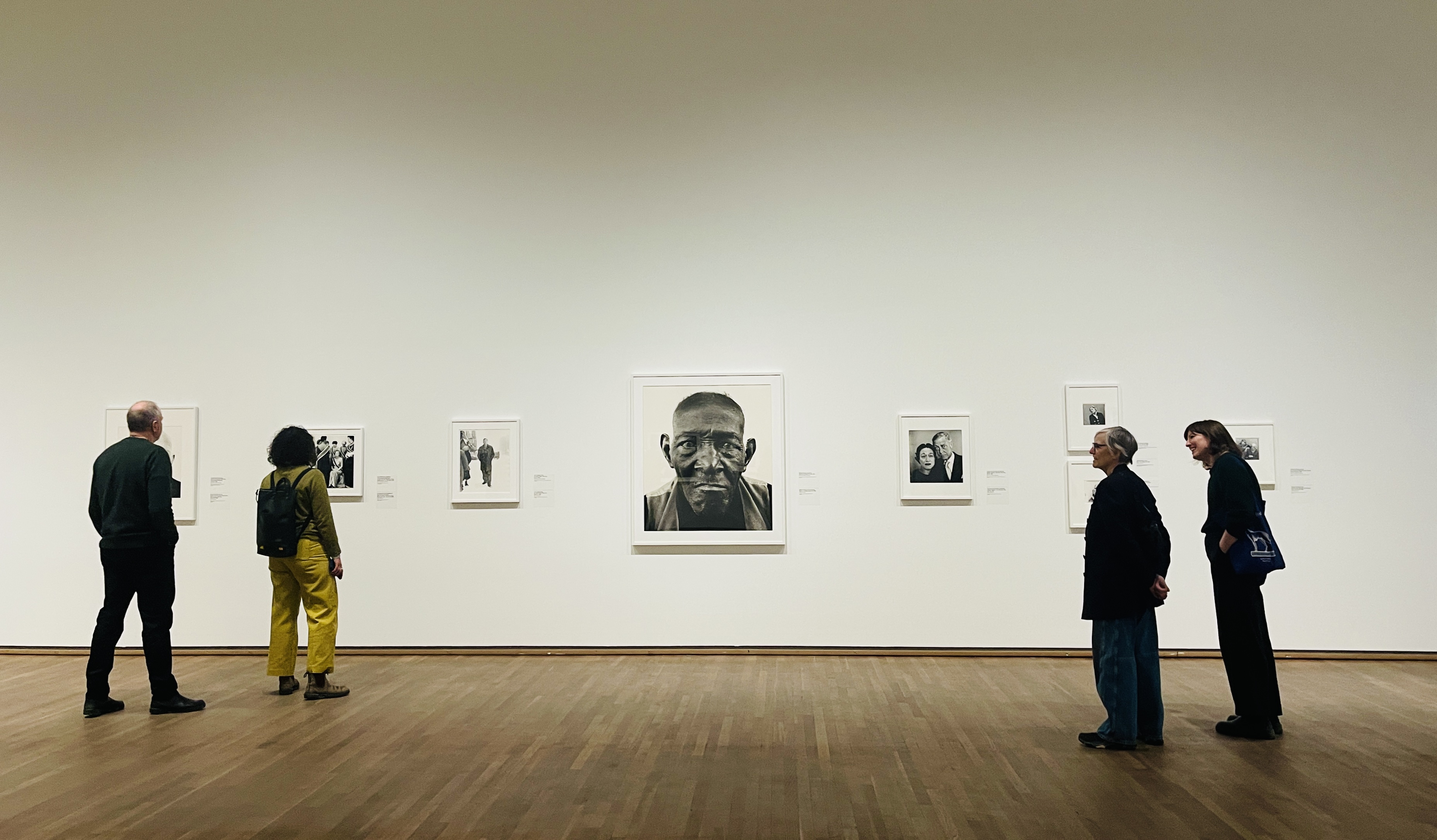
On a key wall just inside the entrance, to the left, one portrait alters the reading of the whole: that of an African American man, one of the last people born into slavery in Louisiana. Among figures of cultural and political power, this face introduces another dimension of time not only the passage of years, but the structural weight of history. His eyes condense a memory that exceeds the individual and unsettles the narrative of elites. Avedon does not assemble a moral pantheon; alongside consecrated writers and admired artists appears the segregationist governor George Wallace, photographed across different decades, as though physical erosion itself operated as political commentary. Confrontation here is not only formal, but historical.
In a more intimate gallery, the museum recreates the series Jacob Israel Avedon, first presented in 1974 at the Museum of Modern Art. Nine portraits document the physical deterioration of the photographer’s father, ill with cancer, until his death. The gaze becomes filial, and the record of aging shifts from public observation to accompaniment. It is difficult not to think of contemporary works such as those by Becky Wilkes in The New Yorker, where parents’ illness during the pandemic becomes visual testimony; in both cases, the camera neither embellishes nor dramatizes, but remains.
Equally striking is the deliberate absence of the iconic fashion images and supermodels that consolidated Avedon’s fame. This omission reveals the duality that runs through his career: on the one hand, the photographer of glamour, haute couture, and urban sophistication; on the other, the portraitist who dismantles hierarchy, who places celebrities and anonymous figures on the same plane, and who turns the face into a field of ethical tension. The timeline ends in 2004, the year of his death, and includes images taken during his final year of life, as if, in the end, his interest no longer lay in the perfect surface but in the fragile truth of time.
Walking through the exhibition, one understands that the confrontation Avedon spoke of is neither provocation nor scandal, but a form of radical honesty: to look without décor, without indulgence, and without distance. If this exhibition traces a chronicle of the second half of the twentieth century, it does so as one might draw a map not of power or prestige, but of time inscribed upon faces. And in that human cartography, what endures is not myth, but shared vulnerability.
A Late Chronicle of the Twentieth Century Through Skin and Confrontation