


Noticias Principales
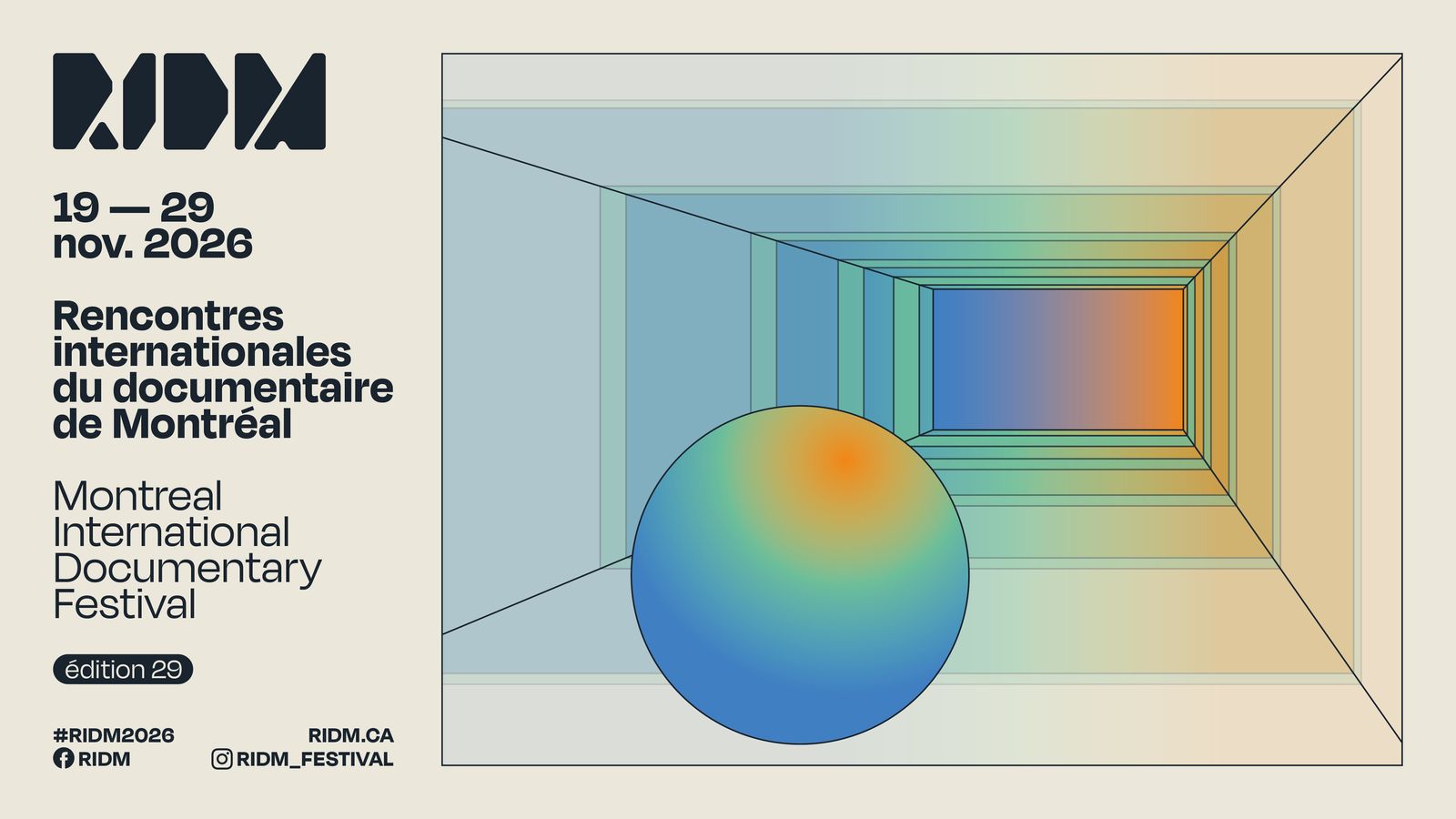
Les Rencontres internationales du documentaire de Montréal (RIDM) sont fières de dévoiler la programmation de leur 29e édition, qui se déroulera du 19 au 29 novembre 2026. Réunissant cette année 127 films en provenance de 54 pays, dont 25 premières mondiales, 19 premières nord-américaines, 22 premières canadiennes et 28 premières québécoises, le festival offre un panorama riche et audacieux du cinéma documentaire, où se croisent regards singuliers, voix émergentes et cinéastes de renom.
« Nous traversons une période mouvementée et de profondes contradictions. Les crises politiques, les fractures sociales, la précarité écologique et les changements dans les rapports de force marquent le monde qui nous entoure et la façon dont nous cherchons à le comprendre. Pour cette 29e édition, nous invitons le public à découvrir un cinéma qui regarde le présent avec pertinence, curiosité et imagination, qui ne se contente pas de réponses faciles et qui propose de nouvelles façons d’observer, d’écouter et d’interagir. » - Mégane Chatelet (direction générale par intérim), Marlene Edoyan et Hubert Sabino-Brunette (codirection artistique et programmation)
Fidèle à sa volonté de faire dialoguer les perspectives et d’ouvrir de nouvelles fenêtres sur le monde, cette édition présente des oeuvres qui interrogent notre époque, bousculent les idées reçues et nourrissent la réflexion. Pour prolonger ces échanges au-delà des projections, les RIDM proposeront également une série de discussions, d’activités et d’événements rassembleurs, dont plusieurs seront accessibles gratuitement.
10 JOURS À LA DÉCOUVERTE DU CINÉMA DOCUMENTAIRE D’AUTEUR - D’ICI ET D’AILLEURS
Les RIDM sont ravies de lancer leur nouvelle programmation avec le long métrage Garder une montagne (To Hold a Mountain) qui nous amène au coeur des montagnes du Monténégro, où la tradition agricole d’une mère et de sa fille est menacée par un projet de l’OTAN. La soirée d’ouverture se déroulera à la Salle Pierre-Mercure du Centre Pierre-Péladeau (300, Boul. de Maisonneuve E) le jeudi 19 novembre prochain, en présence de la cinéaste Biljana Tutorov, qui coréalise le film avec Petar Glomazić. Lauréat du Grand Prix au Festival du film de Sundance, ce portrait profondément féministe, antipatriarcal et environnemental a été présenté au sein des plus grands festivals de documentaires, dont CPH:DOX, Visions du Réel, Cinéma du réel, Hot Docs et Dok.fest München.
Plusieurs oeuvres s’étant démarquées à l’international seront proposées au public québécois à l’occasion de cette 29e édition. Dévoilé à la récente Mostra de Venise, Citizen Osama de Ahmed Hassouna, choisi pour représenter la Palestine aux Oscars® en 2027, suit le journaliste gazaoui Osama Al-Ashi accomplissant l’essentiel geste politique de documenter le génocide dans son quotidien de destruction, de morts et de famine causé par l’armée israélienne à Gaza. Avec Memory, présenté à Visions du Réel, la cinéaste Vladlena Sandu revisite son enfance en Tchétchénie pour comprendre le cycle de la violence qui s’étend sur des générations. La puissance des voix féminines se trouve aussi au coeur de la programmation avec le film Virages de Céline Carridroit et Aline Suter qui a fait ses premières marques au Festival de Cannes, et Hanabi de Ana Vaz, cinéaste brésilienne reconnue dans le milieu expérimental et des arts visuels, dont la projection aux RIDM suivra celles aux festivals de Vienne, New York, Londres et Locarno. Également projeté à Locarno, Atcha Atcha de Mamadou Dia octroie une grande place à la danse et à sa transmission alors qu’il documente la dernière année de formation à l’École des Sables, au Sénégal.
Loran Bonnardot cosigne la réalisation de Tristan Forever avec Tobias Nölle, dont le documentaire Preparation for a Miracle avait fait l’ouverture des RIDM en 2024. Les festivalier·ère·s seront donc en mesure de suivre le travail du cinéaste suisse, ainsi que celui du réalisateur algérien Hassen Ferhani (143, rue du Désert) qui revient au festival avec la présentation de son récent opus, Alea Jacarandas remarqué à Visions du Réel. Parmi les oeuvres essentielles cette année, Once Upon a Time in Harlem de William Greaves et David Greaves, un hommage précieux au mouvement Harlem Renaissance et Amílcar de Miguel Eek, essai poétique lumineux consacré à Amílcar Cabral, agronome, penseur et révolutionnaire africain qui a mené la lutte anticoloniale en Guinée-Bissau et au Cap-Vert.
Le festival réaffirme son engagement de promotion du cinéma d’ici avec 54 films québécois, canadiens et autochtones présentés en primeur cette année. Le public pourra y retrouver les récentes oeuvres de André-Line Beauparlant (Petit Tom) et Steve Patry (Un souffle à la fois), qui interrogent toutes deux les dynamiques de la violence et les possibilités de s’en affranchir. Celles de Catherine Hébert et Elric Robichon (Pour que le silence ne l’emporte pas), Simon Plouffe (Des grues et des voix) et David Sanchez (Nos ruines fertiles) qui partagent la volonté de faire communauté et de s’organiser pour résister à la gentrification. Avec des mises en scènes originales, François Jacob (Partout et nulle part) et Emanuel Licha (Une zone d’échos) proposent des approches cinématographiques singulières pour appréhender des réalités complexes. Les nouvelles formes documentaires sont également explorées dans les films de Matthew Rankin (Mesdames et Messieurs, Brian Mulroney) et de Karl Lemieux (Plateformes), ce dernier étant accompagné d’une installation.
Reconnu pour ses courts métrages, Aziz Zoromba présentera son premier long métrage (LOUF) en plus de donner une leçon de cinéma à l’occasion de la Journée de la relève. Les cinéastes émergent·e·s sont d’ailleurs bien mis à l’honneur de cette 29e édition, avec 24 premiers longs métrages au programme. Avec 66 courts et moyens métrages présentés cette année, les RIDM accordent une place de choix à ce format très riche en exploration cinématographique. Ils seront mis en valeur dans plusieurs volets (Panorama, Rétrospective, Focus), ainsi qu’à travers un programme consacré aux courts métrages de Miryam Charles. Le festival proposera également une projection hommage de deux oeuvres de Jocelyne Saab, figure de proue du nouveau cinéma libanais, sans oublier la traditionnelle Soirée de la relève Radio-Canada.
La programmation de 2026 est également marquée par la forte présence du cinéma des Premiers Peuples avec des oeuvres qui incitent à la reconnexion au territoire, à l’affirmation et au partage de culture. Le public pourra découvrir Itilli Gathering de Myna Ishulutak et Aïda Maigre-Touchet, Inuguiniq de Olivia Ikey, Ceremony de Banchi Hanuse, Aanikoobijigan [ancestor / great-grandparent / great-grandchild] de Adam Khalil et Zack Khalil et le court métrage Endless Sunlight de Tyson Houseman. À ces oeuvres s’ajoutent sept courts métrages du Wapikoni, présentés alternativement avant chaque film de la compétition nationale, afin de mettre en lumière le talent et l’importance des enjeux exposés par la jeune création autochtone. La discussion Cinéma autochtone : Récits et nouvelles formes proposera, quant à elle, une réflexion collective sur les nouvelles directions que prennent les productions autochtones aujourd’hui. De plus, pour donner écho à ces récits, quatre projections se tiendront dans la magnifique salle Alanis Obomsawin de l’Office national du film du Canada (ONF).
Les RIDM vont également investir une toute nouvelle salle à Montréal, soit la Maison Théâtre, où se tiendront plusieurs grandes premières. Le Quartier latin devient ainsi le coeur battant de cette 29e édition, où les festivalier·ère·s pourront toujours se retrouver au QG situé à la Cinémathèque québécoise, lieu des incontournables Soirées RIDM. La programmation se déploiera sous de multiples formes, de la Rétrospective Bani Khoshnoudi : Territoires de mémoire au Focus sur les Balkans occidentaux : Brouiller les frontières, en passant par des installations, des performances et des séances d’écoute. Les RIDM feront également place aux familles avec des activités comme Ciné poupon (Gabin de Maxence Voiseux, Cannes 2026) et Première vue, qui mettra en lumière le travail de l’artiste et réalisatrice Alisi Telengut. Autant de propositions qui font du festival un rendez-vous rassembleur, qui rejoint plusieurs types de publics autour des multiples formes documentaires.
Avant de conclure cette édition riche en découvertes, une remise des prix en formule 5 à 7 à la Cinémathèque québécoise se tiendra le samedi 28 novembre, suivie de la projection du documentaire canadien Ba’s Book de la réalisatrice Ashley Da-Lê Duong à la Maison Théâtre (245, Rue Ontario E). Connaissant un début de parcours impressionnant avec des sélections au TIFF, au VIFF, au BFI - Festival du film de Londres et au CIFF où il a remporté deux prix, ce film touchant et lumineux reconstitue certaines scènes d’un livre écrit par le père de la cinéaste, alors qu’elle et sa famille auscultent les impacts ainsi que l’héritage intergénérationnel de la guerre du Vietnam.
Les cinéphiles pourront profiter du festival jusqu’au dimanche 29 novembre grâce à une dernière journée de projections qui couronnera cette 29e édition.
P R O G R A M M A T I O N C O M P L È T E
COMPÉTITION OFFICIELLE
COMPÉTITION INTERNATIONALE LONGS MÉTRAGES
Se démarquant par leur originalité, les films de cette compétition incarnent des démarches personnelles innovantes remarquables.
Alea Jacarandas de Hassen Ferhani (France, Algérie)
Doggerland de Kim Ekberg (Suède)
Foam of Worlds de Anna Marziano (Italie, Allemagne)
Hanabi de Ana Vaz (France, Brésil)
Letters from an Inner Exile de Eloy Enciso Cachafeiro (Espagne)
mother, you have not died yet. but you will. and when you do, you will finally be alive again. de Advik Beni (Afrique du Sud, États-Unis)
Revolutionaries Never Die de Mohanad Yaqubi (Palestine, Belgique, Qatar)
Virages de Céline Carridroit et Aline Suter (Suisse, France)
COMPÉTITION NATIONALE LONGS MÉTRAGES
Du cinéma direct à la fiction hybride, en passant par les explorations esthétiques de tous genres, les films de cette compétition balisent l’étendue de la création dans le champ du documentaire d’ici.
Ba’s Book de Ashley Da-Lê Duong (Québec/Canada)
Concrete Turned to Sand de Jessica Johnson et Ryan Ermacora (Canada)
Everything Else Is Noise de Nicolás Pereda (Canada, Mexique, Allemagne)
Itilli Gathering de Myna Ishulutak et Aïda Maigre-Touchet (Canada, France)
Mesdames et Messieurs, Brian Mulroney de Matthew Rankin (Québec/Canada)
Partout et nulle part de François Jacob (Québec/Canada)
Petit Tom de André-Line Beauparlant (Québec/Canada)
En l’honneur de ce documentariste montréalais bien-aimé, cette compétition regroupe des films nationaux témoignant d’une grande conscience sociale, à travers différentes approches documentaires marquantes.
Ceremony de Banchi Hanuse (Canada)
Des grues et des voix de Simon Plouffe (Québec/Canada)
Inuguiniq de Olivia Ikey (Québec/Canada)
LOUF de Aziz Zoromba (Canada)
Pour que le silence ne l’emporte pas de Catherine Hébert et Elric Robichon (Québec/Canada)
Un souffle à la fois de Steve Patry (Québec/Canada)
Une zone d’échos de Emanuel Licha (Canada, Mexique)
Une compétition consacrée à des premiers longs métrages internationaux et nationaux audacieux.
Above the Waterline de Elisa Sepúlveda Ruddoff (Chili, France)
An Incomplete Calendar de Sanaz Sohrabi (Canada, Iran, Turquie, Venezuela)
Atcha Atcha de Mamadou Dia (Sénégal, France)
Crossings: Kaleh Ziyarat de Rouzbeh Akhbari (Canada, Portugal, Oman, Iran)
I Heard That They Are Not Going To See Each Other Anymore de Ka Ki Wong (Hong-Kong, Taïwan, Turquie, Royaume-Uni)
In The Sweet Arms de Julian Flavin (Canada, États-Unis)
La belle année de Angelica Ruffier (Norvège)
Our Home Was Buried in a Land We Could Never Find de Deimer Quintero Vertel (Colombie)
COMPÉTITION INTERNATIONALE COURTS ET MOYENS MÉTRAGES
Les oeuvres de cette compétition affirment la richesse d’un format aux possibilités infinies.
An Impossible Address de Suneil Sanzgiri (États-Unis, Angola, Inde)
Drift de Jérémie Danon et Kiddy Smile (France)
El León de Diana Bustamante (Colombie)
Far away de Feguenson Hermogène (Cuba, Haïti)
Forgotten Spaceman de Elham Ehsas (Afghanistan, Royaume-Uni)
Fruits of Despair de Nima Nassaj (Iran)
Gallinazo de Daniel Jacoby (Pérou, Pays-Bas)
Gestures to break an Image de Mayra Villavicencio (Pérou)
In Sum de Komtouch Napattaloong (Thaïlande)
Intersecting Memory de Shayma’ Awawdeh (France, Palestine)
Memories for A Private Eye #2 de Rania Stephan (Liban)
Same Water de Martine Granby (États-Unis)
See Through the Hollowed Blue Hellebore de Jiayi Chen (États-Unis)
Singing of the Evening Stars de Iris Sang (Chine, Estonie, États-Unis)
Visite guidée de Alba Jaramillo (France, Porto Rico)
With Love and Rage de Bojina Panayotova (France)
COMPÉTITION NATIONALE COURTS ET MOYENS MÉTRAGES
Les oeuvres nationales témoignent de la liberté créative qu’offrent les courts et moyens métrages.
A Hundred Years From Now de Arijit Debnath (Canada)
Disappearance Is Not Death de Joyce Joumaa (Québec/Canada, Liban)
Endless Sunlight de Tyson Houseman (Québec/Canada)
Fly Fly Sadness de Ralitsa Doncheva (Canada, Bulgarie)
Haralez: The Noisy Beginnings of the Cradle de Chantal Partamian (Canada, Liban)
Invisible Landscape de Yen-Chao Lin (Québec/Canada)
Living Containers de Kara Hansen (Canada, États-Unis)
Plateformes de Karl Lemieux (Québec/Canada)
searching for sara de Nada El-Omari (Québec/Canada)
Teleplasm de Kate Solar (Canada)
The Flower and the Flood de Elisa González (Canada)
The holoRazutis of Saturna de Guillaume Vallée (Québec/Canada)
The Other Spring de Monica Maria Moraru (Canada, Roumanie)
P A N O R A M A
Cette section rassemble les nouvelles oeuvres de cinéastes incontournables et les films événements de l’année festivalière.
Amílcar de Miguel Eek (Espagne, France, Portugal, Cap-Vert)
From Dawn to Dawn de Xisi Sofia Ye Chen (Espagne, France)
Memory de Vladlena Sandu (France, Pays-Bas)
Once Upon a Time in Harlem de William Greaves et David Greaves (États-Unis)
Les films de cette section représentent des oeuvres audacieuses qui défient nos perceptions du monde et du cinéma.
L’estive de Lisa Debauche et Naël Khleifi (Belgique, France)
The Wind Blows Wherever It Wants de Ivan Boiko (Géorgie)
Tristan Forever de Tobias Nölle et Loran Bonnardot (Suisse)
Tropical Fractals de Leonardo Pirondi (Portugal, Brésil)
Cette section présente des films humains qui offrent des portraits uniques, qu’ils prennent la forme de longs ou de courts métrages.
Crocodile de Pietra Brettkelly et The Critics (Nigéria, Nouvelle-Zélande)
Djeliya, mémoire du Mandé de Boubacar Sangare (Burkina Faso, Côte d’Ivoire, Mali, Sénégal)
The Ultra Runner de Mila Aung-Thwin (Québec/Canada)
Weeping Rocks de Kārlis Bergs (États-Unis)
Berce-nous encore de Juliette Balthazard (Québec/Canada)
Cueilli sous le bananier de Laura Kagumisha (Québec/Canada), réalisé dans le cadre de la résidence Regard sur Montréal 2026 du Conseil des arts de Montréal
Quand Janet dort de Laurence Ly (Québec/Canada)
Que notre voix l’emporte de Marianne Khayat (Québec/Canada)
Des films puissants, qui exposent des formes de résistance, sont proposés dans cette section.
Citizen Osama de Ahmed Hassouna (Palestine, France)
Ici, ailleurs de Comes Chahbazian (Belgique)
KUBANA de Alunaya (Québec/Canada)
La peur, la nuit de Christine Chevarie-Lessard (Québec/Canada)
Nos ruines fertiles de David Sanchez (Québec/Canada)
Les films de cette section ne seront projetés qu’une seule fois, à l’exception de Gabin qui sera également présenté dans le cadre de la projection Ciné poupon.
Aanikoobijigan [ancestor / great-grandparent / great-grandchild] de Zack Khalil et Adam Khalil (États-Unis, Danemark)
Cette maison et un programme de huit courts métrages de Miryam Charles (Québec/Canada), présenté dans le cadre du projet Regards croisés du Cinéma du Musée
Gabin de Maxence Voiseux (France, Allemagne, Suisse)
Projection hommage : Beyrouth, jamais plus et Beyrouth, ma ville de Jocelyne Saab (Liban)
Pour mettre en lumière l’inventivité des créateur·ice·s autochtones et l’importance des enjeux qu’ils et elles exposent, les RIDM et le Wapikoni présentent sept courts métrages en première partie des films de la Compétition nationale longs métrages. Ces oeuvres sont l’occasion de découvrir de nouvelles voix et de célébrer le travail colossal accompli par le Wapikoni depuis 2004.
En cette nuit de Sacheen Ruperthouse-Trapper (Pikogan/Canada)
Là où le silence devient souffle de Marie-Andrée Chachai (Opitciwan/Canada)
Les choses qui me font penser à toi, chez moi de Marie-Andrée Mckenzie (Uashat/Canada)
Marcher vers la réconciliation de Félicia Vollant Dubé (Uashat Mak Mani-Utenam/Canada)
Nicw mahikanak, Deux loups, Two Wolves de Terry Randy Awashish (Québec/Canada)
On Postindian Survivance de Sioui One (Wendake/Canada)
Yonnonhwe’ de France Tewatironnyon Gros-Louis-Morin (Wendake/Canada)
FOCUS ET RÉTROSPECTIVES
FOCUS SUR LES BALKANS OCCIDENTAUX : BROUILLER LES FRONTIÈRES
S’appuyant sur les liens durables des RIDM avec DokuFest, Beldocs et MakeDox, le Focus de cette année réunira sept longs métrages et six courts métrages du Kosovo, de la Serbie et de la Macédoine du Nord. À travers des histoires intimes et des approches formelles audacieuses, les films explorent les liens entre identité, appartenance, mémoire collective et réalités géopolitiques, tout en révélant la pluralité et la richesse du cinéma documentaire contemporain des Balkans occidentaux.
Disturbed Earth de Guillermo Carreras-Candi et Kumjana Novakova (Espagne, Bosnie-Herzégovine, Macédoine du Nord)
Garder une montagne (To Hold a Mountain) de Petar Glomazić et Biljana Tutorov (Serbie, France, Monténégro, Slovénie)
I Have Never Been on An Airplane de Redon Kika (Kosovo)
Promised Spaces de Ivan Marković (France, Allemagne, Serbie, Cambodge)
Sunset de Miloš Jaćimović (Serbie, Croatie, Monténégro)
The Beauty of the Donkey de Dea Gjinovci (Kosovo)
The Tale of Silyan de Tamara Kotevska (Macédoine du Nord)
I Believe the Portrait Saved Me de Alban Muja (Kosovo)
Inventory de Ivan Marković (Serbie)
Mushrooms Grow in Memory de Hanis Bagashov (Macédoine du Nord)
The Divine Feminine de Ivana Todorovic (Serbie)
This Desirable Device de Mina Simendic (Allemagne, Serbie)
Workers’ Wings de Ilir Hasanaj (Kosovo)
Ce Focus est présenté avec le soutien du McGill Critical Media Lab (CML) et la venue des cinéastes Dea Gjinovci et Ilir Hasanaj est rendue possible grâce au soutien du Consulat général de Suisse à Montréal.
RÉTROSPECTIVE BANI KHOSHNOUDI : TERRITOIRES DE MÉMOIRE
Cinéaste, artiste visuelle et travailleuse d’archives, Bani Khoshnoudi crée depuis vingt ans des documentaires, des fictions, des films expérimentaux, des installations et des performances. Largement reconnu sur la scène internationale, son travail explore l’exil, le déracinement, la mémoire, la violence, la solidarité et la lutte pour la liberté, à travers les événements sociaux et politiques des deux dernières décennies qui se sont déroulés en Iran, en France et au Mexique, où elle est exilée.
A People in the Shadows de Bani Khoshnoudi (Iran, Pays-Bas)
Luciérnagas de Bani Khoshnoudi (Mexique, Grèce, République dominicaine)
The Silent Majority Speaks de Bani Khoshnoudi (Iran, Pays-Bas)
The Vanishing Point de Bani Khoshnoudi (Iran, États-Unis, France)
CEM de Bani Khoshnoudi (France)
El chinero, un cerro fantasma de Bani Khoshnoudi (France, Mexique)
Elegy for the Forgotten, on an Endless War de Bani Khoshnoudi (Iran, France)
Sap de Bani Khoshnoudi (Mexique, France, États-Unis)
DÉCADRER LE DOCUMENTAIRE
Regards croisés sur les différentes pratiques narratives.
P E R F O R M A N C E S
vingt-cinq ans se sont écoulés entre nos dents de Sharlene Bamboat | 21 novembre
Une performance en direct accompagnée d’images en mouvement qui explore les stratégies de collaboration, de solidarité et d’activisme, ainsi que leurs tensions. Mêlant sons et images, l'oeuvre interroge le pouvoir transformateur du processus et notre façon d’exister aujourd’hui. Créée par Sharlene Bamboat, avec les performances de Emna Mâaref, Lia Plutonic, Mili Hong et Habib El Bardi, elle a été développée avec le soutien du Images Festival et de l’Institut d’art contemporain de Montréal (MICA).
Constellations de Amanda Lickers et Miri Chekhanovich | 24 novembre
Amanda Lickers et Miri Chekhanovich mettent en dialogue leurs pratiques de recherche-création pour explorer comment les lieux, la cartographie et la contre-cartographie passent par les corps et les matières. Après la projection d’un court métrage de chacune des artistes, une discussion sous la méthode du bocal à poissons, alimentée d’images, d’extraits de films et de recherches en ligne, interrogera les façons de représenter un lieu à partir des souvenirs, des émotions et des matières qui le composent.
I N S T A L L A T I O N S
Plateformes de Karl Lemieux
Ce projet de cinéma expérimental documente le démantèlement de plateformes pétrolières, transformant un processus industriel en une expérience sensorielle où se rencontrent image, son et matière. L’installation ouvre un espace de réflexion sur notre rapport au territoire, au temps et aux transformations irréversibles du monde contemporain. Le vernissage de l’exposition aura lieu au centre d’artistes OBORO le vendredi 20 novembre à 17 h, en partenariat avec l’ONF.
Scaffold, and what time has taught us (2012-2026) de Bani Khoshnoudi
Des images d’un passé pas si lointain, en boucle dans un présent douloureux. Présentée avec le soutien du Consulat général de France à Québec, cette installation visuelle a d’abord été dévoilée en 2012, alors que les réformes et la construction civique semblaient encore possibles dans l’Iran post-révolutionnaire. En 2026, ce passé se mêle à un présent où la population continue désespérément de réclamer le changement, mais se heurte à une répression sanglante et à des violences systématiques qui sacrifient la jeunesse au nom d’une idéologie ayant échoué.
D I S C U S S I O N S
Leçon de cinéma : Bani Khoshnoudi | 21 novembre
À l’occasion de la Rétrospective Bani Khoshnoudi : Territoires de mémoire, la cinéaste parcourra l’ensemble de sa carrière, illustrée à l’aide d’extraits de ces oeuvres, afin de développer sur les réflexions politiques et artistiques qui animent son cinéma.
Territoires en conversation : Voix des Balkans occidentaux | 24 novembre
Rassemblant des cinéastes et des professionnel·le·s de Serbie, de Macédoine du Nord et du Kosovo, cette table ronde explore comment le cinéma contemporain des Balkans occidentaux aborde les frontières, la mémoire, l’appartenance et le territoire. Elle met en lumière une nouvelle génération de cinéastes qui remettent en question les frontières établies et les récits hérités, imaginent de nouvelles façons de se connecter à la région et les un·e·s aux autres, et ouvrent la voie à de nouveaux espaces de dialogue et de collaboration.
Cinéma autochtone : Récits et nouvelles formes | 26 novembre
Pour une deuxième année, les RIDM, le Centre d’art daphne et la Coop Vidéo de Montréal s’unissent pour une conversation avec des cinéastes autochtones sur l’évolution des récits, des perspectives, des formes cinématographiques et des pratiques de création. Cette discussion, gratuite sur réservation, propose une réflexion collective sur les nouvelles directions des cinémas autochtones aujourd’hui.
Discussion : Recherche rigoureuse et liberté formelle | 28 novembre
Cette table ronde vise à discuter du travail primordial de recherche et d’analyse qu’exige un projet de film documentaire, ainsi qu’à réfléchir aux manières dont ce contenu peut être étayé dans une démarche artistique affirmée. Elle réunira des cinéastes de la programmation des RIDM.
ACTIVITÉS POUR TOUS LES ÂGES
LA JOURNÉE DE LA RELÈVE | 20 novembre
Pour la troisième année consécutive et avec le soutien de Tamron, les RIDM consacrent une journée entière à la relève afin d'introduire les jeunes cinéastes à l'écosystème du documentaire et de les aider à franchir le pont entre la fin de leurs études et leur entrée sur le marché professionnel.
Brunch de réseautage
Activité de réseautage, gratuite sur réservation, à destination des étudiant·e·s en compagnie de 10 expert·e·s de l’industrie documentaire, menée en collaboration avec l’École des médias de l’UQAM.
Les films de la relève collégiale
Pour une deuxième année, le festival présente sept courts métrages documentaires réalisés par des cégepien·ne·s récipiendaires d’une Mention RIDM. La sélection de cette édition réunit Grand-Pierre (Cégep du Vieux Montréal), Portes d’entrée (Cégep de Saint-Laurent), Je est Pluriel(le) (Cégep André-Laurendeau), Tant que nous sommes ici (Cégep de Sainte-Foy), Regard bleu (Collège Dawson), Laisse-toi aller ma Francine (École des métiers du cinéma et de la vidéo - ÉMCV) et Porte bonheur (Cégep Montmorency).
Leçon de cinéma : Aziz Zoromba
Le cinéaste Aziz Zoromba viendra discuter du processus de création de LOUF, son premier long métrage, ainsi que de ses projets précédents. Le public est invité à participer à cet échange, coprésenté par le PCCQ, sur les enjeux auxquels font face les jeunes cinéastes et les défis à la réalisation d’un premier long métrage.
5 à 7 de la relève
Babyfoot, jeux de société, pizzas, poufs et ambiance chaleureuse : la Salle Norman-McLaren de la Cinémathèque québécoise se transforme en café étudiant le temps d’un 5 à 7 coprésenté par Radio-Canada.
La Soirée de la relève Radio-Canada
Animée par Alexis De Lancer, cette soirée permet de découvrir des courts métrages documentaires de cinéastes de la relève québécoise. Un jury de professionnel·le·s remettra au·à la lauréat·e une bourse de soutien de 10 000 $ offerte par Radio-Canada. Une sélection des films sera ensuite disponible gratuitement sur ICI TOU.TV du 21 novembre au 21 décembre 2026.
Bubba de Kayli Koonar (Québec/Canada)
Ce que nous cachent les arbres de Mia Lainey (Québec/Canada)
Le chant du chou de Marie Odile Paquin (Québec/Canada)
Le croque-mort de Alain James Rioux Dubé (Québec/Canada)
Nécrose de Jessica Lynch (Québec/Canada)
Prayer for All Simple Things de Diego Rojas (Québec/Canada)
Première vue | 22 novembre
la lumière collective présente un programme de courts métrages de l’artiste et réalisatrice Alisi Telengut, suivi d’un atelier pour les jeunes de 5 à 17 ans. En petits groupes, ils et elles créeront des images animées directement sous la caméra, mettant en mouvement des paysages image par image.
Séance d’écoute | 22 novembre
Radio-Canada invite le public à participer à une séance d’écoute du balado C’est comment? Les ados te disent la vérité, animée par Claudie Mercier, afin de jaser d’adolescence, d’anxiété et de famille.
Ciné poupon | 29 novembre
Une projection spéciale, pensée pour les parents avec bébés et jeunes enfants, aura lieu à la Cinémathèque québécoise. Dans des conditions adaptées — lumières douces, volume réduit, service de gardiennage et ateliers créatifs — le long métrage documentaire Gabin sera présenté, pour un moment de cinéma convivial, apaisant et sans soucis coprésenté par La Lune Sitters.
La parole aux enfants! | 29 novembre
Les RIDM invitent les jeunes à visionner des extraits captivants de La parole aux enfants!, une série de capsules réalisées par André Melançon à l'occasion de l’Année internationale de l’enfance en 1979. Le réalisateur y questionnait les jeunes sur la colère, la joie, le travail, les extraterrestres... ?! Dans un atelier ouvert aux enfants de 5 à 12 ans, les participant·e·s apprendront ensuite à réaliser une première entrevue documentaire en équipe. Cette activité est coprésentée par Tënk.
Bières et Caméras | 22 novembre
Pour la deuxième année, les RIDM proposent une balade photo à travers les rues de Montréal, en collaboration avec Bières et Caméras. Le départ se fera à la fontaine du square Saint-Louis : les intéressé·e·s n’ont qu’à apporter leur caméra préférée pour participer à une marche d’environ 2 heures jusqu’à la Cinémathèque québécoise, où des dégustations seront offertes par la microbrasserie montréalaise Dieu du Ciel!.
Enregistrement du balado : Le monde dans mes oreilles avec Ivan Marković | 26 novembre
Animé par Caroline Marcoux-Gendron, professeure associée au Département de musique de l’UQAM, le balado Le monde dans mes oreilles diffusé sur CHOQ.ca, donne la parole à des personnes immigrantes à travers les musiques qui marquent leur parcours. Pour sa nouvelle saison, coprésentée par les RIDM et consacrée aux Balkans occidentaux, une émission spéciale sera enregistrée en direct avec le cinéaste Ivan Marković, dont les films sont présentés dans le cadre du Focus territorial.
19 novembre : Soirée d’ouverture avec DJ Catherine Piché
20 novembre : Party de la relève : Complètement Bingo! - présenté par Plein(s) Écran(s)
21 novembre : Performance vingt-cinq ans se sont écoulés entre nos dents + Soirée festive avec DJ Lia Plutonic
23 novembre : Soirée de lancement LOUF - présentée par l’ONF
24 novembre : Performance Constellations + VISIONS fête ses 12 ans
25 novembre : Soirée Karaoké!
26 novembre : Soirée Balkans Occidentaux : Performance musicale de Blerta Kosova - présentée avec le soutien du Consulat général de France à Québec
27 novembre : Soirée de lancement double : Nos échos dans les ruines (Nos ruines fertiles et Des grues et des voix) - présenté par SPIRA et Vidéographe
28 novembre : Soirée de clôture : Chez Ba - présentée en collaboration avec Super Boat People
REMISE DE PRIX
Pour terminer le festival en beauté, les cinéphiles sont conviés à la remise des treize prix, en présence des jurys et des cinéastes. La cérémonie se tiendra à la Salle Norman-McLaren de la Cinémathèque québécoise le 28 novembre à 17 h.
Grand prix de la compétition internationale longs métrages
Prix spécial du jury de la compétition internationale longs métrages
Grand prix de la compétition nationale longs métrages - présenté par le Fonds des médias du Canada (FMC) et PRIM
Prix spécial du jury de la compétition nationale longs métrages - présenté par Post-Moderne
Prix Nouveaux Regards - présenté par la SCAM et FIPRESCI
Prix du meilleur court ou moyen métrage international
Prix du meilleur court ou moyen métrage national - présenté par la Coop Vidéo, CineGround et SLA Location
Prix spécial du jury de la compétition nationale courts ou moyens métrages - présenté par Paraloeil Prix Magnus-Isacsson - présenté par DOC Québec, l’ARRQ, Funambules Médias, Cinema Politica et Main Film
Prix du jury étudiant - présenté par la Caisse Desjardins du Plateau-Mont-Royal
Prix du jury des détenues - en collaboration avec la Société Elizabeth Fry du Québec
Prix de la Soirée de la relève Radio-Canada - présenté par Radio-Canada
Prix du public - présenté par Télé-Québec
TARIFS - PASSEPORTS ET BILLETS
Passeport RIDM : 150 $ (Étudiant·e·s & 65 ans et plus : 125 $)
Passeport RIDM + Forum : 300 $
Passeport RIDM + Forum + Face-à-Face : 490 $
Passeport Forum Étudiant·e·s : 50 $
Billet individuel : 15 $ (Étudiant·e·s & 65 ans et plus : 12.50 $)
Billet individuel - Discussion du Forum RIDM : 10 $
Séance d’ouverture : 16.50 $
Billet activité famille : 12.50 $
Carnet de 5 billets : 60 $
La 29e édition des RIDM se déroulera du 19 au 29 novembre 2026
à la Cinémathèque québécoise, à la Maison Théâtre, au Cinéma du Parc, au Cinéma du Musée, à l’Office national du film du Canada (ONF), à BAnQ, à l’Auditorium de Concordia, au centre d’artistes OBORO, au Centre d’art daphne et au Centre Pierre-Péladeau.

Del 8 al 18 de octubre de 2026, el Festival du nouveau cinéma (FNC) de Montreal celebró su 55.ª edición con cerca de 200 obras procedentes de más de 30 países, distribuidas en seis sedes de la ciudad. De vocación generalista, el festival no se limita a un género cinematográfico ni a una forma particular de producción. Como ha señalado Zoé Protat, su línea editorial encuentra un punto de unión en el cine de autor, desde películas de gran presupuesto hasta propuestas independientes realizadas con medios mínimos, incluso bajo la lógica del do it yourself (DIY). Más que una categoría estética cerrada, el FNC parece defender una manera de entender el cine que privilegia la singularidad de las miradas y la libertad de sus formas.
En esta edición, mi experiencia estuvo marcada especialmente por cuatro programas de cortometrajes que, desde perspectivas muy distintas, me permitieron observar cómo esa diversidad se traduce en la selección y en la relación que se establece entre las películas y sus espectadores. Para comprender la identidad actual del festival, sin embargo, conviene recordar sus orígenes.
Los orígenes: abrir espacio a otras cinematografías
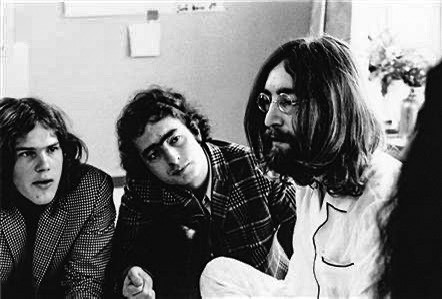
Claude Chamberlan y Dimitri Eipides junto a John Lennon y Yoko Ono durante su bed-in por la paz en Montreal (1969). Dos años después, en 1971, Chamberlan y Eipides fundaron el festival, originalmente llamado Festival international du cinéma en 16 mm de Montréal.
Fundado en Montreal en 1971 por Claude Chamberlan y Dimitri Eipides, el Festival du nouveau cinéma nació con la voluntad de abrir espacio a películas que quedaban al margen de los circuitos habituales de distribución. Ambos fundadores compartían una vocación por descubrir nuevas voces y acercar al público cinematografías que difícilmente encontraban lugar en las salas comerciales.
Chamberlan fue una figura central de la exhibición independiente en Montreal y un incansable descubridor de películas y cineastas. Creía en la importancia de llevar a Quebec las obras que lo habían conmovido en otros festivales y de preservar espacios físicos donde el cine independiente pudiera encontrarse con sus espectadores. Eipides, por su parte, desarrolló una trayectoria internacional como programador en festivales de Montreal, Toronto, Tesalónica y Reikiavik. Su trabajo contribuyó a dar visibilidad a cineastas y cinematografías de distintas regiones, y a establecer conexiones entre comunidades cinematográficas que de otro modo difícilmente habrían coincidido.
Más de medio siglo después, el legado de sus fundadores invita a mirar el FNC más allá de su selección de títulos. La cuestión no es únicamente qué películas presenta, sino qué lugar les concede y cómo invita al público a encontrarse con ellas.
Una programación, múltiples formas de descubrir el cine
La amplitud de la programación se reflejaba también en sus distintas secciones: las competiciones Internacional y Nacional, Panorama international, Les Incontournables (Los imprescindibles), Histoire(s) du cinéma, Les Nouveaux Alchimistes (Los nuevos alquimistas), Temps Ø y P'tits Loups (Lobeznos), además de las presentaciones especiales. A ellas se sumaba el programa RPCÉ, dedicado a una nueva generación de cineastas en formación en Canadá. En conjunto, estas secciones reunían distintas tradiciones cinematográficas, propuestas experimentales, obras destinadas al público infantil y encuentros con películas de diferentes épocas, sin reducir la experiencia del festival a un solo género o circuito de producción.
Cuatro programas, cuatro experiencias
Durante mi visita a la Cinémathèque québécoise asistí a tres programas de cortometrajes en una misma jornada. La experiencia fue reveladora precisamente porque no hubo una única manera de aproximarse al cine breve: cada selección propuso un recorrido distinto, tanto por sus lenguajes como por las reacciones que despertó en la sala.
RPCÉ: el entusiasmo de una nueva generación
Entre las instituciones que descubrí al acercarme a esta edición del FNC está L'inis, sigla del Institut national de l'image et du son (Instituto Nacional de la Imagen y del Sonido), un centro de formación profesional de Montreal especializado en cine, televisión y documental. Su presencia en el festival está vinculada a las RPCÉ: Rencontres pancanadiennes du cinéma étudiant (Encuentros pancanadienses de cine estudiantil), una iniciativa creada por el FNC en 2014 para apoyar al cine emergente y propiciar el encuentro entre estudiantes de cine de distintas escuelas canadienses. Además de una competencia de cortometrajes estudiantiles, las RPCÉ incluyen talleres, conferencias y actividades de intercambio profesional. L'inis participa como institución colaboradora y escuela anfitriona, y sus producciones cuentan con un programa propio dentro de la selección.
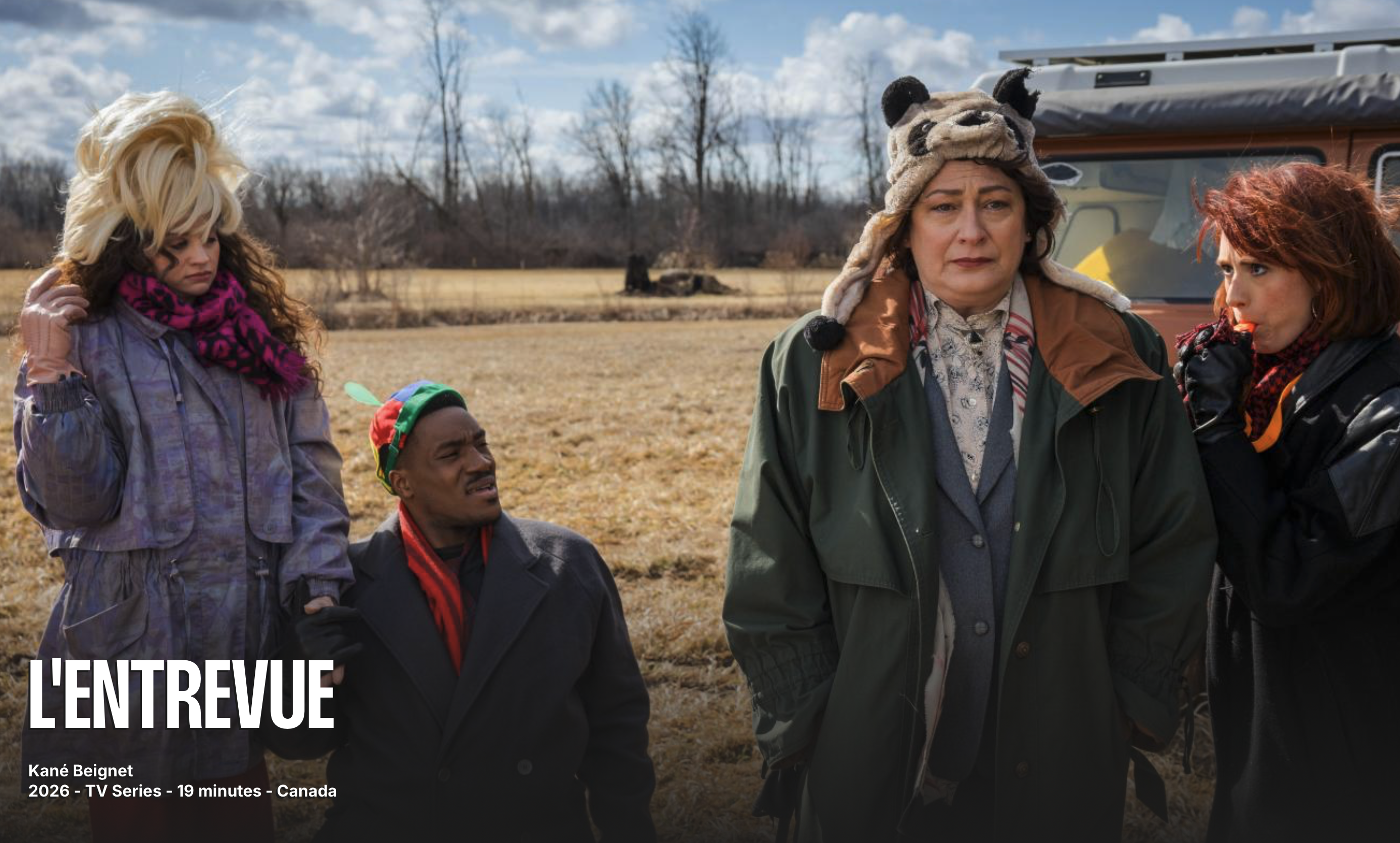
El programa RPCÉ reunió seis cortometrajes: Le sang n'est rien, Combustion, La Grande Cena de Fay, La dose parfaite, Noël Vert y L'entrevue. Concebido como un espacio de apoyo e intercambio para cineastas en formación, el programa compartía, pese a la diversidad de sus historias, un interés por las reacciones humanas y por la tensión que puede surgir de ellas.
También había una evolución perceptible en el tono del programa. Hacia su segunda mitad, el suspenso daba paso en algunos cortometrajes a un humor cercano a la farsa, por momentos ligeramente absurdo, mientras que tres de las seis películas optaban por desenlaces “felices”. Esa alternancia entre tensión, comedia y resolución contribuía a la variedad de la sesión, sin que las películas perdieran su interés por las contradicciones y reacciones de sus personajes.
La respuesta del público fue especialmente entusiasta. La sala, con una presencia notable de espectadores jóvenes, reaccionaba con energía al final de cada cortometraje, entre aplausos y vítores. El ambiente tenía algo de celebración colectiva y hacía evidente la conexión que se había establecido entre las películas y quienes las veían.
New Alchemists: experimentar con la imagen, el tiempo y el sonido
El tono fue diferente en New Alchemists Competition 4, una selección de seis obras que elegí precisamente por su aproximación multidisciplinaria y por la diversidad de sus lenguajes cinematográficos. Aquí el cine se alejaba de las estructuras narrativas más convencionales y abría espacio a la experimentación formal, a distintas maneras de trabajar con la imagen, el tiempo y el sonido.
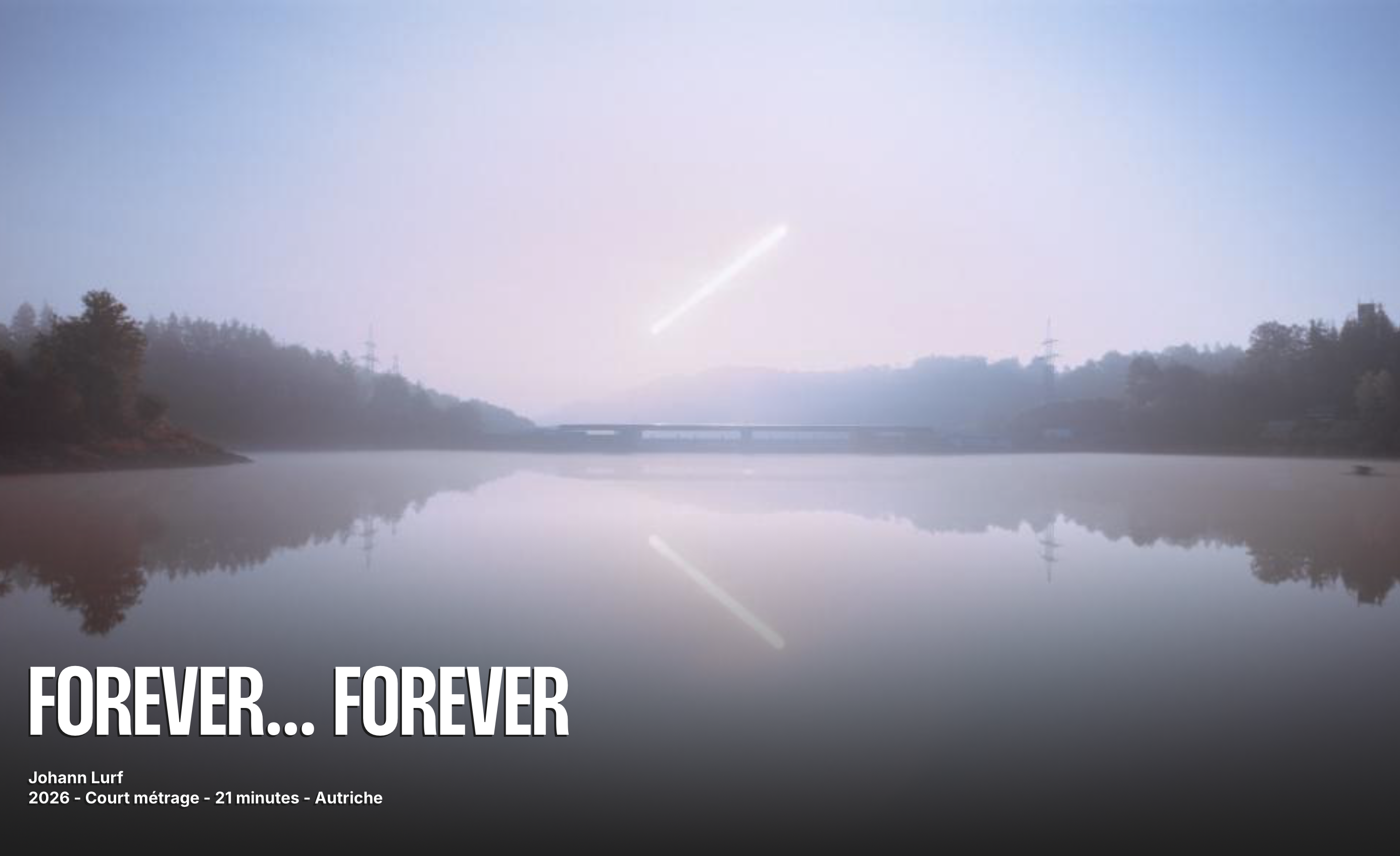
Entre las piezas, Forever... Forever, del cineasta austríaco Johann Lurf, destacó por su trabajo visual en 35 mm y su duración de 21 minutos. La película construía una experiencia temporal que evocaba el paso del día a la noche, con una atención particular a las transformaciones de la luz, el ritmo y el sonido. En una secuencia, ciertos efectos sonoros que recordaban al trueno provocaron reacciones espontáneas de sorpresa en la sala, seguidas de risas y aplausos. Fue uno de esos momentos en que una película experimental, sin necesidad de explicar su procedimiento, encontraba una respuesta directa en el público.
También estuvo presente el realizador de Parie 6, una de las propuestas más abstractas y matéricas del programa. Su participación tuvo un carácter informal y cercano, lejos de la solemnidad que a veces acompaña los encuentros posteriores a una proyección. Esa naturalidad contribuyó a que la sesión se sintiera como un espacio de intercambio, no solamente como una exhibición de obras terminadas.
International Competition: distintas geografías, otras miradas
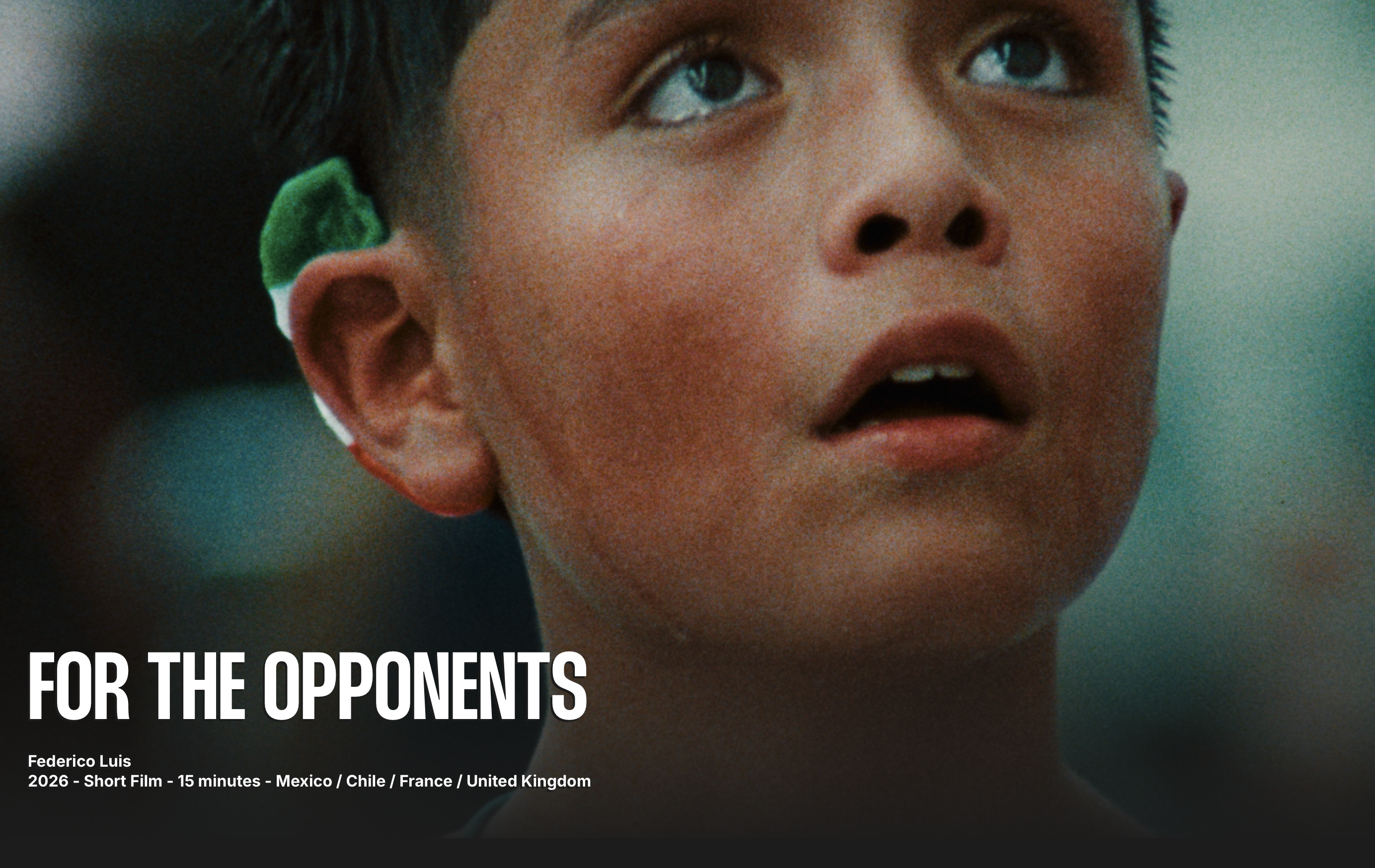
La tercera selección de aquella jornada, International Competition 1, reunió cuatro cortometrajes procedentes de México, Perú, Sudán y Somalia: For the Opponents, Nobody Knows the World, Nothing Happens After Your Absence y Whispers of a Burning Scent. La diversidad geográfica y cultural era uno de los rasgos más evidentes del programa, aunque su interés no se limitaba a la procedencia de las películas. Las cuatro propuestas me parecieron estimulantes y relativamente equilibradas en su capacidad para despertar curiosidad. La selección permitía pasar de un contexto a otro sin imponer una única forma de representar el mundo ni una misma idea de lo que debe ser un cortometraje.
Sentarme junto al director de una de las películas peruanas añadió otra dimensión a la experiencia. La presencia de cineastas invitados, también perceptible en el programa de New Alchemists, acercaba las obras a quienes acabábamos de verlas. La película dejaba de ser un objeto distante en la pantalla y se convertía en el punto de partida de una conversación posible.
National Competition: el humor como punto de encuentro
Días después, asistí al programa National Competition 1, que presentó cinco cortometrajes: Pacific Spirit, Footsteps On The Ceiling, Et qu'en pensent les cochons?, Between Late April and Early May y Skinny Bottines. La sesión volvió a mostrar una faceta distinta del cine breve, con propuestas que incorporaban el humor en diferentes grados. La sala estaba prácticamente llena y el público, compuesto en buena parte por jóvenes adultos, respondió con entusiasmo.
Tres invitados participaron en el encuentro posterior: un productor y dos directores. Me llamó la atención el tono horizontal de la conversación, conducida de manera natural y sin prolongarse innecesariamente. Las presentaciones y preguntas permitieron conocer algo más de las películas sin convertir el intercambio en un acto rígido ni agotar la atención de los asistentes.
Skinny Bottines, de Romain F. Dubois, fue una de las obras que despertó mayor simpatía entre el público. Más tarde supe que había recibido el Premio del Público presentado por SLA Locations en la competencia nacional de cortometrajes, un reconocimiento que coincidía con la buena recepción que había observado en la sala.

Considerados en conjunto, estos cuatro programas reunieron veintiún cortometrajes y cuatro experiencias muy diferentes. Lo significativo no fue que todas las películas me convencieran por igual, sino que cada selección parecía responder a una intención reconocible. La ficción, la experimentación y las distintas procedencias culturales convivían sin que el formato breve quedara reducido a una categoría secundaria.
La sala también forma parte del festival
En las sesiones que pude ver, el público tuvo una presencia activa. Hubo salas llenas, aplausos, risas y reacciones espontáneas; también espectadores que permanecían atentos ante propuestas más abstractas, sin que la falta de una narración convencional pareciera impedir su implicación. Estas observaciones corresponden a las funciones a las que asistí, pero fueron lo suficientemente constantes como para convertirse en una parte importante de mi experiencia del festival.
La Cinémathèque québécoise, en particular, me pareció un lugar propicio para ese encuentro. Pasar allí una jornada completa, entre proyecciones y conversaciones con cineastas, me permitió percibir el espacio como algo más que una sede: durante esas horas, parecía convertirse en un punto de reunión compartido por espectadores, realizadores y personas interesadas en explorar otras formas de cine.
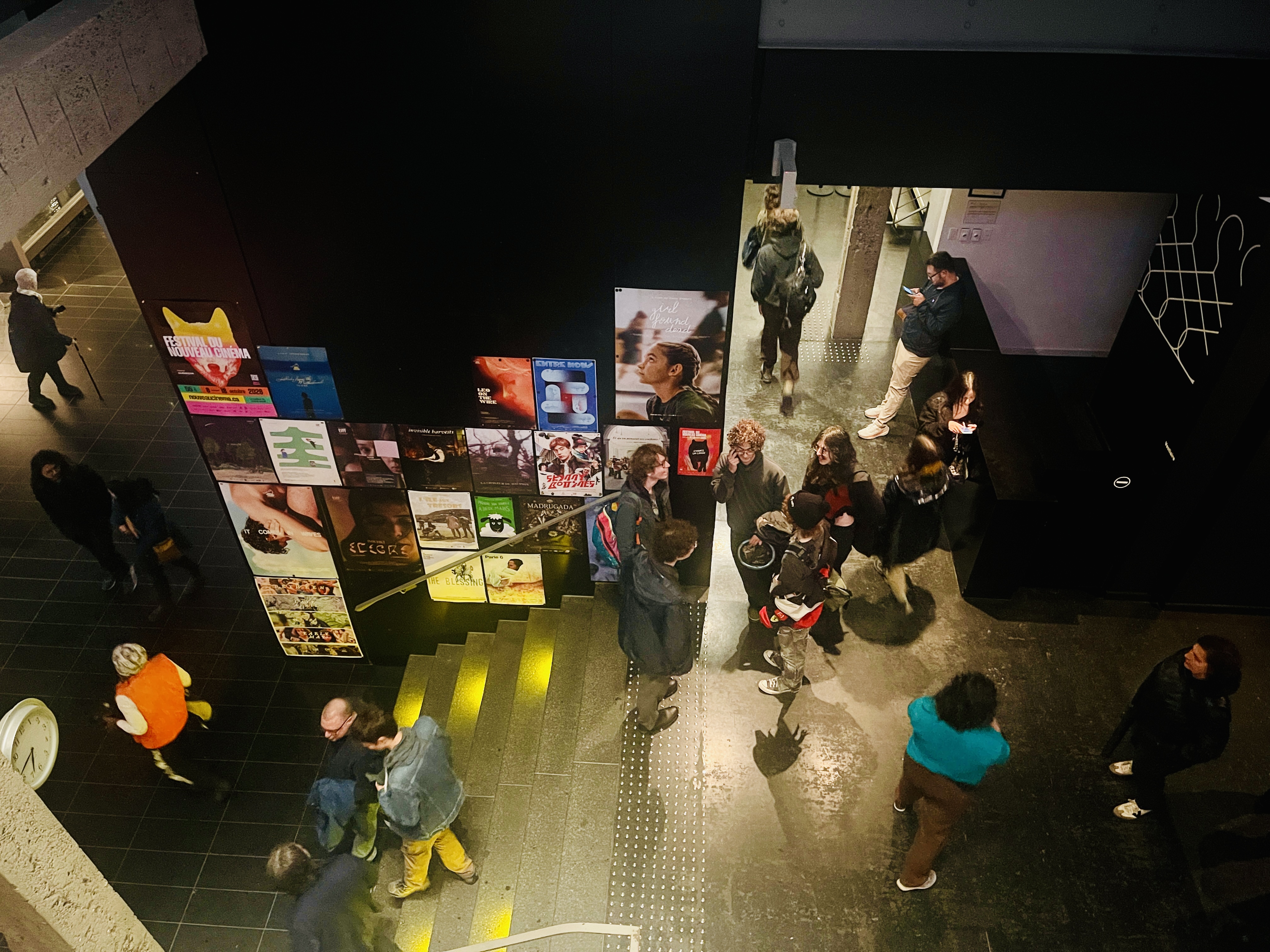
También me interesó la naturalidad de los encuentros con los invitados. No todas las sesiones necesitaban una conversación extensa para generar cercanía. A veces bastaba una presentación breve, una respuesta del director o una reacción colectiva para prolongar la experiencia de la película más allá de la pantalla. En un festival dedicado al descubrimiento, ese contacto importa: ayuda a que las obras circulen no solo como títulos dentro de una programación, sino como propuestas que pueden discutirse, cuestionarse y recordarse.
Seguir al lobo y a la loba

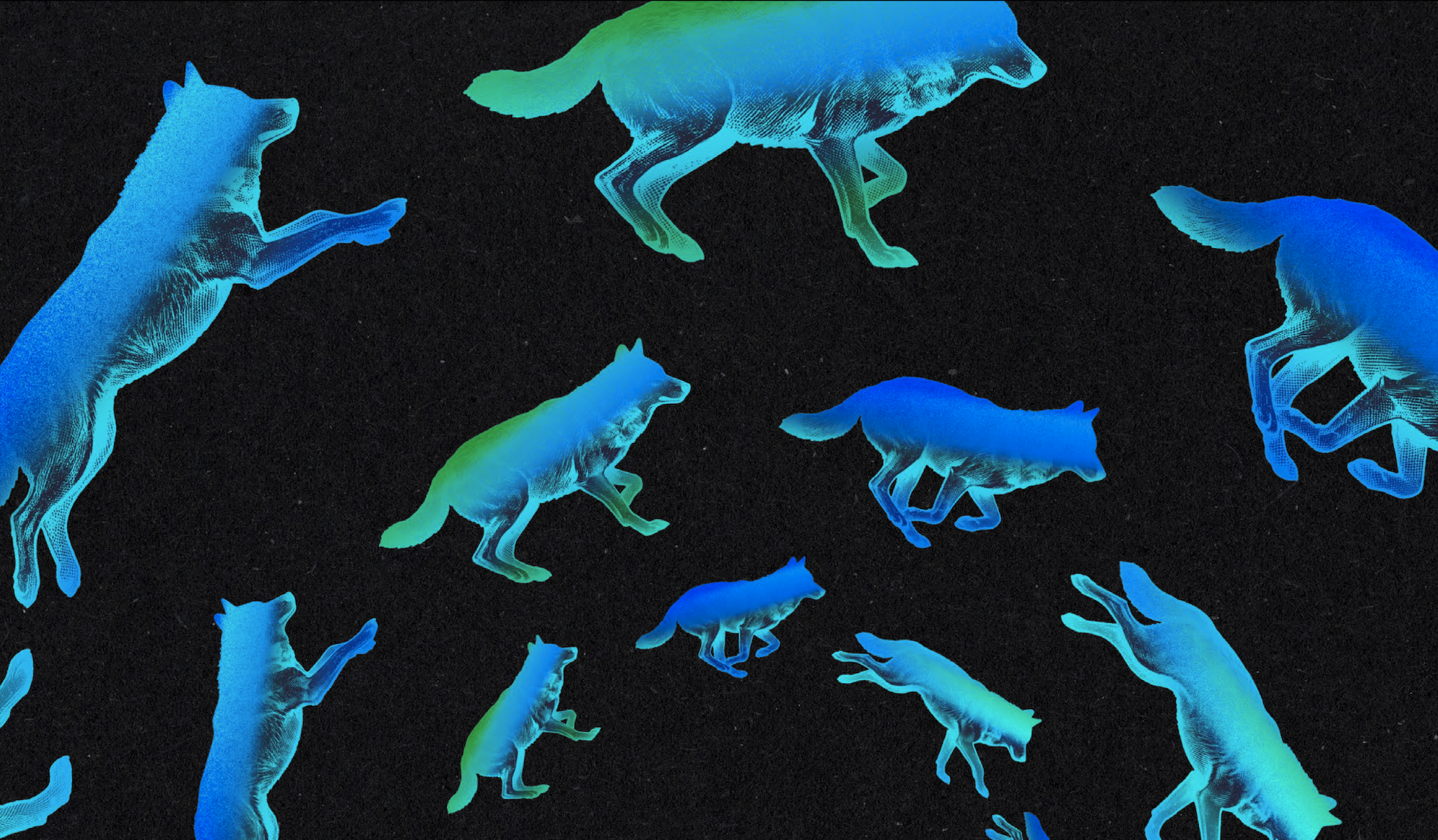
Otra de las características más visibles de esta edición fue su identidad gráfica. Para celebrar su 55.º aniversario, el FNC presentó una nueva imagen articulada en torno a las figuras del lobo y la loba, los contrastes de color y una estética dinámica. En las distintas sedes que recorrí, esta identidad estaba presente en los logotipos, las animaciones, las viñetas, los fondos de pantalla y los diferentes soportes visuales que acompañaban las proyecciones.
Desde mi perspectiva como diseñadora gráfica, aprecié especialmente la consistencia de esta propuesta. No se trataba únicamente de tener un cartel atractivo, sino de desarrollar un lenguaje visual reconocible que acompañara al festival en sus distintos espacios. La imagen de la manada, asociada a una actitud que se niega a ir sobre seguro, encontraba su expresión en el lema de esta edición: “Because the cinema we love has never played by the rules, neither will our image”. La declaración vinculaba la identidad gráfica con una idea de cine que no teme apartarse de las convenciones.
Esa invitación al descubrimiento también se hacía presente en un detalle que disfruté especialmente: el carrusel de películas y programas que aparecía en pantalla antes de las proyecciones. Mientras esperábamos el inicio de la función, los títulos desfilaban y dejaban pequeñas pistas: una imagen que despertaba interés, un nombre que convenía recordar, una sección cuyo planteamiento invitaba a ser explorado. En lugar de limitarse a anunciar lo que vendría después, el carrusel abría otras posibilidades dentro de la programación y convertía la espera en un momento de curiosidad cinematográfica.
Una edición en transición
La edición de 2026 tuvo lugar en un contexto institucional complejo, marcado por cambios en la dirección y ajustes en la estructura del festival. La programación se desarrolló con un equipo que incluía responsabilidades interinas, mientras la directora artística Zoé Protat se encontraba de licencia. En esas circunstancias, sería poco riguroso atribuir el conjunto de la selección a una sola persona sin conocer con precisión cómo se distribuyeron las decisiones. La programación de un festival de esta escala es también el resultado de un trabajo colectivo.
Desde mi experiencia como espectadora, encontré una propuesta coherente y variada. Los programas de cortometrajes que vi no daban la impresión de estar reunidos de manera arbitraria ni de cumplir simplemente con una cuota dentro de la oferta general. Cada uno tenía un carácter propio y, al mismo tiempo, contribuía a una imagen más amplia del festival: un lugar donde conviven diferentes formas de hacer cine y donde la curiosidad del público tiene un papel central.
La acreditación del FNC por la Federación Internacional de Asociaciones de Productores Cinematográficos (FIAPF), anunciada en marzo de 2026, supuso un reconocimiento muy importante para el festival y para Montreal. La FIAPF cuenta con un programa internacional que evalúa y reconoce festivales por su solidez, su impacto y su contribución al ecosistema cinematográfico. Cuando el FNC se incorporó a esta red, formaba parte de una selección de 49 festivales de 29 países y cinco continentes; la lista oficial actualizada reúne actualmente 50. Canadá cuenta con tres festivales acreditados: el Toronto International Film Festival (TIFF), Hot Docs (ambos celebrados en Toronto) y el FNC, único representante de Quebec. Esta incorporación refuerza la presencia de Montreal en el circuito internacional de festivales de cine.
La acreditación no determina por sí sola el valor artístico de una programación, pero sí permite dimensionar la posición que el FNC ocupa en el panorama internacional. Desde mi experiencia en esta edición, los programas que pude ver reflejaron una apuesta por la diversidad de lenguajes y procedencias, así como por el descubrimiento de películas que invitan al público a salir de sus hábitos de visionado.
Más allá de las proyecciones
Durante los once días del festival, con seis sedes y una programación que se desplegaba en paralelo, el FNC ofrecía mucho más de lo que podía abarcar en un solo recorrido. Mientras me concentraba en los cortometrajes, también se desarrollaban actividades vinculadas a MOMENTA (Bienal de Arte Contemporáneo) y eventos especiales, como la noche dedicada a The Matrix y la proyección gratuita de los cortos de Animatrix. La variedad de propuestas permitía acercarse al cine desde experiencias muy distintas, más allá de las proyecciones habituales.
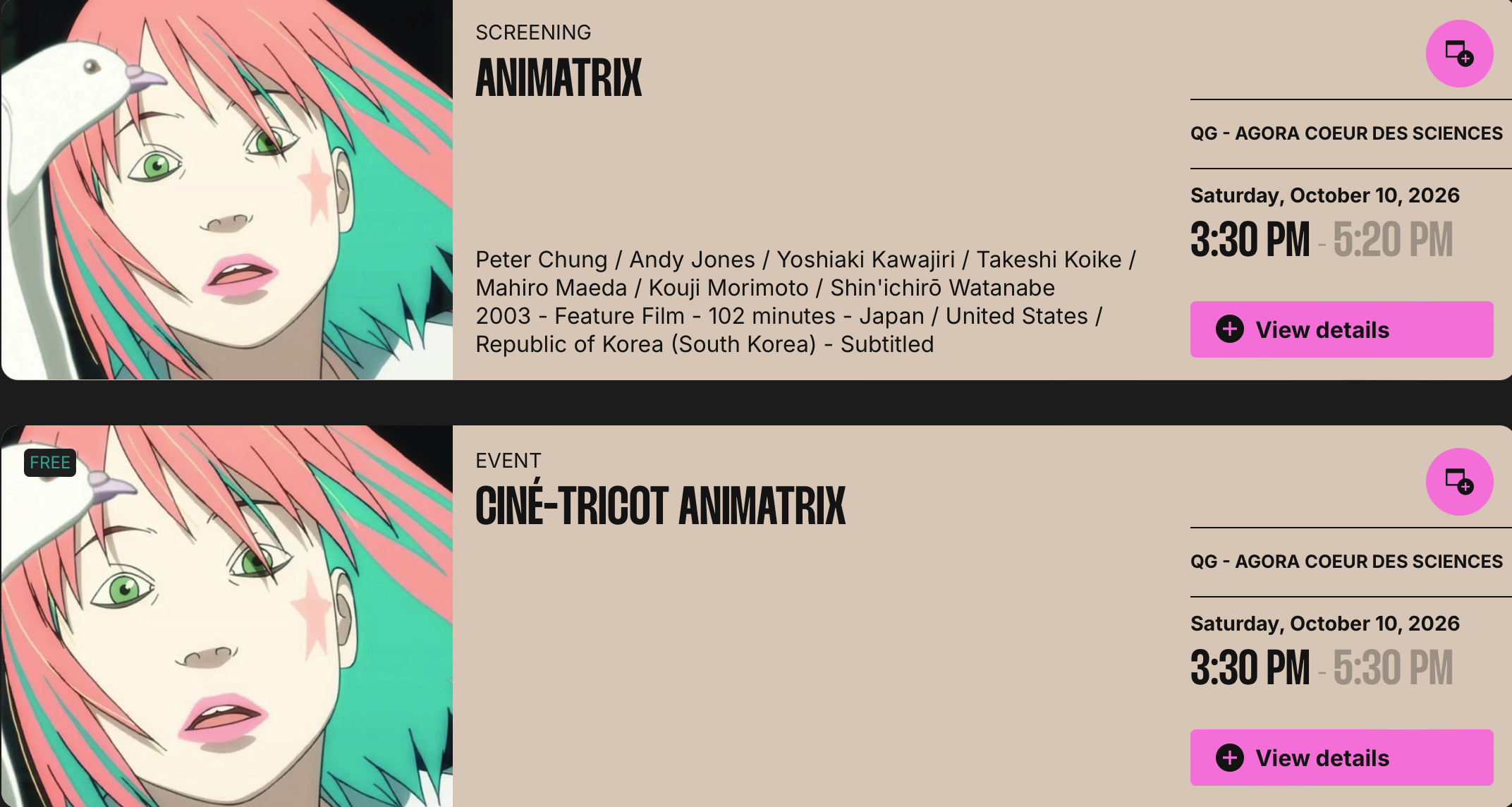
Algunas de estas actividades me hicieron pensar en la capacidad de los festivales para convertir una película en una experiencia colectiva. En la edición anterior, por ejemplo, el maratón de Twin Peaks y la proyección de Tampopo, acompañada de ramen, fueron propuestas que destacaron por la manera en que vinculaban el cine con otras formas de encuentro. Este año, las actividades en torno a The Matrix apuntaban también en esa dirección.
Mi paso por el FNC me permitió dimensionar mejor la vitalidad de los festivales de Montreal y la diversidad de experiencias cinematográficas que conviven en la ciudad. Es una oferta cultural que merece tiempo, curiosidad y exploración.
Una postal antes de la película
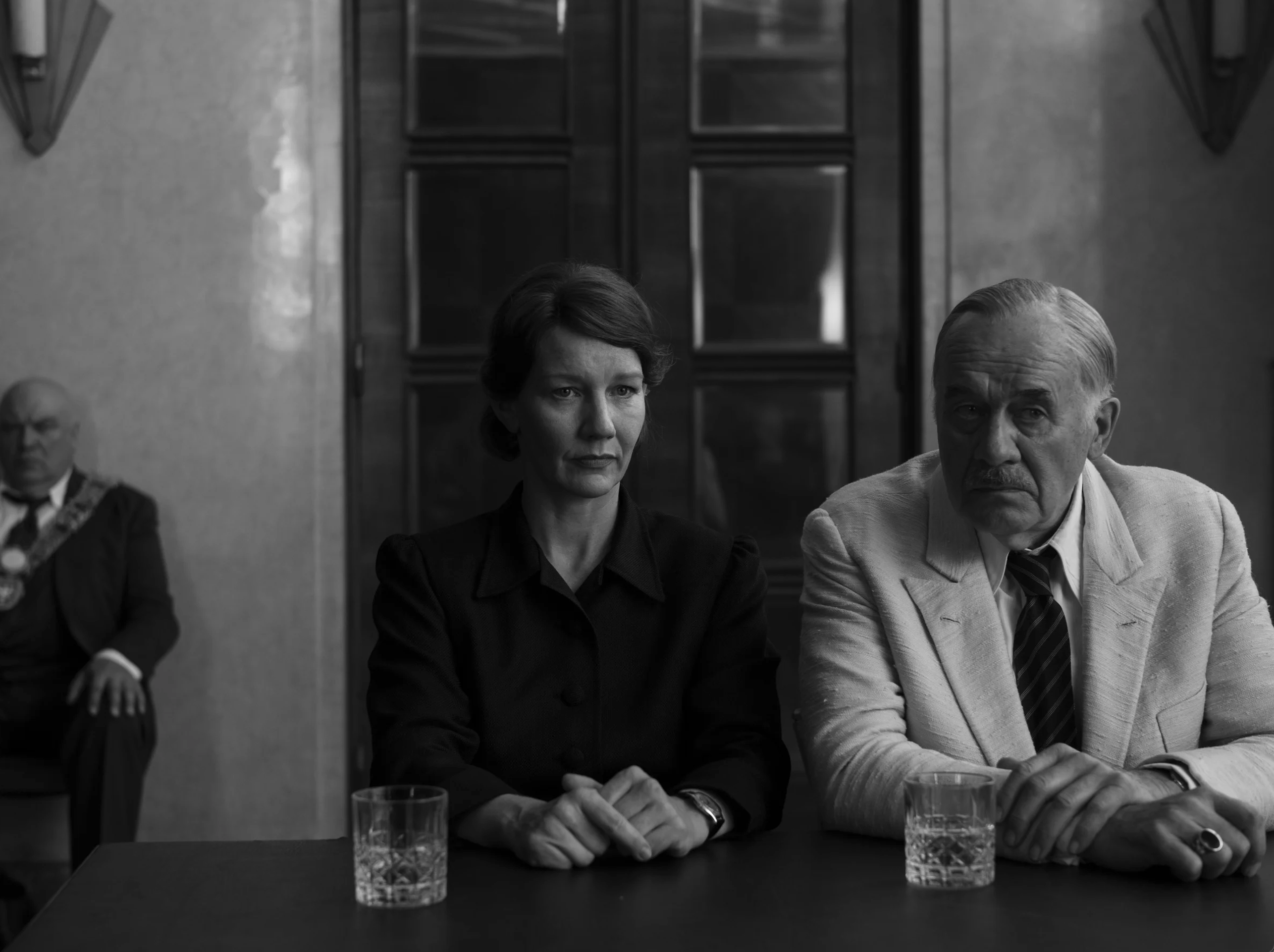
El último día del festival, el 18 de octubre, acudí a una proyección en las instalaciones de la Universidad Concordia. La película era Fatherland, de Paweł Pawlikowski, rodada en blanco y negro y cuyo estreno en MUBI está previsto para el 30 de octubre. Llegué con unos cuarenta minutos de anticipación y me sorprendió encontrar ya una fila considerable frente al auditorio, una sala de grandes dimensiones situada en la planta baja de la universidad.
Mientras esperaba, empecé a fijarme en las personas que me rodeaban. A mi lado había una mujer que sostenía un pequeño libro y no paraba de leer. Tenía algo de profesora universitaria, quizá de esas personas que parecen llevar toda una vida entre libros. Detrás de mí, una muchacha de unos veintidós años escribía continuamente en una libreta roja. No sabía qué leía la mujer ni qué anotaba la joven, pero ambas parecían completamente absortas en sus actividades, ajenas al movimiento de la fila.
La escena me evocó por un instante el ambiente de los círculos artísticos e intelectuales del París del siglo XX: la espera, los libros, la libreta roja, aquella naturalidad con la que cada persona parecía entregada a la lectura o a la escritura. No era solo una cuestión de apariencia, sino la impresión de encontrarme en un entorno donde la cultura formaba parte de la vida cotidiana, donde los libros y las inquietudes intelectuales parecían extenderse más allá de los cafés y las bibliotecas, hasta impregnar la vida misma.
Cuando entré en el auditorio, una pareja de unos sesenta y tantos años, ambos de cabello blanco, ya estaba sentada frente a la pantalla. Cada uno leía su propio libro mientras la sala se llenaba. En la pantalla se sucedían los logotipos del FNC y las imágenes de las películas de la programación, como había ocurrido en las demás proyecciones a las que asistí. La combinación de aquella pareja leyendo, la pantalla encendida y la expectativa del comienzo terminó de componer una imagen que guardé como una postal.
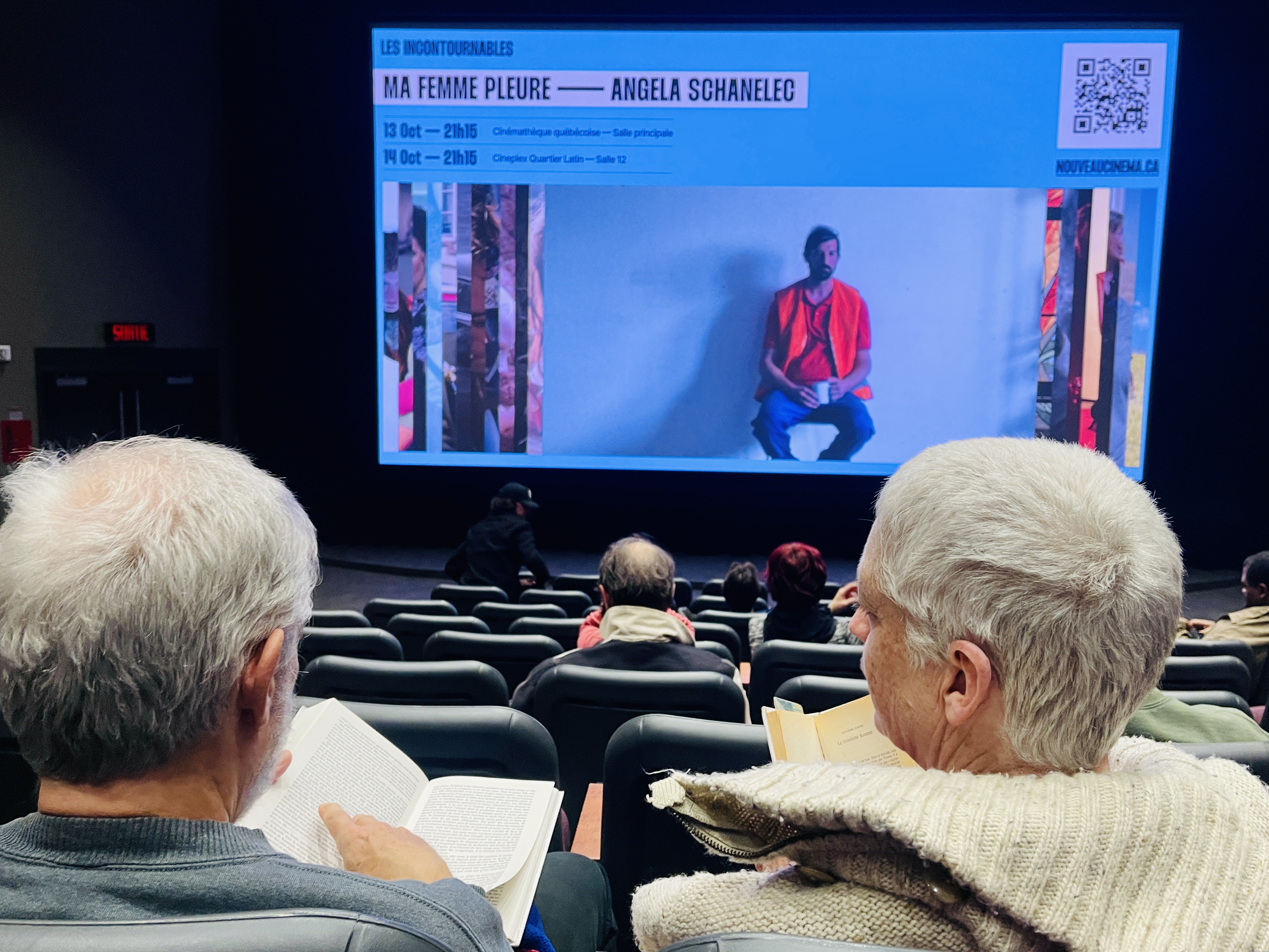
Hasta ese momento no había reparado en que el público de aquella sesión era mayoritariamente francófono, ni sabía que la película se proyectaría con subtítulos en francés. En las sesiones anteriores a las que había asistido, los subtítulos habían sido en inglés, de modo que había dado por hecho que ocurriría lo mismo.
Lo que me quedó de aquella noche fue la imagen de las personas leyendo antes de que comenzara la película. A veces, la experiencia de un festival también está hecha de estas pequeñas escenas que ocurren antes de que se apaguen las luces.
El valor de seguir descubriendo
A los 55 años, el Festival du nouveau cinéma conserva una identidad vinculada a la exploración de aquello que se encuentra fuera de los recorridos más previsibles. Los programas de cortometrajes que pude conocer durante esta edición fueron una muestra concreta de esa vocación: películas de distintas procedencias, lenguajes que iban de la ficción a la experimentación y encuentros que permitían prolongar la experiencia de la proyección.
Me quedo especialmente con la sensación de que el cortometraje ocupó un espacio propio dentro de la programación. No se percibía únicamente como una antesala del largometraje ni como un formato que había que incluir por obligación. Las selecciones tenían suficiente diversidad y personalidad para sostener la atención por sí mismas, y el público respondió con una energía que acompañó incluso las propuestas más arriesgadas.
Un festival no se define solo por la cantidad de películas que presenta, por sus invitados o por los nombres que aparecen en su cartelera. También se reconoce en la manera de poner las obras en relación, en las condiciones que ofrece para verlas y en la disposición que despierta en quienes asisten. En las sesiones que viví, el FNC consiguió mantener abierta esa posibilidad de encuentro.
Quizá esa sea una de las formas más concretas de entender su vocación original: crear un espacio para películas que merecen ser vistas y para espectadores dispuestos a dejarse sorprender. Cincuenta y cinco ediciones después, seguir defendiendo esa posibilidad de descubrimiento continúa siendo una manera de renovar el cine.
From October 8 to 18, 2026, Montreal’s Festival du Nouveau Cinéma (FNC) celebrated its 55th edition with nearly 200 works from more than 30 countries, presented across six venues throughout the city. As a festival with a broad cinematic scope, the FNC is not limited to a particular genre or mode of production. As Zoé Protat has noted, its editorial vision finds common ground in auteur cinema, ranging from big-budget films to independent productions made with minimal resources, sometimes following a do-it-yourself approach. Rather than adhering to a narrowly defined aesthetic category, the FNC seems to champion an understanding of cinema that values distinctive perspectives and a diversity of forms.
My experience of this edition was shaped in particular by four short-film programs. Each offered a different perspective, allowing me to observe how this diversity is reflected in the festival’s selections and in the relationship that develops between films and their audiences. To understand the festival’s identity today, however, it is worth looking back at its origins.
The Origins: Making Room for Other Cinemas
Claude Chamberlan and Dimitri Eipides with John Lennon and Yoko Ono during their Montreal Bed-In for Peace (1969). Two years later, in 1971, Chamberlan and Eipides founded the festival, originally named the Festival international du cinéma en 16 mm de Montréal.
Founded in Montreal in 1971 by Claude Chamberlan and Dimitri Eipides, the Festival du Nouveau Cinéma was created to make room for films that remained outside the usual distribution channels. Both founders shared a commitment to discovering new voices and bringing audiences closer to cinematic traditions and works that rarely found their way into commercial theaters.
Chamberlan was a central figure in Montreal’s independent film exhibition scene and an indefatigable discoverer of films and filmmakers. He believed in the importance of bringing to Quebec the works that had moved him at other festivals, and of preserving physical spaces where independent cinema could meet its audiences. Eipides, for his part, built an international career as a programmer at festivals in Montreal, Toronto, Thessaloniki, and Reykjavík. His work helped bring visibility to filmmakers and cinemas from different regions, while building connections between film communities that might otherwise never have crossed paths.
More than half a century later, the founders’ legacy invites us to look beyond the FNC’s selection of titles. The question is not simply which films it presents, but what place it gives them and how it invites audiences to encounter them.
One Program, Many Ways to Discover Cinema
The breadth of the festival program was also reflected in its different sections: the International and National Competitions, Panorama international, Les Incontournables (The Essentials), Histoire(s) du cinéma (History/Stories of Cinema), Les Nouveaux Alchimistes (The New Alchemists), Temps Ø (Time Ø), and P'tits Loups (Little Wolves), as well as Special Presentations. The RPCÉ program, dedicated to a new generation of emerging Canadian filmmakers, was another part of the lineup. Together, these sections brought different cinematic traditions into conversation, alongside experimental approaches, films for young audiences, and works from different periods in film history. The result was a festival experience that could not be reduced to a single genre or production circuit.
Four Programs, Four Experiences
During my visit to the Cinémathèque québécoise, I attended three short-film programs in a single day. The experience was revealing precisely because there was no single way of approaching short-form cinema: each selection offered a different journey, both in its cinematic language and in the reactions it prompted in the audience.
RPCÉ: The Enthusiasm of a New Generation
One of the institutions I discovered while exploring this edition of the FNC was L'inis, short for Institut national de l'image et du son (National Institute of Image and Sound), a Montreal-based professional training center specializing in film, television, and documentary production. Its presence at the festival is connected to the RPCÉ: Rencontres pancanadiennes du cinéma étudiant (Pan-Canadian Student Film Meetings), an initiative launched by the FNC in 2014 to support emerging cinema and foster connections among film students from different Canadian schools. In addition to a student short-film competition, the RPCÉ includes workshops, talks, and professional networking activities. L'inis participates as a partner institution and host school, with its productions featured in a dedicated program within the festival selection.
The RPCÉ program brought together six short films: Le sang n'est rien, Combustion, La Grande Cena de Fay, La dose parfaite, Noël Vert, and L'entrevue. Created to support young filmmakers and encourage exchange among film students, the program shared, despite the variety of its stories, an interest in human reactions and the tension that can emerge from them. Rather than suspense rooted in fear, it was a sense of uncertainty built around the characters’ behavior, their decisions, and the situations in which they found themselves.
There was also a noticeable shift in tone as the program unfolded. In its second half, suspense gave way in some films to a kind of farcical humor, at times slightly absurd, while three of the six films opted for happy endings. This alternation between tension, comedy, and resolution added variety to the program, without diminishing the films’ interest in the contradictions and reactions of their characters.
The audience response was particularly enthusiastic. The screening room, filled mostly with young people, came alive with applause and cheers at the end of each short film. There was something of a collective celebration in the atmosphere, making the connection between the films and their viewers unmistakable.
New Alchemists: Experimenting with Image, Time, and Sound
The tone shifted with New Alchemists Competition 4, a selection of six works that I chose precisely for their multidisciplinary approaches and the diversity of their cinematic languages. Here, cinema moved away from more conventional narrative structures, making room for formal experimentation and different ways of working with image, time, and sound.
Among the films, Forever... Forever, by Austrian filmmaker Johann Lurf, stood out for its visual approach, its use of 35mm film, and its 21-minute running time. The film created a temporal experience that evoked the transition from day to night, paying particular attention to changes in light, rhythm, and sound. At one point, sound effects reminiscent of thunder prompted spontaneous expressions of surprise from the audience, followed by laughter and applause. It was one of those moments when an experimental film, without needing to explain its process, prompted an immediate reaction from the audience.
The filmmaker behind Parie 6 was also in attendance. It was one of the program’s most abstract and materially driven works. His participation had an informal, approachable quality, far removed from the solemnity that sometimes accompanies post-screening discussions. That natural atmosphere helped make the session feel like a space for exchange, rather than simply a showcase of completed works.
International Competition: Different Geographies, New Perspectives
The third selection of the day, International Competition 1, brought together four short films from Mexico, Peru, Sudan, and Somalia: For the Opponents, Nobody Knows the World, Nothing Happens After Your Absence, and Whispers of a Burning Scent. Their geographic and cultural diversity was one of the program’s most evident features, although its appeal went beyond the films’ countries of origin. I found all four engaging, and relatively balanced in their ability to spark curiosity. The selection moved between different contexts without imposing a single way of representing the world or a fixed idea of what a short film should be.
Sitting next to the director of one of the Peruvian films added another dimension to the experience. The presence of invited filmmakers, also noticeable in the New Alchemists program, brought the works closer to those of us who had just watched them. The film ceased to be a distant object on the screen and became the starting point for a possible conversation.
National Competition: Humor as Common Ground
A few days later, I attended National Competition 1, which presented five short films: Pacific Spirit, Footsteps On The Ceiling, Et qu'en pensent les cochons?, Between Late April and Early May, and Skinny Bottines. The screening revealed yet another side of short-form cinema, with films that incorporated humor to varying degrees. The screening room was nearly full, and the audience, made up largely of young adults, responded enthusiastically.
Three guests took part in the post-screening discussion: one producer and two directors. I was struck by the open, informal tone of the conversation, which unfolded naturally and did not go on unnecessarily. The introductions and questions offered some insight into the films without turning the exchange into a rigid formal event or exhausting the audience’s attention.
Skinny Bottines, by Romain F. Dubois, was one of the films that seemed to resonate most strongly with the audience. I later learned that it had received the Audience Award, presented by SLA Locations, in the National Short Film Competition, a recognition that aligned with the positive response I had witnessed during the screening.
Taken together, these four programs brought twenty-one short films and four very different experiences. What mattered was not that every film appealed to me equally, but that each selection seemed to have a distinct and recognizable intention. Fiction, experimentation, and films from different cultural backgrounds coexisted without short-form cinema being relegated to a secondary category.
The Screening Room Is Part of the Festival, Too
In the screenings I attended, the audience played an active role. Audiences filled the screening rooms, with applause, laughter, and spontaneous reactions, while viewers also remained attentive to more abstract works, even without the familiar structures of conventional storytelling. These observations reflect only the screenings I attended, but they were consistent enough to become an important part of my experience of the festival.
The Cinémathèque québécoise, in particular, struck me as a place well suited to this kind of encounter. Spending an entire day there, moving between screenings and conversations with filmmakers, allowed me to experience the venue as more than just a screening location. For those hours, it seemed to become a shared meeting place for audiences, filmmakers, and people interested in exploring other forms of cinema.
I was also struck by the ease and informality of the encounters with invited guests. Not every screening needed an extended discussion to create a sense of connection. Sometimes a brief introduction, a filmmaker’s response, or a collective reaction was enough to extend the experience of a film beyond the screen. At a festival devoted to discovery, that kind of contact matters: it allows films to circulate not merely as titles in a program, but as works that can be discussed, questioned, and remembered.
Following the Wolf and the She-Wolf
Another striking feature of this edition was its visual identity. To mark its 55th anniversary, the FNC introduced a new visual language built around the figures of the wolf and the she-wolf, bold color contrasts, and a dynamic aesthetic. At the different venues I visited, this identity was present throughout: in the logos, animations, short animated sequences, screen backgrounds, and various visual materials accompanying the screenings.
From my perspective as a graphic designer, I particularly appreciated the consistency of this approach. It was not simply a matter of having an attractive poster, but of developing a recognizable visual language that accompanied the festival across its different spaces. The image of the pack, associated with an attitude that refuses to play it safe, found expression in this edition’s motto: “Because the cinema we love has never played by the rules, neither will our image.” The statement connected the festival’s graphic identity with an understanding of cinema that is unafraid to move beyond conventions.
This invitation to discover new things also appeared in a detail I particularly enjoyed: the carousel of films and programs displayed on screen before each screening. As we waited for the films to begin, titles passed by, offering small clues: an image that sparked interest, a name worth remembering, a section whose concept invited further exploration. Rather than simply announcing what was coming next, the carousel opened up other possibilities within the program and turned the waiting time into a moment of cinematic curiosity.
An Edition in Transition
The 2026 edition took place amid a complex institutional context, marked by changes in leadership and adjustments to the festival’s organizational structure. During this period, some responsibilities were being handled on an interim basis, while artistic director Zoé Protat was on leave. Under these circumstances, it would be inaccurate to attribute the entire selection to a single person without knowing precisely how programming decisions were distributed. Programming a festival of this scale is also the result of collective work.
As an audience member, I found the program coherent and varied. The short-film selections I attended did not feel arbitrarily assembled or as though they were simply fulfilling a quota within the overall lineup. Each had its own character while contributing to a broader picture of the festival: a place where different approaches to filmmaking coexist and where audience curiosity plays a central role.
The FNC’s accreditation by the International Federation of Film Producers Associations (FIAPF), announced in March 2026, marked an important milestone for both the festival and Montreal. FIAPF operates an international program that evaluates and recognizes festivals for their organizational strength, impact, and contribution to the film industry. When the FNC joined this network, it became part of a group of 49 festivals across 29 countries and five continents; the current official list includes 50. Canada has three accredited festivals: the Toronto International Film Festival (TIFF), Hot Docs (both held in Toronto), and the FNC, the only representative from Quebec. This accreditation strengthens Montreal’s presence on the international film festival circuit.
Accreditation alone does not determine the artistic value of a festival’s programming, but it does help put the FNC’s position within the international film landscape into perspective. From what I experienced at this edition, the programs I attended reflected a commitment to diverse cinematic languages and geographical backgrounds, as well as to discovering films that invite audiences to move beyond their usual viewing habits.
Beyond the Screen: The Audience Experience
Over the eleven days of the festival, with six venues and a program unfolding across multiple locations at the same time, the FNC offered far more than anyone could take in during a single visit. While I focused on the short films, other activities were also taking place, including events connected to MOMENTA (Contemporary Art Biennale) and special events such as a night dedicated to The Matrix and a free screening of the Animatrix shorts. This range of offerings allowed audiences to engage with cinema in very different ways, beyond the usual screening experience.
Some of these activities made me reflect on the ability of festivals to turn a film into a collective experience. At the previous edition, for example, the Twin Peaks marathon and the screening of Tampopo, accompanied by ramen, stood out for the way they connected cinema with other forms of gathering. This year, the activities surrounding The Matrix seemed to follow a similar direction.
My experience at the FNC gave me a better sense of the vitality of Montreal’s film festivals and the diversity of cinematic experiences that coexist throughout the city. It is a cultural landscape that deserves time, curiosity, and exploration.
A Postcard Before the Film
On the festival’s final day, October 18, I attended a screening at Concordia University. The film was Fatherland, by Paweł Pawlikowski, shot in black and white and scheduled to premiere on MUBI on October 30. I arrived about forty minutes early and was surprised to find a sizable line already forming outside the auditorium, a large screening space on the university’s ground floor.
As I waited, I began noticing the people around me. Beside me stood a woman holding a small book, which she read continuously. She had the air of a university professor, perhaps one of those people who seem to have spent a lifetime among books. Behind me, a young woman in her early twenties was constantly writing in a red notebook. I had no idea what the woman was reading or what the younger woman was writing, but both seemed completely absorbed in their activities, seemingly unaware of the movement around them.
For a moment, the scene brought to mind the artistic and intellectual circles of twentieth-century Paris: the waiting, the books, the red notebook, the effortless way in which each person seemed immersed in reading or writing. It was not simply a matter of appearances, but the impression of being in an environment where culture was part of everyday life, where books and intellectual pursuits seemed to extend beyond cafés and libraries and permeate daily existence.
When I entered the auditorium, a couple in their sixties, both with white hair, was already seated facing the screen. Each was reading a book of their own as the room gradually filled. On the screen, the FNC logos and images from the festival program were playing, just as they had before the other screenings I attended. The sight of the couple reading, the illuminated screen, and the anticipation of the film’s beginning came together to form an image I would keep as a postcard.
Until that moment, I had not realized that the audience at this screening was predominantly French-speaking, nor did I know that the film would be shown with French subtitles. At the previous screenings I had attended, the subtitles had been in English, so I had simply assumed the same would be true here.
What stayed with me from that evening was the image of people reading before the film began. Sometimes, the experience of a film festival is also made up of these small scenes that unfold before the lights go down.
The Value of Continuing to Discover
At 55, the Festival du nouveau cinéma retains an identity rooted in exploring what lies beyond the more predictable paths of cinema. The short-film programs I encountered during this edition offered a concrete expression of that commitment: films from different backgrounds, cinematic languages ranging from fiction to experimentation, and encounters that allowed the screening experience to continue beyond the film itself.
What stayed with me most was the sense that short films occupied a space of their own within the program. They were not treated merely as a prelude to feature films or as a format included out of obligation. The selections had enough diversity and character to hold the audience’s attention in their own right, and viewers responded with an energy that extended even to the more daring works.
A festival is defined not only by the number of films it presents, its guests, or the names featured in its lineup. It is also recognized by the way it brings works into conversation, the conditions it creates for viewing them, and the openness it inspires in those who attend. In the screenings I experienced, the FNC succeeded in keeping that possibility of connection alive.
Perhaps this is one of the most tangible ways to understand its founding mission: to create a space for films that deserve to be seen and for audiences willing to be surprised. Fifty-five editions later, continuing to defend that possibility of discovery remains one way of renewing cinema.

Les Îles de Guadeloupe sont à l’honneur dans le nouveau film de voyage réalisé par Les Aventuriers Voyageurs, qui met en scène Gino Chouinard, animateur vedette de l’émission matinale Salut Bonjour. Le film est à découvrir dans les salles de cinéma du Québec dès le 18 octobre.
En quête de liberté après des années passées au rythme intense de l’émission matinale Salut Bonjour, Gino Chouinard s’offre une immersion au coeur des Îles de Guadeloupe, une destination où la nature luxuriante, la douceur de vivre, l’authenticité et l’âme créole s’entrelacent avec force.
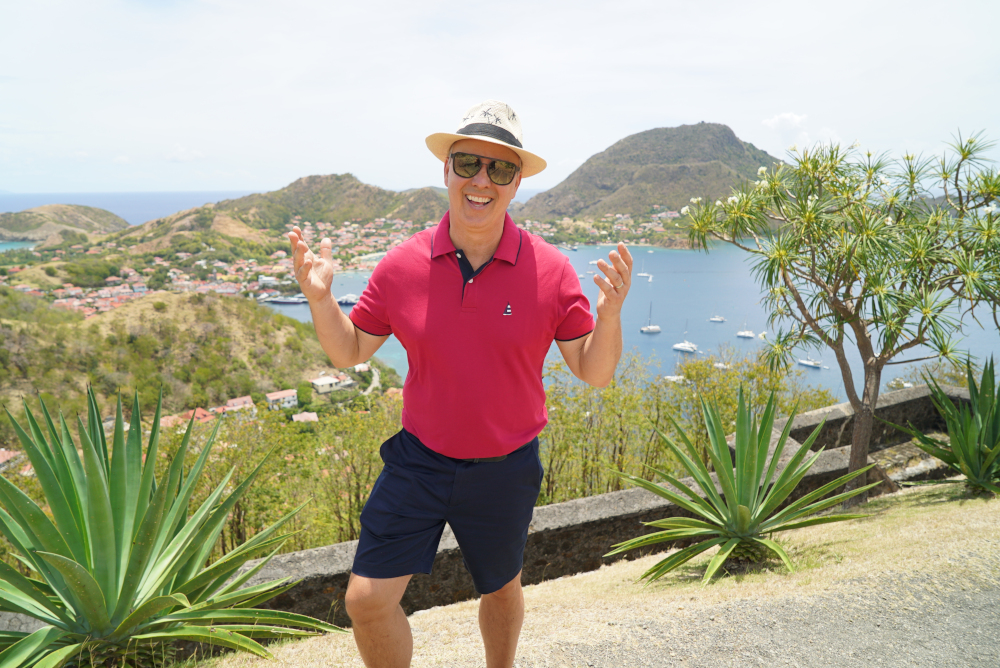
À seulement quatre heures de vol direct depuis Montréal toute l’année avec Air Canada, Air Transat, et depuis Québec en vols saisonniers, les Îles de Guadeloupe forment un archipel situé dans les Caraïbes françaises, composé de six îles aux personnalités bien distinctes : Basse-Terre, Grande-Terre, Marie-Galante, La Désirade, Terre-de-Haut, Terre-de-Bas (Les Saintes).
Chacune possède sa propre identité, son énergie et son caractère, offrant ainsi une grande diversité d’expériences aux voyageurs en un seul voyage. Il est également facile et accessible de passer d’une île à l’autre, plusieurs liaisons en ferry quotidiennes en traversier permettant de les rejoindre en moins d’une heure. Tourné aux quatre coins de l’archipel, ce film de 90 minutes accompagne Gino à la découverte des Îles de Guadeloupe, entre paysages d’exception, culture et traditions.
Bienvenue au coeur des Îles de Guadeloupe, à travers la visite des marchés locaux et des distilleries, une immersion au coeur de Pointe-à-Pitre, Ville d’Art et d’Histoire, une escapade à travers le Parc National de Guadeloupe et sa mangrove, ou encore une excursion à Marie-Galante, l’île aux cent moulins et aux champs de cannes à perte de vue. À bord d’un catamaran, Gino met le cap vers Terre-de-Haut (Les Saintes) et prend part à un atelier culinaire autour de la fabrication du tourment d’amour. Au fil d’échanges authentiques et d’expériences immersives, il part à la rencontre de celles et ceux qui font vivre et rayonner la destination au quotidien.
Ce film de voyage animé par Gino Chouinard sera présenté dans plus de 60 cinémas au Québec avec Les Aventuriers Voyageurs dès le 18 octobre. Vous pouvez visionner la bande-annonce et connaître l’horaire des représentations sur le site www.lesaventuriersvoyageurs.com.

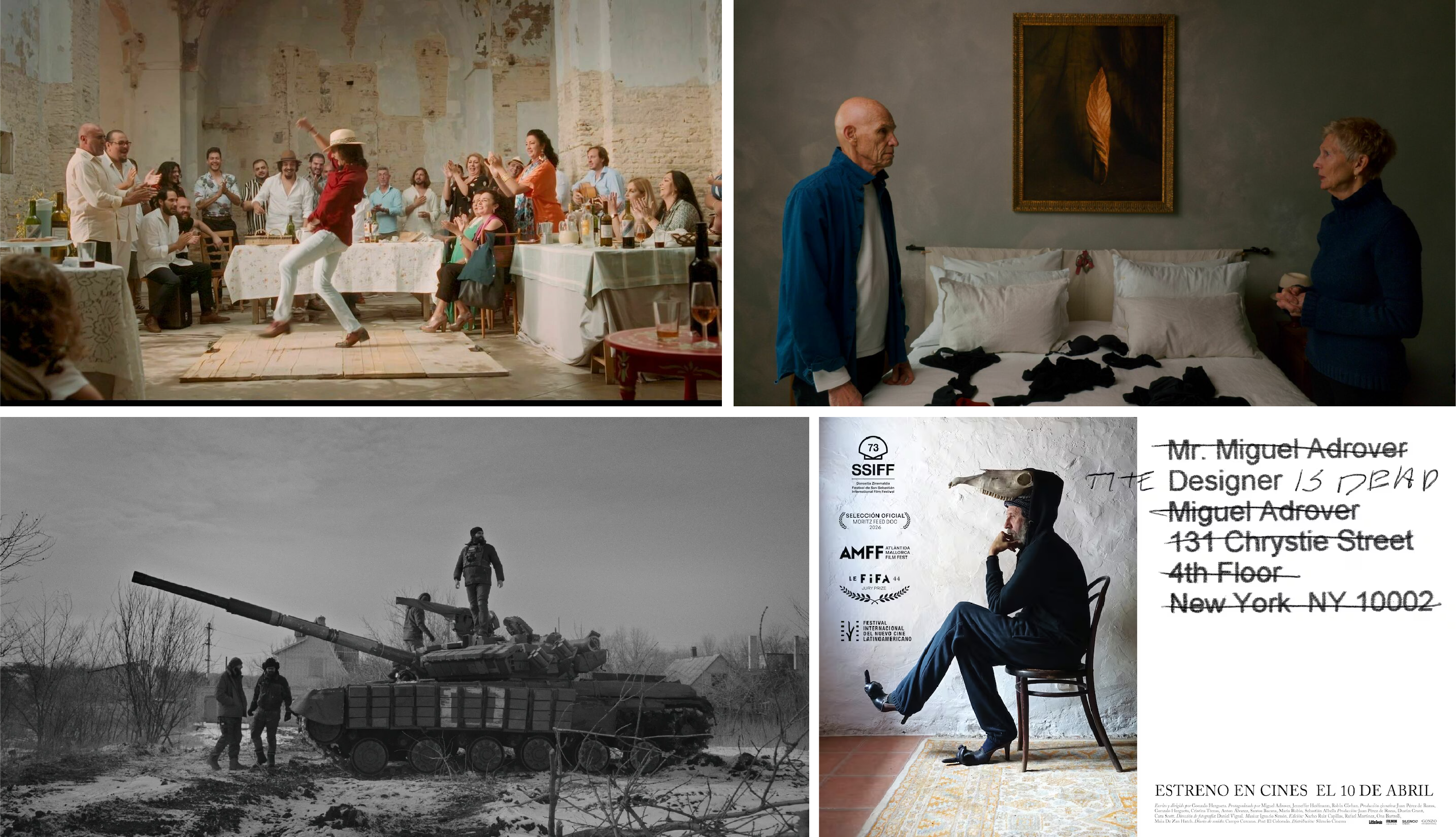
There are festivals one attends, and there are festivals one inhabits. The 44th edition of the Festival International du Film sur l’Art (FIFA), held in Montreal, belongs unmistakably to the latter.
Founded in 1981 by René Rozon, FIFA has grown into the most important festival in the world dedicated to the international promotion and circulation of films on art and media arts. With an initial mission “to increase the knowledge and appreciation of art among the public,” the festival has, over more than four decades, built a remarkable legacy: over 5,000 films presented from nearly 80 countries and more than 400 awards granted. What began as a six-day event is now an 11-day celebration of artistic expression in cinematic form.
A City of Festivals, A Festival Apart
Montreal is a city that breathes festivals, with a cultural calendar that spans the entire year. In less than a year, I had already encountered several, each offering a distinct lens into cinema and culture.
Yet FIFA stood apart. Within this rich cultural landscape, it asserts a presence that is both precise and singular.
What makes FIFA distinctive is not only its longevity, but the clarity of its focus: a festival devoted to films that engage with art as subject, form, and experience. Moving fluidly across disciplines (cinema, visual arts, photography, architecture, dance, music, design, and digital and media-based practices) it expands the possibilities of what the moving image can hold.
What makes this discovery particularly meaningful for me is that it emerges from a broader trajectory shaped by experiences in film programming and curatorial practice. Before arriving in Montreal, I had the opportunity to engage with festivals such as the San Sebastián International Film Festival (Zinemaldia) and Punto de Vista in Pamplona, experiencing them both as a spectator and through more curatorial and institutional perspectives.
This dual position (between observation and internal understanding) has shaped the way I approach festivals not as isolated events, but as complex cultural systems. From this perspective, FIFA reveals its singularity not in opposition to other festivals, but through a distinct logic: one that prioritizes thematic coherence and artistic focus over scale.
It is precisely in this deliberate narrowing (this focus on art as both subject and practice) where its strength becomes visible.
FIFA does not limit itself to being an event. It functions as an ecosystem. Its professional hub, FIFA Connexions, its international network (FOAN), and its streaming platform ARTS.FILM extend its presence far beyond the eleven days of screenings. In contrast to festivals that sometimes concentrate their energy into a single temporal peak, FIFA distributes its influence across the year, sustaining a continuous circulation of art films, ideas, and collaborations.
This structural continuity is not anecdotal; it is ideological. It suggests that films on art and media practices should not be consumed as an isolated moment, but as an ongoing practice.
Entering the Festival: A Volunteer’s Perspective
My first real contact with FIFA came not through the screen, but through participation. I took part in the festival as a volunteer, joining a team of around 130 volunteers for this edition.
The room was full, an immediate indication of the scale and enthusiasm surrounding FIFA. During those sessions, we were introduced to the artistic and executive director, Philippe U. del Drago, as well as to the teams behind the festival’s different sections and programs.
But beyond the formal presentations, what struck me most was the atmosphere.
Entering the festival’s offices, I was greeted by a large Jean-Michel Basquiat poster dominating the wall, a bold statement of artistic intent. Surrounding it were framed posters from past editions, some featuring the unmistakable visual language of Keith Haring. It was not just decoration; it was a declaration: this is a festival that lives and breathes art.
Opening and Closing: A Full Circle Experience
I had the privilege of attending both the opening night and the closing screening of the festival, witnessing its beginning and its conclusion.
The festival officially opened on March 12 at the Monument-National, one of Montreal’s emblematic cultural venues. The theater was completely full, a powerful testament to the audience’s anticipation. The opening film, Mon Amour c’est pour le restant de mes jours, set the tone for what was to come, not only as a cinematic experience, but as a conceptual entry point into the festival itself.
Days later, the closing film, The Way We Move, offered a different but equally resonant perspective, bringing the experience to a meaningful close.
As someone deeply connected to visual arts, cinema, and the moving image, being able to inhabit the festival across its duration felt like entering a sustained artistic atmosphere, one shaped not only by films, but by encounters, conversations, and shared sensibilities. The experience was not only cinematic, but profoundly artistic, while extending into a sense of community and shared collaboration.
Watching the Festival: A Curated Immersion
Beyond my role as a volunteer, I attended seven film sessions across different sections of the program, including the Carte Blanche selection More-Than-Human Worlds, curated by Pauline Soh, Senior Curator of Programmes at the National Gallery Singapore, presenting a program of six works by contemporary Southeast Asian artists and filmmakers. From there, the program shifted into other sections and perspectives: Viktor, Two Strangers Trying Not to Kill Each Other, The Designer is Dead, Farruquito: A Flamenco Dynasty, and the closing film, The Way We Move.
This selection of films offers only one possible reading of the festival. Had I chosen a different set of screenings or Carte Blanche programs, I would have inevitably encountered another constellation of works and, with it, another version of FIFA. With hundreds of films presented across the festival, it is impossible to grasp it in its entirety. Yet there is also something rewarding in this partial access: the freedom to build one’s own path through the program, and to construct a personal reading based on what time, curiosity, and circumstance allow.
This sense of partiality becomes even more evident when considering the scale of the 44th edition: 178 titles from 52 countries, including 60 Canadian films, with 41 world premieres. Notably, 93 films were (co-)directed by women, reflecting a strong commitment to diverse voices in contemporary films on art. The official competitions included 23 international and 17 national entries, highlighting a careful balance between global reach and local presence.
Stills from selected films, from left to right: Farruquito: A Flamenco Dynasty, Two Strangers Trying Not to Kill Each Other, Viktor and The Designer is Dead.
Recurring Themes: Art, Mortality, and the Human Condition
Across the screenings I attended, a pattern began to emerge, one that I had not anticipated, yet felt deeply coherent within the festival’s curatorial vision: a sustained reflection on mortality.
Mon Amour c’est pour le restant de mes jours, centered on Quebec filmmaker Robert Morin, emerged as one of the most striking films in my selection. As a newcomer to Montreal, I was searching for traces of non-commercial, local cinema, voices that exist beyond mainstream recognition. Discovering his work through this intimate lens felt like an initiation into a lesser-known cultural lineage.
This reflection on life and its finitude reappeared in Two Strangers Trying Not to Kill Each Other, where photographer Joel Meyerowitz and writer Maggie Barrett confront aging, artistic frustration, and the inevitability of death through the prism of their relationship. Similarly, the documentary on Farruquito carries an underlying awareness of legacy and generational continuity, unfolding between glory and tragedy, while The Designer is Dead plays with the ambiguity of disappearance, revealing a creator, Miguel Adrover, who has not died, but has instead withdrawn from the systems that once defined him.
In all these works, death is not treated as spectacle, but as a condition, something to think with, rather than something to fear. It appears less as an event than as a structure, quietly shaping how time, memory, and artistic gesture unfold.
Alongside this line of inquiry, another thematic thread emerged around the relationship between art, the body, and access. In the words of FIFA’s Artistic Director Philippe U. del Drago, art can be understood as “a laboratory for the expansion of human language,” where it constantly shifts imaginaries, reconfigures perception, and redefines what is visible, audible, and thinkable. He further writes that cinema, perhaps more than any other art form, becomes the space where these languages meet, collide, and translate one another, asking us to “learn the language of the other” not as assimilation, but as a form of openness and displacement.
Within this framework, films such as The Way We Move explore how deaf communities experience and collectively translate music, expanding the sensory boundaries of performance. In a more politically charged register, Viktor follows a deaf Ukrainian man during the ongoing war, whose desire to enlist in the army confronts the structural limits imposed by his condition. Unable to serve as a soldier, he turns to photojournalism in search of purpose and participation. Here, deafness is not only a question of accessibility, but of agency, usefulness, and belonging within a nation at war.
Even indirectly, projects like Song of the Hands point toward a redefinition of how art can be transmitted, translated, and felt. Taken together, these films suggest that FIFA is not only about representing art, but about interrogating who art is for, and under what conditions it can be experienced, shared, or even lived.
FIFA Connexions: A Global Network of Art and Cinema
For its 44th edition, FIFA signals a shift in its professional program through FIFA Connexions, conceived not merely as an industry platform but as a dynamic space for exchange, learning, and professional development. Through round tables, conferences, workshops, and pitch sessions, it creates conditions for dialogue around key contemporary challenges, creation, distribution, financing, and the circulation of works.
What distinguishes Connexions is its deliberate inclusivity: it places emerging voices and early-career professionals in direct conversation with established figures, fostering an environment where knowledge is shared horizontally rather than hierarchically. In this sense, it functions as a laboratory for future collaborations and as a bridge between local and international ecosystems.
FOAN: Extending the Network
FOAN (Festival of Films on Art Network) operates as a distinct but complementary structure. Composed of member institutions across North America, South America, Europe, and Asia, it facilitates the exchange of knowledge and practices while supporting the production, circulation, and visibility of films on art.
More than a formal alliance, FOAN acts as a space of dialogue and collaboration, where partners collectively reflect on the evolving role of art films within a global cultural landscape. In this context, such films can be understood as sensitive indicators of social and cultural change, carrying meanings that extend beyond the screen.
A Festival Beyond Time and Space
One of FIFA’s most compelling evolutions is its digital extension: ARTS.FILM. This online platform transforms the festival into a year-round experience, offering access to more than 600 films that are otherwise difficult (or impossible) to find.
During the festival period and beyond, audiences can continue exploring its programming from home, extending the life of the festival beyond its physical duration.
Belonging Through Festivals
As a recent arrival in Montreal, my experience of FIFA is inseparable from my process of building a sense of belonging within the city.
What becomes evident over time is that Montreal’s festivals do not compete, they coexist. Each occupies a specific space within an annual cultural cycle, addressing different audiences, disciplines, and sensibilities. Together, they form a living ecosystem.
Within this landscape, FIFA stands out as the festival with which I feel the strongest intellectual and professional affinity. Its focus on art, its curatorial rigor, and its expanded structure resonate with contemporary practices in curatorial studies and film programming, particularly those concerned with expanded notions of exhibition and circulation.
To encounter such a festival not only as a spectator, but also as a volunteer, is to engage with it on multiple levels.
Beyond the Festival
FIFA ultimately invites a broader reflection on what a film festival can be today. In an era where images circulate endlessly and attention is fragmented, FIFA proposes an alternative model: one rooted in depth, continuity, and dialogue across artistic practices. Its commitment to art is not static or self-referential, but oriented toward a transdisciplinary space in which perception itself is reshaped, particularly at a moment marked by global instability and the ongoing violence of multiple conflicts, where artistic practices also become sites of reflection, resistance, and solace.
If traditional festivals often seek to frame the present of film, FIFA seems to ask a different question: what is the place of art within it?
And perhaps more importantly, who is it for, and under what conditions does it become accessible, perceptible, and shared?
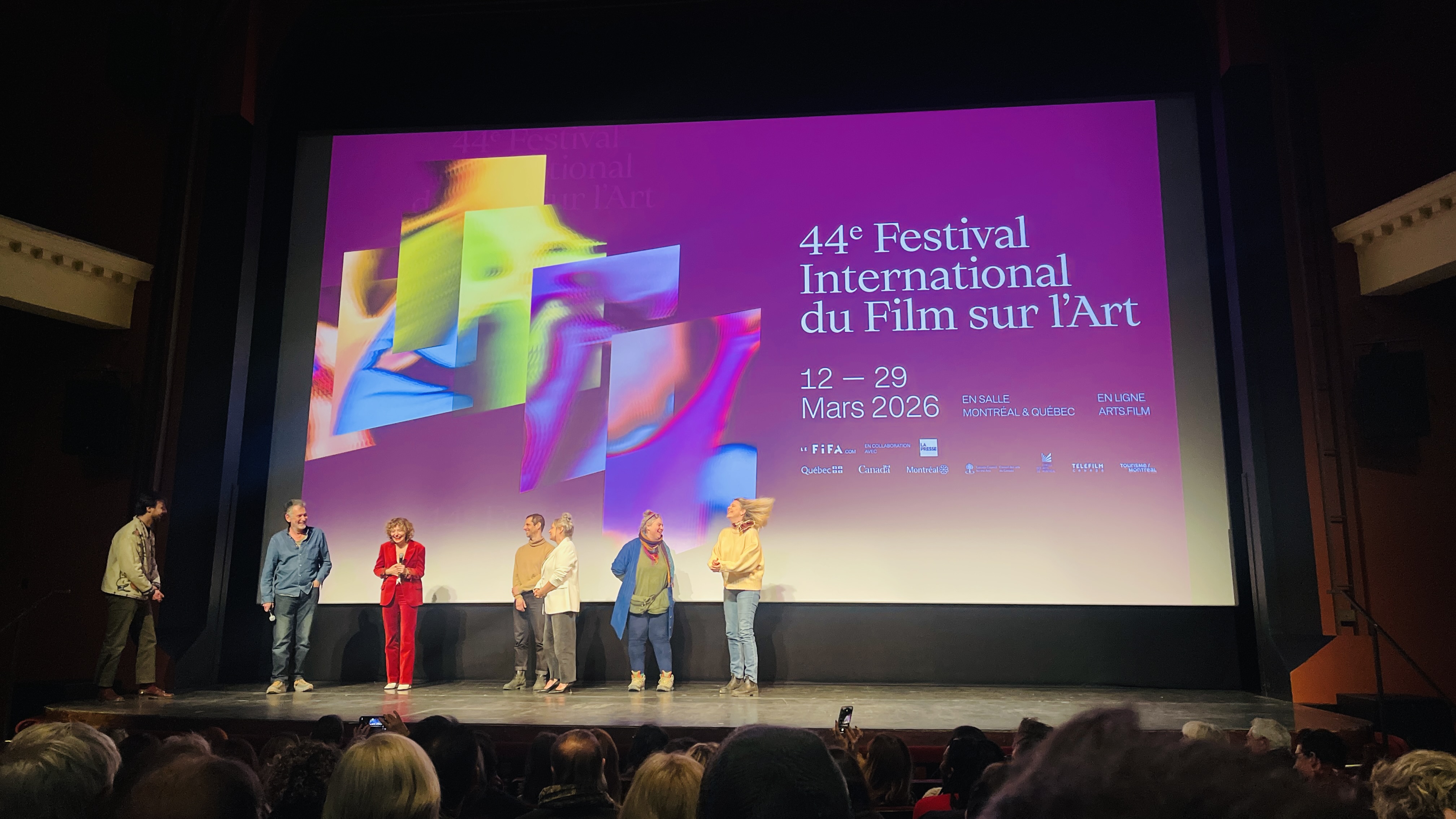
On Thursday, March 12, the Festival International du Film sur l’Art (FIFA) opened its 44th edition at the Monument-National, one of the most important film events dedicated to cinema about art. The film chosen to open the festival was the documentary Mon amour, c’est pour les restant de mes jours, directed by Quebec filmmaker André-Line Beauparlant, an intimate work that explores the life and work of her partner, filmmaker Robert Morin.
Running 95 minutes and narrated in Quebec French, the film unfolds as a deeply personal portrait. Beauparlant, known for her work as an art director on numerous Quebec film productions and for documentaries about members of her own family, turns her camera here toward the partner with whom she has shared her life for decades.
The two met when Morin was 44 and Beauparlant 27. She was just beginning her career in cinema and was working as a set decorator on Morin’s film Windigo (1994). From that encounter began a relationship that, over time, also evolved into a creative dialogue.
The documentary adopts a curiously dual form. Beauparlant almost never appears on screen, yet her presence is constant: we hear her voice, her reflections, and the questions and statements she directs to Morin. The film thus works as a kind of intimate diptych. On one side is the portrait of the filmmaker; on the other, the loving (and at times inquisitive) gaze of the person observing him.
With more than thirty-five films in his career, Morin emerges as a deeply atypical figure within Canadian cinema. He has never pursued commercial filmmaking. Over the years his work has moved through different formats, from Super 8 to magnetic video and, more recently, digital media. By revisiting her partner’s archives, Beauparlant shows how each technological shift became for him an opportunity for exploration.
When she asks him how he would define his art, Morin responds with disarming honesty: he is interested in showing things that unsettle people, images that make viewers uncomfortable. He confesses that making art is what helps him fight depression; art, he admits, is his addiction.
In one of the documentary’s most revealing passages, Morin speaks about “the weight of dreams”: the films that exist in one’s imagination but are never completed. For him, part of the craft lies in accepting the failure of certain projects that will never see the light of day. And yet, whenever he sits down at his computer, he feels as if he has entered a kind of sanctuary.
This absolute dedication to artistic work also implies a degree of selfishness, the filmmaker acknowledges. He explains that he has always tried to avoid distractions that might take time away from his creative practice. He had two children from previous relationships, but with Beauparlant he did not build a family in that sense.
As the conversation unfolds, a darker dimension of Morin’s biography also emerges. He recalls a traumatic childhood event: he was walking with a friend when suddenly a bus struck the boy. The child died instantly while Morin remained unharmed. The image of blood and bones deeply marked his memory; for several days, he says, he even lost his sense of time.
Death would appear again in other ways throughout his life. His father was injured in a collision with a train and remained bedridden for years, and their relationship was distant and lacking affection. Later, his mother died in a fire caused by Christmas decorations.
And yet the documentary makes clear that Morin is not a dark or fatalistic figure. Rather, he seems to be someone who has learned to live with the constant presence of loss.
This reflection on death also runs through the film project Morin attempts to make during the years Beauparlant is filming him. It is a fiction centered on a moose wounded by an arrow who, aware of his fate, lies down in the forest to await death. The director hopes to film how the animal’s body becomes food for other creatures (bears, coyotes, scavengers) and eventually decomposes.
But nature does not cooperate with the script. Only a few vultures, some birds, and occasionally a fox appear. The filmmaker’s persistence in trying to capture the moment becomes almost absurd and, at the same time, deeply human. At one point he even resorts to small manual tricks to simulate the breathing of the dying moose, hoping to record the animal’s final gasps.
In contrast to this obsession with death, Beauparlant’s documentary seems guided by another force. At one point in the film, Morin asks his partner whether she thinks about death. She answers that she does not. He, on the other hand, admits that he thinks about it often.
She then formulates a quiet conclusion: if Morin’s film about the moose is an attempt to understand death, hers is, instead, a film about love.
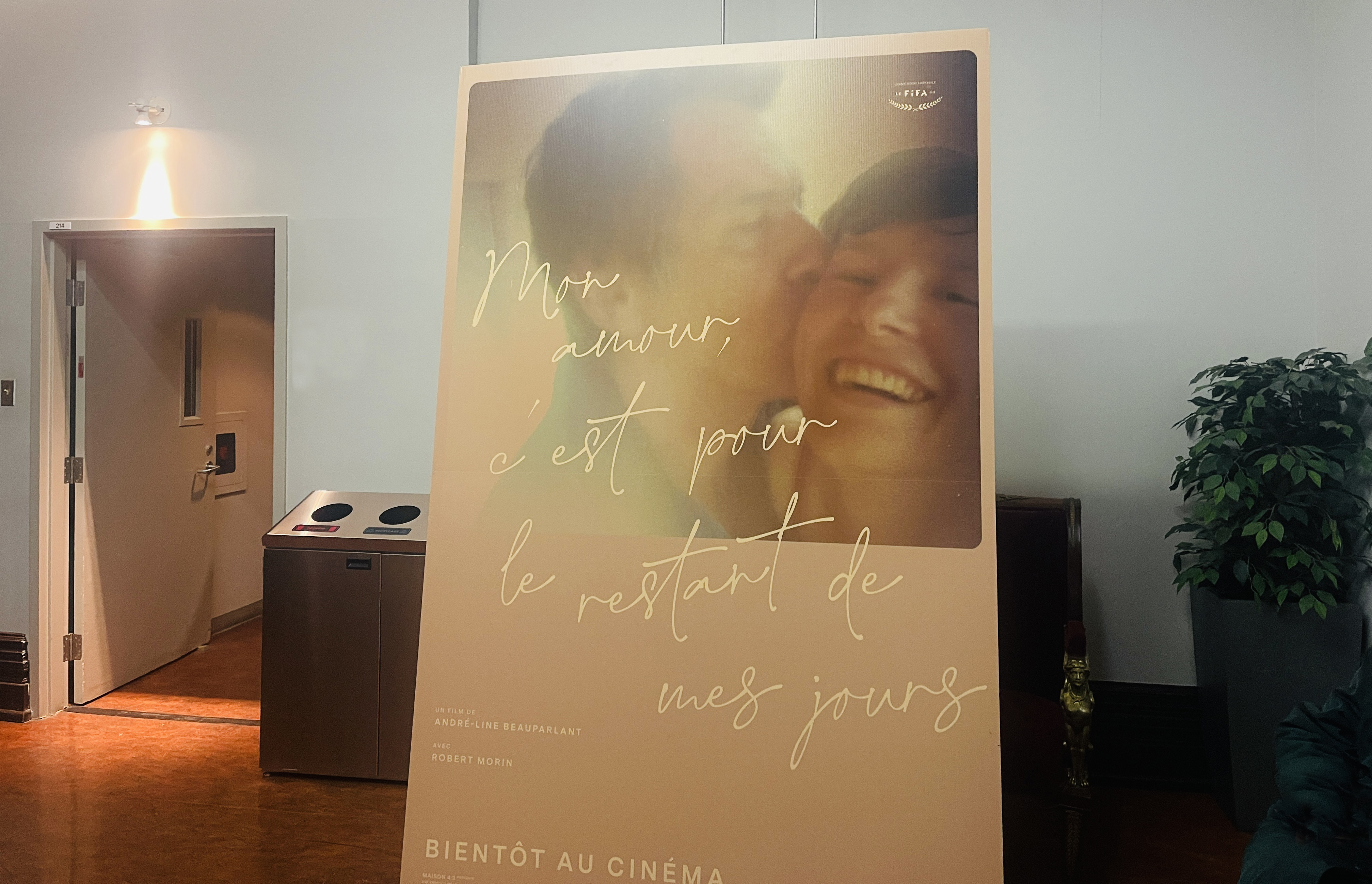
The opening screening also had a special element: both André-Line Beauparlant and Robert Morin were present in the theater, sharing the experience with the audience. It is one of the small kinds of magic that film festivals manage to weave, the direct encounter between a work and the people who created it.
For Morin, the evening carried particular significance. It was the first time he had seen the completed documentary his partner had made about him. Before the screening began, Beauparlant tried to reassure him with a simple phrase: “Everything will be fine, Robert.”
When the lights came up at the end of the film, unanimous applause filled the room. Visibly moved (and perhaps a little overwhelmed by the attention) Beauparlant and Morin went up together to the cinema podium to thank the audience. He told her then that she had done a tremendous job; she received the comment with genuine surprise and a smile.
Thus, amid emotion, complicity, and cinema, the first screening of the 44th edition of the Festival International du Film sur l’Art was officially inaugurated.
El jueves 12 de marzo se inauguró en el teatro Monument-National la 44ª edición del Festival International du Film sur l’Art (FIFA), uno de los encuentros cinematográficos más importantes dedicados al cine sobre arte. La película encargada de abrir el festival fue el documental Mon amour, c’est pour les restant de mes jours, dirigido por la cineasta quebequense André-Line Beauparlant, una obra íntima que explora la vida y la obra de su pareja, el cineasta Robert Morin.
Con una duración de 95 minutos y narrada en francés quebequense, la película se presenta como un retrato profundamente personal. Beauparlant, conocida por su trabajo como directora artística en numerosas producciones del cine quebequense y por documentales dedicados a miembros de su familia, dirige aquí su mirada hacia el compañero con quien comparte su vida desde hace décadas.
Ambos se conocieron cuando Morin tenía 44 años y Beauparlant 27. Ella comenzaba su camino en el cine y trabajaba como decoradora de set en la película Windigo (1994), dirigida por Morin. A partir de ese encuentro comenzó una relación que, con el paso del tiempo, se transformó también en un diálogo creativo.
El documental adopta una forma curiosamente doble. Beauparlant casi nunca aparece en pantalla, pero su presencia es constante: escuchamos su voz, sus reflexiones y las preguntas y declaraciones que le dirige a Morin. La película funciona así como un díptico íntimo. Por un lado, el retrato del cineasta; por el otro, la mirada amorosa (y a veces inquisitiva) de quien lo observa.
Morin, con más de treinta y cinco películas en su trayectoria, se revela como un cineasta profundamente atípico dentro del panorama canadiense. Nunca ha perseguido el cine comercial. Su trabajo ha transitado por distintos formatos a lo largo de los años: desde el Super 8 hasta el video magnético y, más recientemente, el medio digital. Beauparlant revisita los archivos de su compañero y muestra cómo cada cambio tecnológico fue para él una oportunidad de exploración.
Cuando ella le pregunta cómo definiría su arte, Morin responde con una franqueza desarmante: le interesa mostrar aquello que sacude al espectador, lo que lo incomoda. Confiesa que hacer arte es lo que le ayuda a combatir la depresión; el arte, admite, es su adicción.
En uno de los pasajes más reveladores del documental, Morin habla del “peso de los sueños”: esas películas que existen en la imaginación pero que nunca logran realizarse. Para él, parte del oficio consiste en aceptar el fracaso de ciertos proyectos que jamás verán la luz. Aun así, cada vez que se sienta frente a su computadora siente que entra en una especie de santuario.
Esa dedicación absoluta al trabajo artístico también implica un grado de egoísmo, reconoce el propio cineasta. Explica que siempre intentó evitar distracciones que pudieran alejarlo de su creación. Tuvo dos hijos en relaciones anteriores, pero con Beauparlant no formó una familia en ese sentido.
A lo largo de la conversación emerge también una dimensión más oscura de su biografía. Morin recuerda un episodio traumático de su infancia: caminaba con un amigo cuando, de pronto, un autobús lo atropelló. El niño murió en el acto mientras él permanecía ileso. La imagen de la sangre y los huesos marcó profundamente su memoria; durante días, cuenta, perdió incluso la noción del tiempo.
La muerte volvería a aparecer en su vida de otras formas. Su padre sufrió un accidente al chocar contra un tren y quedó postrado durante años, y su relación con él fue distante, sin afecto. Más tarde, su madre moriría en un incendio provocado por una decoración navideña.
Sin embargo, el documental deja claro que Morin no es una figura sombría ni fatalista. Más bien parece alguien que ha aprendido a convivir con la presencia constante de la pérdida.
Esa reflexión sobre la muerte atraviesa también el proyecto cinematográfico que Morin intenta realizar durante los años en que Beauparlant lo filma. Se trata de una ficción centrada en un alce herido por una flecha que, consciente de su final, se recuesta en el bosque para esperar la muerte. El director quiere filmar cómo el cuerpo se convierte en alimento para otros seres: osos, coyotes, carroñeros y, posteriormente se degrada.
Pero la naturaleza no coopera con el guion. Apenas aparecen algunos buitres, ciertas aves y ocasionalmente un zorro. La obstinación del cineasta por capturar ese momento se vuelve casi absurda y, al mismo tiempo, profundamente humana. Incluso llega a utilizar pequeños trucos manuales para simular la respiración del alce agonizante, intentando registrar los últimos estertores del animal.
En contraste con esa obsesión por la muerte, el documental de Beauparlant parece estar guiado por otra fuerza. En un momento de la película, Morin le pregunta a su pareja si ella piensa en la muerte. Ella responde que no. Él, en cambio, admite que sí lo hace con frecuencia.
Entonces ella formula una especie de conclusión silenciosa: si la película de Morin sobre el alce es un intento por comprender la muerte, la suya es, en cambio, una película sobre el amor.
La proyección de apertura tuvo además un elemento especial: tanto André-Line Beauparlant como Robert Morin se encontraban presentes en la sala, compartiendo la experiencia con el público. Esa es una de las pequeñas magias que los festivales de cine consiguen tejer: el encuentro directo entre las obras y quienes las crean.
Para Morin, la velada tenía un significado particular. Era la primera vez que veía terminado el documental que su pareja había realizado sobre él. Antes de que comenzara la proyección, Beauparlant intentó tranquilizarlo con una frase sencilla: “Todo irá bien, Robert”.
Al encenderse las luces al final de la película, un aplauso unánime llenó la sala. Visiblemente conmovidos (y también un poco abrumados por la atención) Beauparlant y Morin subieron juntos al podio del cine para agradecer la recepción. Él le dijo entonces que había hecho un trabajo tremendo; ella, sorprendida, recibió el comentario con una sonrisa genuina.
Así, entre emoción, complicidad y cine, quedó inaugurada la primera proyección de la 44ª edición del Festival International du Film sur l’Art.

Philippe Katerine, Wajdi Mouawad, Gustavo Dudamel, Amadou et Mariam, Patrice Vermette,
André-Line Beauparlant, Robert Morin, Marlene Millar, Darlene Naponse, Ai Wei Wei, Tina Modotti, L’Opéra de Paris, Isabelle Adjani, Caravaggio, Gilbert & George, Rimbaud, Fellini, Chaplin, TATE Modern, Reina Sofía, Le Prado, National Gallery Singapore.
En salle du 12 au 22 mars et en ligne du 20 au 29 mars
à Montréal - à Québec - en ligne.
BANDE-ANNONCE | Le FIFA 44:
|

Montréal, le 19 février 2026 - Le plus grand festival dédié aux films sur l’art et aux films d’art au monde vous invite en salle à Montréal et à Québec du 12 au 22 mars et en ligne du 20 au 29 mars prochains. Venez découvrir le meilleur du film sur l’art avec une programmation au cœur de nos questionnements qui transcende les frontières de l’imagination.
|
Pour rappel, la 44e édition du Festival ouvrira avec Mon amour: c'est pour le restant de mes jours d’André-Line Beauparlant (Canada) en première mondiale. Projeté en salle, le jeudi 12 mars au Monument National à Montréal en présence de la réalisatrice, de Robert Morin et de l’équipe du film, il sera également en ouverture du FIFA à Québec, le vendredi 13 mars au Musée national des beaux-arts du Québec (MNBAQ).
|

 Cette année, le cinéma espagnol s'est imposé dans notre programmation par la force de ses productions. Portrait de l'architecte Enric Miralles récompensé d'un Lion d'or à la Biennale d'architecture de Venise (Miralles), film portant sur un immense talent du flamenco (Farruquito: A Flamenco Dynasty) ou encore documentaire retraçant le parcours d'un des créateurs de mode les plus doués de sa génération (The Designer is Dead), c'est une Espagne plurielle et contemporaine qui est racontée à travers les films que nous présentons.


La segunda edición de la Semaine de la Critique de Montréal se llevó a cabo en el Cinéma du Musée, consolidando un espacio de encuentro que, apenas en su segunda edición, muestra una claridad de propósito y una sensibilidad curatorial pocas veces vistas en la ciudad. Fundada por la revista en línea Panorama-cinéma, la Semana se define como un festival no competitivo, un lugar de encuentro entre cineastas, críticos, investigadores y público general, con el objetivo de fomentar el diálogo, la reflexión y la experimentación cinematográfica.
Montreal se inserta así en una genealogía internacional de semanas de la crítica. Desde 1962, la Semaine de la Critique de Cannes, organizada por el Syndicat français de la critique de cinéma, ha funcionado como un espacio para descubrir las primeras y segundas películas de directores de todo el mundo, legitimando la crítica como práctica activa y no como comentario posterior. Paralelamente, la Critics’ Week de Berlín ha trabajado bajo el principio de que la crítica es una agenda: un lugar donde se discuten política, estética y formas de percepción, cuestionando cómo vemos las películas y qué cine deseamos. La Semana de la Crítica de Montreal se inserta en este legado, sin pretender competir, pero adoptando la misma filosofía: cine como conversación, como exploración y como construcción colectiva de significado.

Al llegar, cada acreditado recibía un pase singular: una pulsera de cuentas con letras que componían su nombre, elaborada por un artesano. Un objeto simple, hecho a mano, que desplazaba la acreditación del protocolo al gesto, y anunciaba desde el inicio una relación cercana y encarnada con la experiencia cinematográfica.
En Montreal, este tipo de experiencia se vuelve aún más relevante ante la ausencia del Festival du Film du Monde, que, tras décadas de actividad desde su primera edición en 1977, concluyó en 2019. Ese festival, reconocido por la F.I.A.P.F. y considerado internacionalmente como de gran envergadura, dejó un vacío que, afortunadamente, otros festivales independientes han comenzado a llenar. Entre ellos se cuentan el Festival Internacional de Documentales de Montreal, el Festival Internacional de Presencia Autóctona, el Festival du nouveau cinéma de Montréal y festivales especializados que, como la Semana de la Crítica o incluso el Festival Internacional de Cine sobre Arte buscan nutrir la comunidad cinematográfica, fomentar cruces interdisciplinarios y sostener la curiosidad del público. En este ecosistema, Montreal demuestra que la ciudad sigue viva, diversa y culturalmente fértil, incluso ante la desaparición de un gran festival.
La experiencia en la sala de Cinéma du Musée confirma esta idea. Se trata de un espacio acogedor y cuidado, donde la programación artística e independiente se combina con la posibilidad de asistir a funciones dobles o triples, y donde la comunidad de espectadores (estudiantes, investigadores, cinéfilos y cineastas) se involucra activamente. La interacción es constante: mientras se espera la proyección, se comentan las películas, se trabaja, se hace networking. Las preguntas y respuestas con los directores, la venta de revistas, carteles y merchandising, los pequeños gestos lúdicos como comprar palomitas o un totebag, crean un ecosistema de cine desbordado, donde el acto de ver la película se desplaza de su lugar central para integrarse en una experiencia crítica, relacional y contextual.
Entre las proyecciones de esta edición, Magallanes, de Lav Díaz, condensó de manera ejemplar el espíritu de la Semana. La película, situada en Filipinas y contada desde la perspectiva de los colonizados, desplaza la narrativa tradicional de la conquista y ofrece una revisión de la historia desde una mirada decolonial, investigada y reconstruida por el propio director. Su enfoque, lúcido, lúdico y confrontacional, resume la ambición de la Semana: cine que piensa, cuestiona y genera conversación.
Junto a Magallanes, la programación ofreció una serie de películas que destacaron por su diversidad formal y política. Cada obra, a su manera, dialogó con el marco curatorial de esta edición: explorando paisajes, cuerpos, sueños y tensiones sociales; combinando intimidad y epicidad; invitando al espectador a participar, reflexionar y emocionarse.

Water Sports de Whammy Alcazaren (Filipinas, 2024, 19'', Tagalog con subtítulos en inglés) es un cortometraje que condensa múltiples tensiones en un formato breve y visualmente intenso. Su estética casi cuadrada, con colores saturados deliberadamente “posterizados”, transmite el calor abrumador de Filipinas y el bochorno físico de los jóvenes protagonistas, estudiantes que entrenan lo que parece ser el servicio social militar. La película no muestra armas ni escenas de combate; centra la atención en la encarnación de la masculinidad a través del cuerpo, la disciplina y la cooperación, especialmente en la relación sutilmente LGBTQ de una pareja que se ayuda, se carga y se cuida entre sí. La repetición de la botella amarilla de agua funciona como un símbolo inquietante, mientras que la puesta en escena con hojas marchitas, moho y óxido refuerza la sensación de un mundo afectado por el calentamiento global y la corrupción institucional. Con sus juegos visuales y ritmo casi gif-animado, Water Sports logra que el espectador sienta físicamente el calor y la tensión de sus personajes, mostrando cómo la economía del tiempo breve puede amplificar la intensidad estética y política de una obra.

Revelations of Divine Love de Caroline Golum (73'', Estados Unidos, 2025, inglés) es un segundo largometraje que revisita la vida de la mística Julian de Norwich, primera autora femenina en inglés, y lo hace con un enfoque a la vez histórico y radicalmente estético. Ambientada en el siglo XIV, la película narra la reclusión de Julian tras experimentar visiones extraordinarias, utilizando maquetas que muestran el paso de las estaciones y un detallado diseño de vestuario y escenografía para reconstruir la Edad Media de manera ingeniosa y psicodélica. La obra recuerda en su teatralidad y precisión visual a Perceval el galés (Éric Rohmer, 1979), pero con un estilo más nítido y contemporáneo, donde las piedras y muros, aunque artificiales, sirven al ritmo narrativo y a la construcción del espacio. El tratamiento del sonido, minucioso y envolvente, refuerza el carácter meditativo de la película, mientras que el lenguaje elevado y epistemológico de Julian aporta una reflexión profunda sobre la experiencia mística, creando un diálogo entre lo histórico y lo imaginativo que resulta fascinante y envolvente.

Entiérranos en un desierto solitario de Nguyễn Lê Hoàng Phúc (Vietnam, 2025, 62'', vietnamita con subtítulos en inglés) es un largometraje que combina ternura, humor y reflexión sobre la muerte y el duelo. La película comienza con un ladrón que intenta robar una casa y termina cautivado por el dueño, un anciano viudo obsesionado con reunirse con su esposa fallecida. Lo que podría parecer un relato simple se convierte en un juego de pactos, cuidado mutuo y construcción de intimidad entre el anciano y su inesperado acompañante. La película experimenta con el formato visual, pasando de un encuadre circular al abrirse en el desierto, y utiliza la arena mostaza como un recurso poético que acompaña la eutanasia voluntaria del protagonista, así como su reunión simbólica con la esposa momificada. Con un tono absurdamente tierno, la obra recuerda a Taste of Cherry de Kiarostami en su delicadeza hacia temas difíciles, pero lo hace mediante un humor sutil y un afecto tangible entre los personajes. La narrativa circula entre la muerte, el duelo y la eutanasia, pero nunca pierde ligereza ni empatía, convirtiendo un acto final tan fuerte en una experiencia conmovedora, entretenida y profundamente humana.

Estoy Sintiendo Algo de Nuno Pimentel (Portugal, 2026, 13 min, sin diálogo, subtítulos en inglés) es un cortometraje de estreno mundial que despliega su narrativa en paisajes aparentemente desprovistos de presencia humana, donde la vida persiste a través de subtítulos autogenerados que describen acciones y emociones invisibles en la imagen. La obra juega con un humor sutil, memético, y con una relación entre texto e imagen que recuerda a los intertítulos del cine silente, pero en clave contemporánea y minimalista. Lejos de crear atmósferas impresionistas o paisajes cautivadores, Pimentel apuesta por la simplicidad y la experimentación con el lenguaje escrito, generando un efecto poético y ligero que involucra al espectador en un acto de lectura activa y contemplación. Su estreno fue recibido con calidez, celebrando la valentía de presentar una obra que explora cómo la narrativa y la emoción pueden surgir de lo que no se ve, sino de lo que se sugiere.
Cada una ofreció un gesto singular: algunas desafiaron formalmente la narrativa, otras reflexionaron sobre temas políticos y sociales, y todas contribuyeron a crear un diálogo abierto y enriquecedor con el público, confirmando que Montreal está en camino de construir una tradición crítica propia, accesible y estimulante, en paralelo con los grandes ejemplos internacionales de Cannes y Berlín.
En conjunto, esta segunda edición de la Semana de la Crítica de Montréal confirma la vitalidad del cine independiente y reflexivo en la ciudad. Espacios como este no solo permiten descubrir nuevas voces, sino que también construyen una comunidad crítica, interdisciplinaria y accesible, donde el cine se experimenta como diálogo y encuentro. Montreal, con esta Semana, demuestra que incluso ante la desaparición de grandes festivales, su ecosistema cinematográfico sigue vivo, diverso y capaz de inspirar a cineastas, investigadores y espectadores por igual.

On January 16, during Montreal’s Critics’ Week, I attended the screening of Magellan, a daring collaboration between the renowned Mexican actor Gael García Bernal and the Filipino filmmaker Lav Diaz. The screening was accompanied by a brief introduction and a post-film conversation with Lav Diaz, whose reflections offered rare insight into a work that is at once historically rigorous, aesthetically radical, and ethically fearless.
Magellan is not a conventional historical epic. Rather than reaffirming the dominant Western narrative of Ferdinand Magellan’s circumnavigation, the film deliberately destabilizes it by adopting a Filipino perspective, one that questions not only colonial historiography, but also the myths that nations construct around their founding heroes. Lav Diaz spent nearly seven years researching the project, consulting archives and libraries across multiple countries, including Spain, Portugal, and the United States. This prolonged investigation is felt throughout the film, not as didactic exposition, but as a slow, deliberate reconstruction of history that refuses simplification.
Filipino director Lav Diaz on January 16 at Cinéma du Musée during the Q&A.
The narrative follows Magellan from his early military campaigns in Southeast Asia to the final stages of his expedition in the Philippine archipelago. Central to the film is Enrique, Magellan’s slave and translator, displaced from Malacca (city in Malaysia) through early colonial trade networks. It is through Enrique’s perspective that the film ultimately overturns historical convention: the legendary figure of Datu (chieftain) Lapu-Lapu, long celebrated as the architect of Magellan’s death, is revealed as a fabrication. Instead, the film suggests that Magellan was killed by Rajah Humabon and his forces, a revelation that radically reframes the story of conquest, resistance, and historical memory.
This narrative choice is profoundly controversial. In the Philippines, Lapu-Lapu is a national hero, commemorated by monuments and statues. To question his existence is to question the very foundations of a national historical narrative. Yet Lav Diaz approaches this provocation not as an act of negation, but as an invitation to reconsider how history is written, remembered, and instrumentalized. Magellan does not seek to replace one heroic myth with another; it seeks to expose the mechanisms by which myth itself is produced.
Gael García Bernal as Magellan in the dense Philippine jungle.
The casting of Gael García Bernal as Magellan reinforces the film’s transhistorical and transnational dimension. Lav Diaz has pointed to the profound parallels between the colonial histories of Mexico and the Philippines, both shaped by Spanish expansion during the same historical moment, yet articulated across opposite geographic poles of the empire. This resonance is particularly striking from a Mexican perspective. In Tabasco, where the Spanish first established a foothold on the mainland and faced early indigenous resistance at the Battle of Centla, the figure of Hernán Cortés emerges as a historical counterpoint to Magellan, who was another conqueror whose legacy is inseparable from violence, mythmaking, and the erasure of Indigenous voices. In this sense, Magellan gestures toward a broader, interconnected colonial history that transcends national boundaries.
Formally, the film is as radical as its historical thesis. Lav Diaz rejects cinematic ostentation, working instead with minimal equipment and a reduced crew. The opening shot presents an Indigenous woman encountering the white invader for the first time: her surprise and flight dominate the scene, while the man’s face remains off-screen. Filmed entirely by Lav Diaz on his own, the shot establishes an intimate visual language that runs throughout the film. The cinematography is marked by high contrasts, extended takes, and a deliberate pacing that resists narrative urgency. Each shot unfolds according to its own internal rhythm, allowing time to accumulate rather than dissipate.
One of the film’s most striking strategies is its systematic demystification of the conquistadors. Rather than portraying them as triumphant or heroic figures, Lav Diaz reduces them to fallen humans, mere mortals, vulnerable bodies that are often grotesquely human. In the end, the camera confronts the consequences of their actions without glorification, underscoring their mortality and fragility. In one memorable scene following a military victory in Malacca, Afonso de Albuquerque delivers a rousing speech only to collapse drunkenly onto the ground, where he remains, inert and undignified. Across the film, battlefields are littered with bodies (dead, dying, or already lifeless) lying in various positions, stripped of narrative emphasis or heroic framing. This repeated imagery of fallen or sleeping bodies serves a dual purpose: it highlights the human cost of conquest and emphasizes the vulnerability and mortality of the oppressors, stripping away any illusion of glory.
This attention to the body extends beyond death to everyday existence. Magellan includes numerous scenes of complete nudity, portraying men and women as they would have lived in the early sixteenth century. Lav Diaz has spoken openly about the difficulty of filming these scenes, noting that he spent months convincing performers that the nudity was neither pornographic nor exploitative, but historically and ethically necessary. The result is a naturalistic depiction of the human body as historical evidence, an archive inscribed with vulnerability, labor, and exposure.
Violence, too, is treated with remarkable restraint. Rather than staging executions or massacres in graphic detail, Lav Diaz often directs the camera toward those who order the violence, not those who physically enact it. The act itself frequently occurs off-screen. This choice stands in stark contrast to contemporary cinema and television, where violence is often aestheticized and fetishized. In Magellan, violence is neither sensationalized nor sanitized; it is rendered through absence, implication, and moral weight.
Magellan on a raft on a river. Photo courtesy of Janus Films.
Although often described as contemplative cinema, Magellan goes beyond mere contemplation. What the viewer is invited to contemplate is not only the image, but the slow, laborious process of historical reconstruction itself. Lav Diaz refuses to accelerate history for the sake of narrative efficiency. Instead, he allows time to function as an ethical dimension of the film, time to observe, to endure, and to reckon with the consequences of colonial violence.
It is also worth noting that Magellan was co-produced by Albert Serra, the Catalan filmmaker known for his radically subversive approach to historical cinema. Serra’s involvement situates the film within a lineage of contemporary auteurs who systematically dismantle heroic narratives and challenge the aesthetic conventions of the historical genre. His presence as co-producer reinforces Magellan’s commitment to anti-spectacle, temporal rigor, and ethical discomfort. Furthermore, Magellan marks Lav Diaz’s first color film in over a decade, following a long period in which his work was predominantly shot in black and white. The return to color is not ornamental but deeply considered, aligning with the film’s project of historical reconstruction and sensory immersion, and signaling a new yet coherent phase in Lav Diaz’s cinematic practice.
Ultimately, Magellan is a film about perspective, power, and historical authorship. By ultimately redirecting the narrative toward the enslaved Enrique and dismantling the myth of the conquering hero, Lav Diaz reveals history as a contested terrain rather than a closed record. The film reminds us that history is not a neutral inheritance, but a construction shaped by omission, domination, and repetition. In reclaiming cinema as a space for historical interrogation, Magellan offers not answers, but a profoundly necessary disturbance, one that resonates far beyond the Philippines, reaching into the shared colonial histories of the global South.
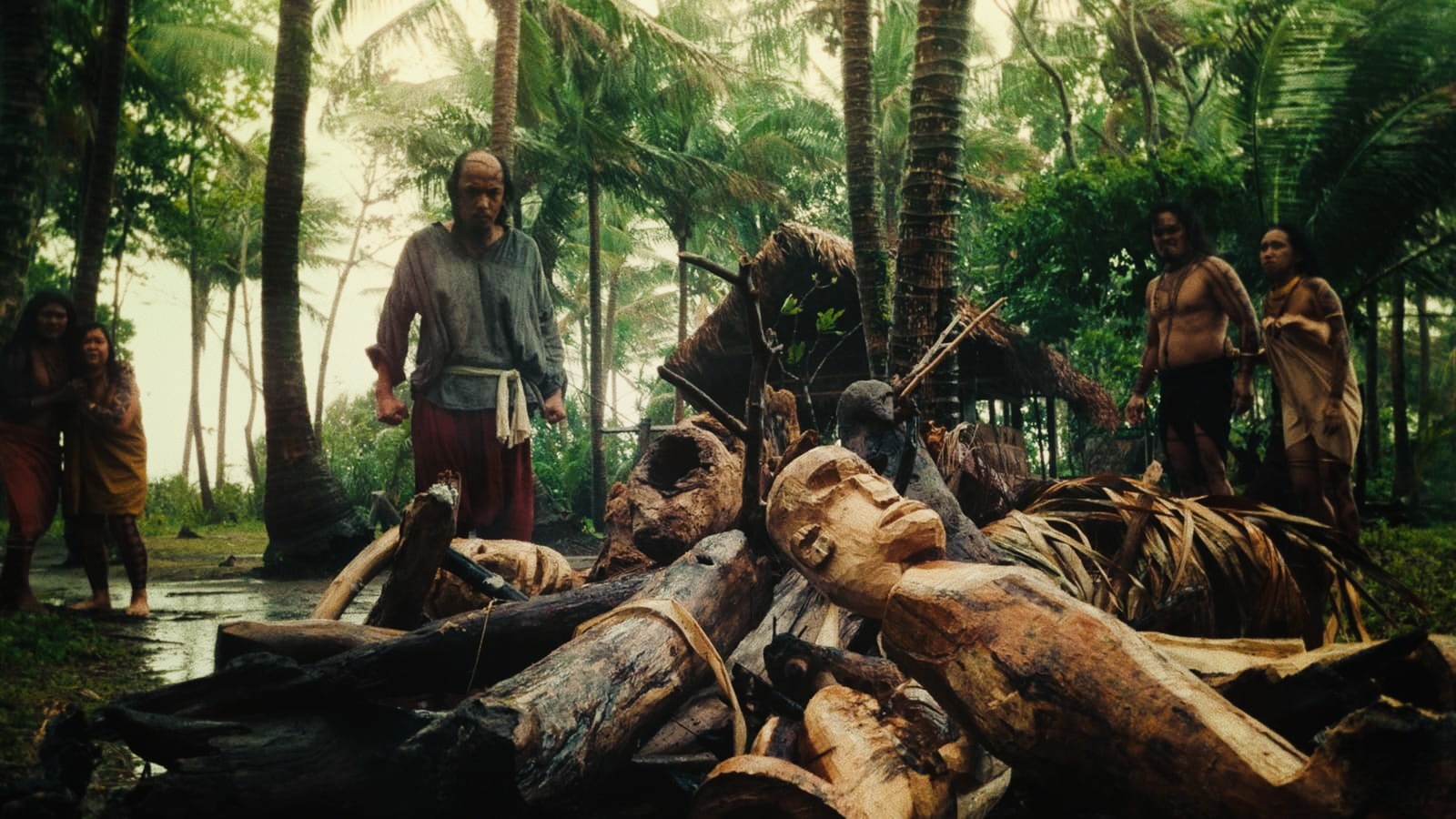
Wooden idols burned following the community’s conversion to Christianity, as villagers watch in silence. Photo courtesy of Janus Films.
El 16 de enero, durante la Segunda Semana de la Crítica de Montreal, asistí a la proyección de Magallanes, una colaboración audaz entre el reconocido actor mexicano Gael García Bernal y el cineasta filipino Lav Diaz. La función estuvo acompañada por una breve introducción y un conversatorio posterior con Lav Diaz, cuyas reflexiones ofrecieron una mirada poco común a una obra que es, al mismo tiempo, históricamente rigurosa, estéticamente radical y éticamente intrépida.
Magallanes no es una epopeya histórica convencional. En lugar de reafirmar el relato occidental dominante sobre la circunnavegación de Fernando de Magallanes, la película lo desestabiliza deliberadamente al adoptar una perspectiva filipina, que cuestiona no solo la historiografía colonial, sino también los mitos que las naciones construyen en torno a sus héroes fundacionales. Lav Diaz dedicó cerca de siete años a la investigación del proyecto, consultando archivos y bibliotecas en distintos países, entre ellos España, Portugal y Estados Unidos. Esta investigación prolongada se percibe a lo largo del filme, no como una exposición didáctica, sino como una reconstrucción histórica lenta y deliberada que se resiste a la simplificación.
El director filipino Lav Diaz el 16 de enero en el Cinéma du Musée durante la sesión de preguntas y respuestas.
La narrativa sigue a Magallanes desde sus primeras campañas militares en el sudeste asiático hasta las etapas finales de su expedición en el archipiélago filipino. En el centro del filme se encuentra Enrique, esclavo y traductor de Magallanes, desplazado desde Malaca (ciudad de Malasia) a través de las primeras redes coloniales de comercio. Es desde la perspectiva de Enrique que la película subvierte finalmente la convención histórica: la figura legendaria de Datu (cacique) Lapu-Lapu, largamente celebrada como el artífice de la muerte de Magallanes, se revela como una fabricación. En su lugar, la película sugiere que Magallanes fue asesinado por Rajah Humabon (cebuano) y sus fuerzas, una revelación que reconfigura de manera radical la historia de la conquista, la resistencia y la memoria histórica.
Gael García Bernal como Magallanes en la densa selva filipina.
El reparto de Gael García Bernal como Magallanes refuerza la dimensión transhistórica y transnacional de la película. Lav ha señalado los profundos paralelismos entre las historias coloniales de México y Filipinas, configuradas por la expansión española durante un mismo periodo histórico, pero articuladas en polos geográficos opuestos del imperio. Esta resonancia resulta especialmente significativa desde una perspectiva mexicana. En Tabasco, donde los españoles establecieron por la fuerza su primer enclave en tierra firme, enfrentaron una temprana resistencia indígena en la mítica Batalla de Centla, la figura de Hernán Cortés emerge como un contrapunto histórico de Magallanes, otro "conquistador" cuyo legado es inseparable de la violencia, la mitificación y la invisibilización de las voces indígenas. En este sentido, Magallanes apunta hacia una historia colonial más amplia e interconectada, que trasciende las fronteras nacionales.
En el plano formal, la película es tan radical como su tesis histórica. Lav Diaz rechaza la ostentación cinematográfica y trabaja, en cambio, con equipo mínimo y un equipo humano reducido. El plano inicial muestra a una mujer indígena que se topa por primera vez con el invasor blanco: su sorpresa y fuga dominan la escena, mientras el rostro del hombre permanece fuera de campo. Filmada completamente por Lav Diaz en solitario, esta toma establece un lenguaje visual íntimo que atraviesa toda la película. La cinematografía se caracteriza por altos contrastes, tomas prolongadas y un ritmo deliberado que resiste la urgencia narrativa. Cada plano se despliega según su propio ritmo interno, permitiendo que el tiempo se acumule en lugar de disiparse.
Una de las estrategias más contundentes del filme es la desmitificación sistemática de los conquistadores. En lugar de representarlos como figuras triunfantes o heroicas, Lav Diaz los reduce a humanos caídos, simples mortales, cuerpos vulnerables y, a menudo, grotescamente humanos. Al final, la cámara muestra la consecuencia de sus actos sin glorificación, enfatizando su mortalidad y fragilidad. En una escena memorable posterior a una victoria militar en Malaca, Afonso de Albuquerque pronuncia un discurso exaltado solo para desplomarse borracho en el suelo, donde permanece inerte y despojado de dignidad con sus huestes riendo ante tal escena. A lo largo de la película, los campos de batalla aparecen cubiertos de cuerpos (muertos, moribundos o ya sin vida) tendidos en diversas posiciones, despojados de énfasis narrativo o encuadres heroicos. Esta reiterada imaginería de cuerpos caídos o dormidos cumple una doble función: subraya el costo humano de la conquista y enfatiza la vulnerabilidad y mortalidad de los opresores, desmantelando cualquier ilusión de gloria.
Esta atención al cuerpo se extiende más allá de la muerte hacia la vida cotidiana. Magallanes incluye numerosas escenas de desnudez total, retratando a hombres y mujeres tal como habrían vivido a inicios del siglo XVI. Lav Diaz ha hablado abiertamente sobre la dificultad de filmar estas escenas, señalando que pasó meses convenciendo a las intérpretes de que la desnudez no era pornográfica ni explotadora, sino histórica y éticamente necesaria. El resultado es una representación naturalista del cuerpo humano como evidencia histórica, un archivo inscrito de vulnerabilidad, trabajo y exposición.
La violencia, asimismo, es tratada con una notable contención. En lugar de escenificar ejecuciones o masacres con detalle gráfico, Lav Diaz suele dirigir la cámara hacia quienes ordenan la violencia, no hacia quienes la ejecutan físicamente. El acto en sí ocurre con frecuencia fuera de campo.Esta elección contrasta de manera frontal con el cine y la televisión contemporáneos, donde la violencia se estetiza y se fetichiza, vaciándose de sentido moral y reduciendo la experiencia humana a espectáculo. En Magallanes, la violencia no se espectaculariza ni se suaviza; se articula a través de la ausencia, la insinuación y el peso moral.
Magallanes en una balsa en un río. Foto cortesía de Janus Films.
Aunque a menudo se describe como cine contemplativo, Magallanes va más allá de la mera contemplación. Lo que se invita al espectador a contemplar no es solo la imagen, sino el proceso lento y laborioso de la reconstrucción histórica en sí misma. Lav Diaz se niega a acelerar la historia en nombre de la eficiencia narrativa. En su lugar, permite que el tiempo funcione como una dimensión ética de la película: tiempo para observar, para soportar y para confrontar las consecuencias de la violencia colonial.
Cabe destacar también que Magallanes fue coproducida por Albert Serra, el cineasta catalán conocido por su enfoque radicalmente subversivo del cine histórico. La participación de Serra sitúa la película dentro de una genealogía de autores contemporáneos que desmantelan sistemáticamente los relatos heroicos y cuestionan las convenciones estéticas del género histórico. Su presencia como coproductor refuerza el compromiso de Magallanes con el antiespectáculo, el rigor temporal y la incomodidad ética. Además, Magallanes marca la primera película en color de Lav Diaz en más de una década, tras un largo periodo en el que su obra fue predominantemente filmada en blanco y negro. El regreso al color no es ornamental, sino profundamente reflexivo, en consonancia con el proyecto de reconstrucción histórica e inmersión sensorial de la película, y señala una nueva (aunque coherente) etapa en la práctica cinematográfica de Lav Diaz.
En última instancia, Magallanes es una película sobre la perspectiva, el poder y la autoría histórica. Al subvertir finalmente la narrativa estratégica en el esclavo Enrique y desmantelar el mito del héroe conquistador, Lav Diaz expone la historia como un territorio en disputa más que como un registro cerrado. La película nos recuerda que la historia no es una herencia neutral, sino una construcción moldeada por la omisión, la dominación y la repetición. Al reclamar el cine como un espacio para la interrogación histórica, Magallanes no ofrece respuestas, sino una perturbación profundamente necesaria, que resuena mucho más allá de Filipinas y alcanza las historias coloniales compartidas del Sur Global.
Esta elección narrativa es profundamente controversial. En Filipinas, Lapu-Lapu es un héroe nacional, conmemorado por monumentos y estatuas. Cuestionar su existencia implica poner en duda los propios cimientos de una narrativa histórica nacional. Sin embargo, Lav Diaz aborda esta provocación no como un acto de negación, sino como una invitación a reconsiderar cómo se escribe, se recuerda y se instrumentaliza la historia. Magallanes no busca reemplazar un mito heroico por otro; busca exponer los mecanismos mismos mediante los cuales el mito es producido.
Ídolos de madera quemados tras la conversión de la comunidad al cristianismo, mientras los aldeanos observan en silencio. Foto cortesía de Janus Films.

Lav Diaz, Caroline Golum et Robert Morin parmi les invité·e·s
Montréal, le mardi 6 janvier 2026 - La Semaine de la critique de Montréal est heureuse d’annoncer les invité·e·s de sa deuxième édition qui se déroulera du 12 au 18 janvier au Cinéma du Musée. L’événement, centré autour de la discussion et des échanges, aura le plaisir d'accueillir un bon nombre de réalisateurs et réalisatrices en provenance du Mexique (Racornelia), du Portugal (Nuno Pimentel), de la Suisse (Nicolas Wadimoff), des États-Unis (Caroline Golum) et des Philippines (Lav Diaz). Il laissera également la part belle aux cinéastes d’ici qui viendront présenter leurs films en première mondiale, notamment Robert Morin, Olivier Godin, Ariane Falardeau St-Amour, Paul Chotel, Samuel Terry Pitre, Christopher Beaulieu, Renaud Després-Larose et Ana Tapia Rousiouk. Les cinéastes Charles-André Coderre, Ralitsa Doncheva, Mike Hoolboom et Alex Lo seront également au festival pour accompagner leurs plus récentes œuvres.
Composée de 26 courts, moyens et longs métrages, cette nouvelle édition proposera un voyage cinématographique avec 7 premières mondiales, 2 premières nord-américaines, 5 premières canadiennes, 8 premières québécoises et 10 discussions placées à la fin de chacun des programmes, permettant la rencontre avec 18 cinéastes et 10 panélistes.
LES VOILES - Lundi 12 janvier à 18 h 30
Coprésentée par le Goethe-Institut Montréal, la soirée d’ouverture se tiendra le lundi 12 janvier à 18 h 30 au Cinéma du Musée avec la première mondiale de Cauchemar Conseil, deuxième long métrage de Renaud Després-Larose et Ana Tapia Rousiouk (Le rêve et la radio). Le duo de cinéastes sera présent pour l’occasion, avant d’accompagner le film au Festival international du film de Rotterdam (IFFR) deux semaines plus tard. La séance débutera avec la projection du court métrage A Thousand Waves Away de la réalisatrice allemande Helena Wittmann, projeté en première canadienne.
Invité·e·s: Les cinéastes Renaud Després-Larose, Ana Tapia Rousiouk et leur équipe Modération: Thomas Filteau, membre du comité de rédaction de Panorama-cinéma
Information: semainedelacritique.ca/#lundi-12-janvier-2026
VERS L’EXTASE - Mardi 13 janvier à 18 h 30
Le programme triple proposé pour cette deuxième journée du festival sera coprésenté par la revue Hors Champ et réunira les films Water Sports de Whammy Alcazaren, Revelations of Divine Love de Caroline Golum et Oublie pas le gruau de Olivier Godin, présenté en première mondiale. Sur le panel figurent les cinéastes Caroline Golum et Olivier Godin, ainsi que Eric Jacobus, qui prête les mouvements de son corps au protagoniste de God of War, Kratos.
Invité·e·s : Les cinéastes Caroline Golum et Olivier Godin et l’acteur et cascadeur américain Eric Jacobus
Modération : Maude Trottier, rédactrice en chef de la revue Hors Champ
Information : semainedelacritique.ca/#mardi-13-janvier-2026
LES COMPAGNONS - Mercredi 14 janvier à 18 h 30
Coprésenté par Fugues, ce programme triple proposera La dureté du mental de Charles-André Coderre, Last Night I Conquered the City of Thebes de Gabriel Azorín et Drunken Noodles de Lucio Castro. Un trio de films tendres et perspicaces sur l’amitié masculine, entre les bains antiques de Thèbes et les satyres de la forêt new-yorkaise.
Invité·e·s: Le cinéaste Charles-André Coderre, Yves Lafontaine, rédacteur en chef de Fugues et Laurence Perron,
membre du comité de rédaction de Panorama-cinéma et éditrice de Liberté
Modération: Mélopée B. Montminy, autrice et membre du comité de programmation
Information: semainedelacritique.ca/#mercredi-14-janvier-2026
TELENOVA - Jeudi 15 janvier à 18 h 30
Ce quatrième programme, coprésenté par la revue 24 images, propose une réflexion féministe à la fois tempétueuse et implacable sur la plasticité de l’image et l’objectification des femmes. Trois films cinglants à découvrir le jeudi 15 janvier à 18 h 30 au Cinéma du Musée: Abortion Party de Julia Mellen, By Design de Amanda Kramer et MACDO de Racornelia.
Invité·e·s : La cinéaste Racornelia, Stéfany Boisvert, membre du comité de rédaction de 24 images et Mustafa
Uzuner, cinéaste et producteur
Modération: Justine Smith, critique de cinéma et membre du comité de programmation
Information: semainedelacritique.ca/#jeudi-15-janvier-2026
MAGELLAN - Vendredi 16 janvier à 14 h 30
La Semaine de la critique de Montréal est fière de s’associer au Cinéma du Musée pour lancer le dernier opus du cinéaste philippin Lav Diaz (Léopard d’or en 2014, Lion d’or en 2016), Magellan, une réécriture brillante et contestataire du récit colonial européen qui met en vedette Gael García Bernal dans le rôle du célèbre navigateur.
Invité: Le cinéaste Lav Diaz
Modération: Ariel Esteban Cayer, directeur de la programmation
Information: semainedelacritique.ca/#vendredi-16-janvier-2026-14h30
CHASSE AUX TRÉSORS - Vendredi 16 janvier à 18 h 30
Ce programme triple portant sur l’absence, le deuil et ses échappatoires ludiques est coprésenté par la revue Spirale. Il réunit le court métrage I’m Feeling Something de Nuno Pimentel, présenté en première mondiale, Bury Us in a Lone Desert de Nguyễn Lê Hoàng Phúc et Pin de Fartie de Alejo Moguillansky.
Invité·e·s: Le cinéaste Nuno Pimentel, Suzanne Beth, membre du comité de rédaction de Spirale et Laurence Ly, cinéaste et producteur.
Modération: Mathieu Li-Goyette, directeur général et membre du comité de programmation
Information: semainedelacritique.ca/#vendredi-16-janvier-2026-18h30
MIKE DE LEON (1947-2025) - Samedi 17 janvier à 14 h 30
Coprésentée par McGill, cette projection hommage au défunt cinéaste philippin Mike De Leon inclut la restauration 4K de son classique de 1981, Kisapmata, accompagnée de Objects Do Not Randomly Fall From the Sky, un court métrage réalisé par une cinéaste de la relève, Maria Estela Paiso. Deux films éminemment politiques qui évoquent les troubles sociaux au pays des Marcos et des Duterte.
Invitées : Maria Hwang, professeure à McGill et Marianne Métivier, cinéaste
Modération: Richard Bolisay, critique de cinéma et membre du comité de programmation
Information: semainedelacritique.ca/#samedi-17-janvier-2026-14h30
AUX PORTES DE LA CITÉ - Samedi 17 janvier à 18 h 30
Cette franche incursion dans la réalité des membres du précariat torontois, où les âmes errent désespérément à la recherche d’un chez-soi, est coprésentée par la revue Liberté. Pour l’occasion, le festival présentera la première mondiale du Otium de Christopher Beaulieu ainsi que Permanent Tourist le film culte en devenir signé par Alex Lo.
Invités: Les cinéastes Alex Lo et Christopher Beaulieu
Modération: Olivier Thibodeau, critique de cinéma et membre du comité de programmation
Information: semainedelacritique.ca/#samedi-17-janvier-2026-18h30
UNE DERNIÈRE NUIT SUR TERRE - Dimanche 18 janvier à 14 h 30
Ce programme de courts métrages mélancoliques réunit Douce prisonnière de Paul Chotel et Ariane Falardeau St-Amour, Last Evenings on Earth de Ralitsa Doncheva, D’époques de Samuel Terry Pitre, 23 Thoughts About My Mother de Mike Hoolboom et Blue Stomach de Nathan Donovan. Une coprésentation de Plein(s) Écran(s).
Invité·e·s: Les cinéastes Paul Chotel, Ariane Falardeau St-Amour, Ralitsa Doncheva, Samuel Terry Pitre, Mike
Hoolboom et Nathan Donovan
Modération: Ariel Esteban Cayer, directeur de la programmation
Information: semainedelacritique.ca/#dimanche-18-janvier-2026-14h30
ATRIUM - Dimanche 18 janvier à 18 h 30
Deux vieux amis et routiers du cinéma documentaire viennent présenter leurs nouvelles œuvres sur le thème de l’exil forcé dans ce programme double coprésenté par la revue Cinémas. C’est la chance d’assister à la première nord américaine de Qui vit encore de Nicolas Wadimoff et à la première mondiale du nouveau film de Robert Morin, Six portraits néoréalistes.
Invité·e·s: Les cinéastes Nicolas Wadimoff et Robert Morin, et Viva Paci, professeure, codirectrice du labdoc
(UQAM) et directrice de la revue Cinémas
Modération: Mathieu Li-Goyette, directeur général et membre du comité de programmation
Information: semainedelacritique.ca/#dimanche-18-janvier-2026-18h30

***
TARIFS DES PASSEPORTS ET BILLETS
Billet individuel (programme double ou triple) : 25$
Billet individuel (projections à 14 h 30) : 15$
Passeport régulier : 140$
Passeport étudiant·e·s & 65 ans et + : 100$
Partenaires
Panorama-cinéma et la Semaine de la critique de Montréal tiennent à souligner le soutien financier du Conseil
des arts du Canada et du Conseil des arts de Montréal, ainsi que celui de leur partenaire de diffusion, le Cinéma
du Musée. Le festival tient également à remercier ses partenaires associés, l’Association québécoise des critiques
de cinéma (AQCC), le Goethe-Institut Montréal, la Semaine de la critique de Berlin (Woche der Kritik), le Cégep
de Saint-Laurent, Plein(s) Écran(s), Tënk Canada, Vidéographe ainsi que ses partenaires de présentation : les
revues 24 images, Cinémas, Fugues, Hors Champ, Liberté et Spirale.
La 2e Semaine de la critique de Montréal
se déroulera du 12 au 18 janvier 2026 au Cinéma du Musée
Informations et achat des billets : www.semainedelacritique.ca
Suivez la Semaine de la critique de Montréal sur Facebook - Instagram

Quatre amies sillonnent les routes de la Türkiye, une terre magnifique aux paysages à couper le souffle, où culture et nature se rencontrent harmonieusement. Ensemble, elles explorent Istanbul, ses bazars, ses mosquées et ses palais, avant de s’émerveiller devant les bassins turquoise de Pamukkale, les cheminées de fées de la Cappadoce et les eaux cristallines de la Méditerranée. Un voyage de rêve !

El Festival Internacional de Documentales de Montreal (RIDM) concluyó ayer su vibrante 28ª edición, a pesar del clima gris de noviembre. De las muchas películas que atrajeron a los asistentes y llenaron las salas, fue el largometraje de Nadia Louis-Desmarchais, Recomposée, el que ganó el codiciado Premio del Público 2025.
Sinopsis: Si bien la película aborda inicialmente una experiencia común a todas las mujeres mestizas, profundiza más en la propia directora. Nacida de madre haitiana y padre italo-quebequés, la joven, criada en una familia adoptiva blanca, examina el racismo internalizado y normalizado que la rodea. Sus reflexiones sobre la crisis de identidad se entrelazan gradualmente con otras relacionadas con el abandono materno. Basándose en archivos, testimonios e historias de personas negras, la cineasta confronta tabúes familiares, momentos incómodos, separaciones y oportunidades perdidas. Una conmovedora e introspectiva búsqueda a través de la cual Nadia Louis-Desmarchais busca reconstruir su propia identidad e historia familiar.
Producida por Paola Arriagada-Nuñez (Pimiento Médias). Distribuida por Noble Arts Inc., el film Recomposée se estrenará durante el invierno de 2026.

LISTA DE GANADORES DE LA EDICIÓN 2025
La ceremonia de entrega de premios se celebró en la Cinemateca Quebequense el sábado 29 de noviembre, donde se entregaron un total de 12 premios a las películas ganadoras de la selección de 2025.
- Gran Premio, Competencia Internacional de Largometrajes
Imago de Déni Oumar Pitsaev (Francia, Bélgica) - Premio Especial del Jurado, Competencia Internacional de Largometrajes - presentado por Vital Distribution
Waking Hours de Federico Cammarata y Filippo Foscarini (Italia) - Gran Premio, Competencia Nacional de Largometrajes - presentado por el Fondo Canadiense de Medios (CMF) y PRIM
Partition de Diana Allan (Palestina, Líbano, Quebec/Canadá) - Premio Especial del Jurado para la Competencia Nacional de Largometrajes - presentado por Télé-Québec y Post-Moderne
Jardin d'enfants de Jean-François Caissy (Quebec/Canadá) - Premio Nuevas Perspectivas - presentado por FIPRESCI y SCAM
Soul of the Foot de Mustafa Uzuner (Canadá, Turquía) - Premio Magnus-Isacsson - presentado con la participación de DOC Québec, ARRQ y Funambules Medios, Cine Político y Película Principal
¿Adónde vamos, Coyote? de Jonah Malak (Quebec/Canadá) - Premio al Mejor Cortometraje o Mediometraje Internacional - presentado por URBANIA
Marratein, Marratein de Julia Yezbick (EE. UU., Líbano) - Premio al Mejor Cortometraje o Mediometraje Nacional - presentado por Coop Vidéo, SLA Location y CineGround
Lloyd Wong, Unfinished de Lesley Loksi Chan y Lloyd Wong (Canadá) - Premio Especial del Jurado del Concurso Nacional de Cortometrajes o Mediometrajes - presentado por Paraloeil
Momentum de Nada El-Omari (Canadá) - Premio del Jurado Estudiantil - presentado por Caisse Desjardins du Plateau-Mont-Royal
Recomposée de Nadia Louis-Desmarchais (Quebec/Canadá) - Premio del Jurado de Reclusos - con el apoyo de la Sociedad Elizabeth Fry de Quebec
Les blues du bleuet de Andrés Livov (Quebec/Canadá) - Premio de la Noche de Talentos Emergentes de Radio-Canadá - presentado por Radio-Canadá
Historias de Ansiedad de Adèle Schneider (Quebec/Canadá)
PROYECCIONES DE REPASO DEL RIDM
Algunas de las películas premiadas se proyectarán en el Cinéma Public los días 13 y 14 de diciembre. La programación se anunciará próximamente en el sitio web de RIDM. Una selección de las películas presentadas en la Noche de Talentos Emergentes de Radio-Canadá está disponible gratuitamente en ICI TOU.TV hasta el 21 de diciembre de 2025.
LOS COLABORADORES DEL RIDM
El RIDM agradece el apoyo de sus socios institucionales y clave, quienes contribuyeron al éxito a la 28.ª edición. El Gobierno de Quebec, el Ministerio de Cultura y Comunicaciones, SODEC, la Secretaría de la Región Metropolitana, el Gobierno de Canadá, Telefilm Canada, el Consejo Canadiense para las Artes, la Alcaldía de Montreal, el Consejo de las Artes de Montreal, Turismo Montreal, Turismo Quebec, el Centro de Servicios a las Empresas - Integración en el Empleo (Emploi-Québec), el Ministerio de Asuntos Municipales y Vivienda, Télé-Québec, el Fondo Canadiense para los Medios de Comunicación, Radio-Canadá, la Cinemateca Québécoise, Post-Moderne, Rodeo FX, PRIM, así como a Benoît Parent y Arthur Gaumont-Marchand.
Acerca del RIDM
Con el objetivo de mostrar las visiones más estimulantes y diversas del cine documental, el Festival Internacional de Documentales de Montreal (RIDM) ofrece un programa innovador que reúne las obras de cineastas consagrados y talentos emergentes, a la vez que fomenta la conexión entre artistas y público.

La 28ª edición del Festival Internacional de Documentales de Montreal (RIDM) abrió con una función inaugural que condensó, desde el primer momento, el espíritu del festival: cine atento a lo humano, a los márgenes y a las formas contemporáneas de habitar el mundo. La noche de inauguración tuvo lugar el jueves 20 de noviembre en el Monument-National, en una Montreal particularmente gélida, contrastada por un público cálido y entusiasta que llenó la sala en su totalidad, incluso con personas de pie. Los aplausos se prolongaron para cineastas, programadores y el equipo que sostiene este vibrante festival, confirmando a RIDM como un espacio de encuentro vivo entre el cine documental y su comunidad.
La película de apertura fue Letters from Wolf Street, del cineasta Arjun Talwar, un documental que construye un retrato tierno y profundamente matizado de un barrio de Varsovia, observado desde la mirada sensible de un realizador con trasfondo migrante, en búsqueda de conexión y pertenencia. Talwar realiza aquí un gesto valiente y honesto: se filma a sí mismo y se convierte en protagonista de su propia historia, asumiendo el riesgo del documental autobiográfico sin caer en el narcisismo.
La cinematografía, dominada por tonos pálidos y amarillentos, evoca una Polonia suspendida en el tiempo, casi espectral, como si todavía flotaran los residuos visuales de una era comunista que persiste en la textura de los muros, en la luz y en los cuerpos. Los habitantes de la calle que Talwar se empeña en filmar no necesitan actuar ni adoptar poses para existir en el encuadre: son personajes singulares, entrañables, que se ofrecen tal como son. Su presencia sostiene la película con una naturalidad poco frecuente, donde el dispositivo documental se vuelve casi invisible.
En este sentido, Letters from Wolf Street dialoga claramente con Daguerréotypes (1976) de Agnès Varda, aquel retrato minucioso de la vida cotidiana de los vecinos y comerciantes de la rue Daguerre en Francia. Tanto Varda como Talwar convierten lo ordinario en un espacio poético y político: observan lo cotidiano no como algo banal, sino como un archivo vivo de la posmodernidad, de sus confusiones, contradicciones y afectos. Ambos cineastas entienden el barrio como un microcosmos donde se inscriben las grandes tensiones del mundo contemporáneo.
La película resonó conmigo de manera particular. Me remitió a mi propia experiencia como inmigrante en el País Vasco, donde viví tres años mientras estudiaba cine en la entonces recién fundada Elias Querejeta Zine Eskola (EQZE). Nos tocó vivir ahí la pandemia, el confinamiento y los toques de queda; una temporalidad suspendida que redefinió nuestra relación con el espacio y con los otros. Recuerdo las interacciones intermitentes con los dueños de bares y cafés, figuras locales llenas de carácter, tan duros como encantadores y complejos como los habitantes polacos que Talwar retrata en Varsovia.
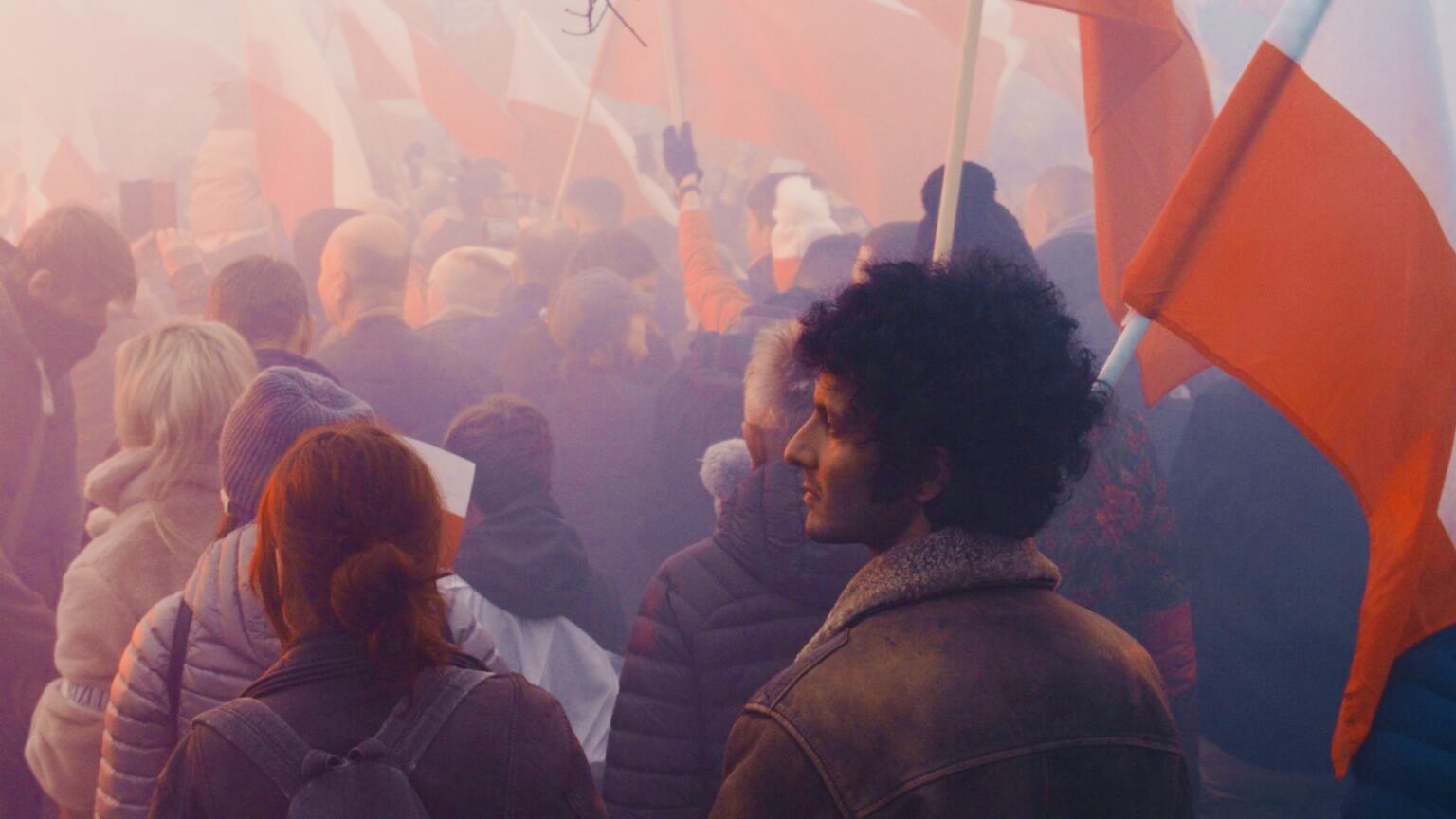
La secuencia de la manifestación en la película (del dia de Polonia y los estandartes de la virgen Maria) me llevó, inevitablemente, a los meses del postconfinamiento, cuando salimos a marchar por Black Lives Matter y, de pronto, aparecieron jóvenes y comunidades LGBTQ de todas partes, conformando una multitud inesperada y luminosa. Era una marcha atravesada por el duelo, pero también por una esperanza colectiva que volvía a tomar la calle. En Letters from Wolf Street, esa dimensión política emerge sin estridencias: la calle se convierte en un espacio donde lo íntimo y lo social se cruzan, donde el gesto mínimo puede contener una forma de resistencia.
Con esta película, RIDM no solo inauguró su edición número 28, sino que propuso desde el inicio una reflexión sobre comunidad, desplazamiento y pertenencia, recordándonos que el documental sigue siendo una herramienta privilegiada para observar el mundo desde sus fisuras más humanas.
Encuentros fortuitos y cine hecho por impulso: El mundo al revés
En la fila de la inauguración del RIDM ocurrió uno de esos encuentros fortuitos que solo los festivales propician. Ahí nos encontramos con Leon Schwitter, director de la película El mundo al revés. Suizo, con un español impecable, nos contó que estaba en Montreal para presentar su filme de 77 minutos en el festival. La conversación fue breve, pero suficiente para sembrar la curiosidad por ver su obra. Días después, decidí asistir a la segunda proyección de la película, esta vez en el Cinéma du Parc, donde nuevamente estaban presentes Schwitter y su novia argentina, quien es codirectora de la película.
Durante la presentación, ambos confesaron que el proyecto nació bajo la influencia de un cineasta (cuyo nombre no revelaron) que tenía el ímpetu radical de hacer tres películas al año, a veces con dinero y a veces sin él. Más que un modelo de producción, se trataba de una ética del hacer: filmar sin pensarlo demasiado, confiar en el impulso y en las circunstancias. El mundo al revés surge precisamente de ese reto. Iban a pasar tres meses en un pequeño pueblo de Córdoba, Argentina, y decidieron que ese tiempo y ese lugar eran la oportunidad perfecta para hacer una película dejándose llevar, sin sobreintelectualizar el proceso.
Aunque la película no se percibe estrictamente como un documental —más bien se siente como una ficción—, sus protagonistas son familias locales, oriundas de la región. Personas que los directores fueron encontrando y pensando, casi intuitivamente: “esta tiene que estar en la película”. Y así, una a una, fueron integrándose al relato.
La sinopsis establece el tono de inmediato:
En un pequeño pueblo del campo argentino, los habitantes llevan una vida marcada por la naturaleza y la rutina. Cuando una luz se le aparece al anciano agricultor Omar una noche, emprende junto a su nieto Noah un viaje en busca de sentido. En una casa de vacaciones cuyos dueños nunca están, las dos empleadas domésticas, Rosana y Lily, hacen un descubrimiento que abre para ellas una nueva forma de conocimiento.
La película comienza con una escena inquietante y delicada: un grupo de personas sentadas en una banca de iglesia de pueblo, mirando hacia el altar. En la pared blanca, ligeramente empolvada, los fieles creen distinguir la sombra de la Virgen. Y, en efecto, algo se percibe en el plano: una forma ambigua, sugerente, que deja espacio a la interpretación y marca desde el inicio un clima de fe popular y misterio cotidiano.
En paralelo, dos mujeres que limpian una casa de campo escuchan, a través del altavoz, a sus patrones que llaman desde Buenos Aires y que —como siempre— anuncian su llegada sin concretarla nunca. En una de las habitaciones, al abrir un clóset, descubren una pared tapeada con bloques de ladrillo cocido, como si algo hubiese sido ocultado dentro. Ese espacio abrupto se transforma pronto en objeto de devoción: lo adornan con velas y peticiones, convirtiéndolo en un altar improvisado donde lo inexplicable encuentra forma.
Sin embargo, el eje central del filme es la historia de Omar, el abuelo que cuida a su nieto Noah. Una noche, mientras la madre del niño sale a una fiesta de pueblo a bailar, Noah duerme y Omar toma el fresco sentado en una silla afuera, de frente a la vereda. De pronto, de su boca emerge una bola de luz, que se desplaza en línea horizontal, camina entre la maleza, hasta que se pierde. Omar queda impávido, a partir de ese acontecimiento, comienza a averiguar, a preguntar y a contar lo sucedido sin exageración o dramatismo. Su relato suena menos a un episodio médico que a una historia mística de campo, transmitida con la serenidad de quien acepta lo inexplicable como parte de la vida.
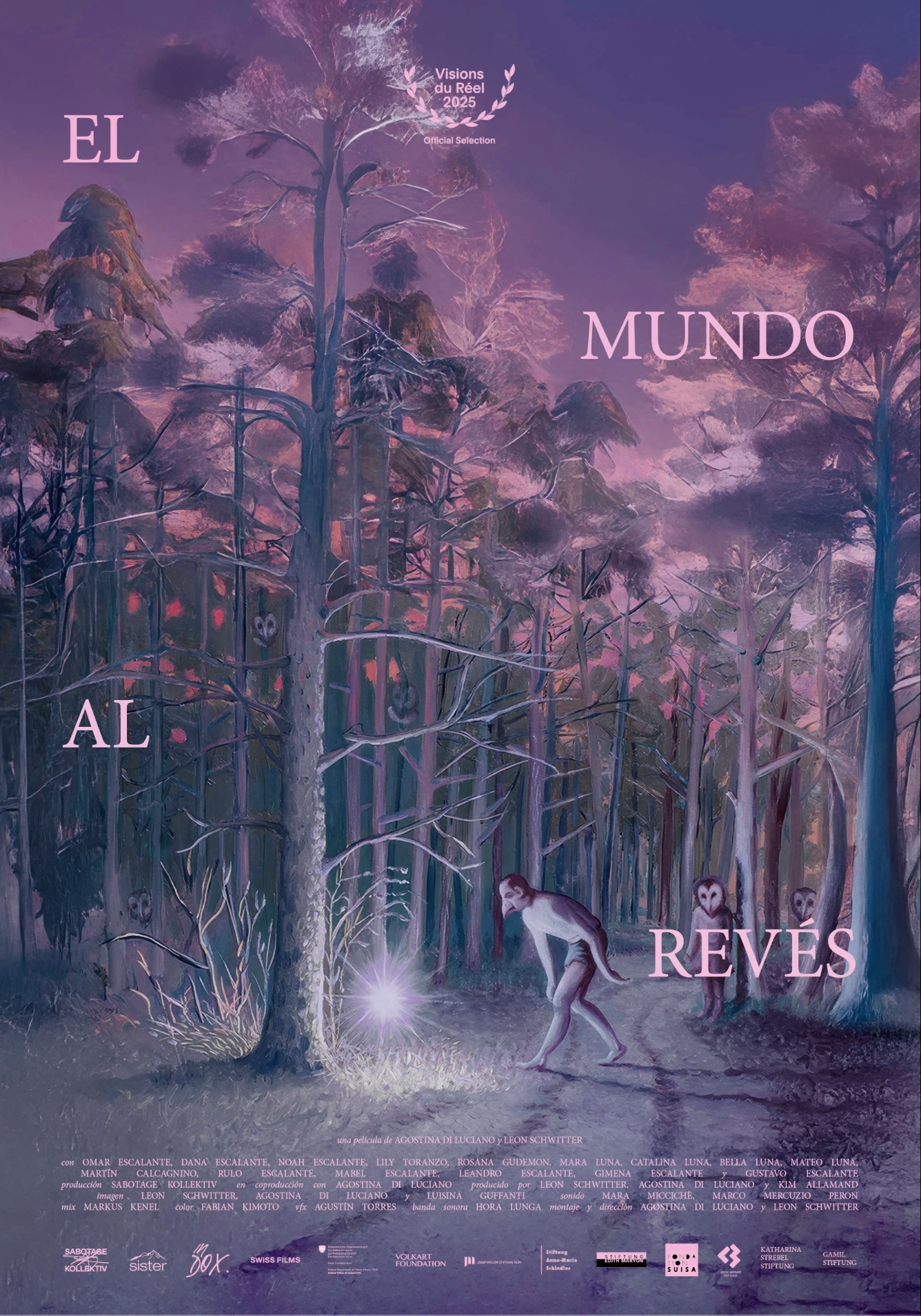
La codirectora explicó que el trabajo con los actores naturales de la región se basó en principios de teatro pedagógico, privilegiando la improvisación, especialmente en el caso del niño Noah. Esa decisión se siente en pantalla: los gestos, los silencios y las acciones parecen surgir orgánicamente del entorno, sin impostación.
El mundo al revés es una película sin pretensiones, pero eficaz. A pesar de su ritmo aparentemente lento, nunca aburre. Al contrario, atrapa al espectador en su aire naturalista, donde se filtra un suspenso rural sutil, tejido entre la naturaleza y la rutina. El diseño sonoro refuerza esa atmósfera: los sonidos del campo, el viento, los silencios prolongados, contribuyen a un clima místico que remite inevitablemente al realismo mágico, no como artificio estilístico, sino como forma de percepción del mundo.
En el contexto del RIDM, El mundo al revés funciona como un recordatorio de que el cine (documental o de ficción) puede nacer del impulso, de la observación atenta y de la confianza en los lugares y las personas. Un cine que se hace al revés de las lógicas industriales, pero a favor de una sensibilidad profundamente humana.
En Montreal, en la 28ª edición del RIDM, estas películas reafirmaron de manera conjunta lo que el festival representa desde hace años: un espacio donde lo cotidiano adquiere resonancia política y donde la comunidad no es un concepto abstracto, sino una construcción viva y frágil. Desde las calles de Varsovia hasta los paisajes rurales de Córdoba, el RIDM nos recuerda que el cine documental sigue encontrando sentido no en el espectáculo, sino en los gestos mínimos, en los barrios y en los espacios compartidos. Así, encuadra lo ordinario como un territorio político: sutil, íntimo y profundamente humano.
The 28th edition of the Montreal International Documentary Festival (RIDM) opened with an inaugural screening that, from the very first moment, encapsulated the spirit of the festival: cinema attentive to the human condition, to the margins, and to contemporary ways of inhabiting the world. Opening night took place on Thursday, November 20, at the Monument-National, in a particularly frigid Montreal, contrasted by a warm and enthusiastic audience that filled the theater completely, with even standing room occupied. Applause lingered for the filmmakers, programmers, and the team that sustains this vibrant festival, reaffirming RIDM as a living meeting point between documentary cinema and its community.
The opening film was Letters from Wolf Street, by filmmaker Arjun Talwar, a documentary that constructs a tender and deeply nuanced portrait of a Warsaw neighborhood, observed through the sensitive gaze of a director with a migrant background in search of connection and belonging. Talwar makes a brave and honest gesture here: he films himself and becomes the protagonist of his own story, embracing the risks of autobiographical documentary without falling into narcissism.
The cinematography, dominated by pale and yellowish tones, evokes a Poland suspended in time, almost spectral as if the visual residues of a communist era still linger in the texture of the walls, in the light, and in the bodies. The inhabitants of the street whom Talwar insists on filming do not need to perform or adopt poses in order to exist within the frame: they are singular, endearing characters who offer themselves just as they are. Their presence sustains the film with a rare naturalness, rendering the documentary apparatus nearly invisible.
In this sense, Letters from Wolf Street clearly dialogues with Daguerréotypes (1976) by Agnès Varda, that meticulous portrait of the everyday lives of shopkeepers and neighbors on rue Daguerre in France. Both Varda and Talwar transform the ordinary into a poetic and political space: they observe the everyday not as something banal, but as a living archive of postmodernity its confusions, contradictions, and affections. Both filmmakers understand the neighborhood as a microcosm where the major tensions of the contemporary world are inscribed.
The film resonated with me on a deeply personal level. It brought me back to my own experience as an immigrant in the Basque Country, where I lived for three years while studying cinema at the then newly founded Elias Querejeta Zine Eskola (EQZE). We experienced the pandemic there (lockdowns and curfews) a suspended temporality that redefined our relationship to space and to others. I remember the intermittent interactions with bar and café owners, local figures full of character—tough yet charming, and as complex as the Polish residents Talwar portrays in Warsaw.
The sequence of the demonstration in the film (shot during Poland’s Independence Day, with banners of the Virgin Mary) inevitably brought me back to the post-lockdown months, when we took to the streets in support of Black Lives Matter and, suddenly, young people and LGBTQ communities appeared from everywhere, forming an unexpected and luminous multitude. It was a march marked by grief, but also by a collective hope reclaiming public space. In Letters from Wolf Street, this political dimension emerges without stridency: the street becomes a site where the intimate and the social intersect, where even the smallest gesture can contain a form of resistance.
With this film, RIDM not only inaugurated its 28th edition but also set the tone for a reflection on community, displacement, and belonging, reminding us that documentary cinema remains a privileged tool for observing the world through its most human fissures.
Still from Letters from Wolf Street directed by Arjun Talwar, 2025, photo: MDAG.
Chance Encounters and a Cinema Guided by Intuition: El mundo al revés
While standing in line at the RIDM opening night, one of those serendipitous encounters that only festivals seem to generate took place. There we met Leon Schwitter, director of El mundo al revés (The World Upside Down) Swiss, with impeccable Spanish, he told us he was in Montreal to present his 77-minute film at the festival. The conversation was brief, but enough to spark curiosity about his work. A few days later, I decided to attend the film’s second screening, this time at Cinéma du Parc, where Schwitter and his Argentine partner (co-director of the film) were again present.
During the introduction, they both confessed that the project was born under the influence of a filmmaker (whose name they did not reveal) who had the radical drive to make three films a year, sometimes with money and sometimes without. More than a production model, it was an ethic of making: filming without overthinking, trusting impulse and circumstance. El mundo al revés emerged precisely from that challenge. They were going to spend three months in a small town in Córdoba, Argentina, and decided that this time and place were the perfect opportunity to make a film by surrendering to the process, without over-intellectualizing it.
Although the film does not feel strictly like a documentary (it leans more toward fiction) its protagonists are local families from the region. People the directors encountered and selected almost intuitively: “she has to be in the film.” And so, one by one, they became part of the narrative.
The synopsis immediately sets the tone:
In a small rural Argentine town, inhabitants live a life shaped by nature and routine. When a light appears to the elderly farmer Omar one night, he embarks on a journey in search of meaning alongside his grandson Noah. In a vacation home whose owners are never present, two domestic workers, Rosana and Lily, make a discovery that opens for them a new form of knowledge.
The film begins with a delicate and unsettling scene: a group of people seated on a church bench in a small town, facing the altar. On the slightly dusty white wall, the faithful believe they can discern the shadow of the Virgin. And indeed, something appears in the frame: an ambiguous, suggestive shape that leaves room for interpretation, establishing from the outset an atmosphere of popular faith and everyday mystery.
In parallel, two women cleaning a country house listen through a loudspeaker to their employers calling from Buenos Aires who—as always—announce their arrival without ever actually coming. In one of the rooms, upon opening a closet, they discover a wall sealed with baked clay bricks, as if something had been hidden inside. This abrupt space soon becomes an object of devotion: they decorate it with candles and petitions, transforming it into an improvised altar where the inexplicable finds form.
However, the central axis of the film is Omar’s story, the grandfather who cares for his grandson Noah. One night, while the boy’s mother goes out dancing at a town celebration, Noah sleeps and Omar sits outside taking in the cool air, facing the sidewalk. Suddenly, a ball of light emerges from his mouth, moving horizontally, gliding through the brush until it disappears. Omar remains stunned. From that moment on, he begins to inquire, to ask questions, and to recount what happened without exaggeration or dramatization. His story sounds less like a medical episode than a rural mystical tale, told with the serenity of someone who accepts the inexplicable as part of life.
Poster of the movie El Mundo al revés, directed by Leon Schwitter, 2025, source: IMDb.
The co-director explained that their work with non-professional actors from the region was based on principles of pedagogical theater, privileging improvisation, especially in the case of the child, Noah. That decision is palpable on screen: gestures, silences, and actions seem to arise organically from the environment, without affectation.
El mundo al revés is an unpretentious yet effective film. Despite its seemingly slow pace, it never becomes tedious. On the contrary, it draws the viewer into its naturalistic atmosphere, where a subtle rural suspense seeps through the interplay between nature and routine. The sound design reinforces this mood: the sounds of the countryside, the wind, the prolonged silences contribute to a mystical climate that inevitably evokes magical realism, not as stylistic artifice, but as a way of perceiving the world.
Within the context of RIDM, El mundo al revés serves as a reminder that cinema (whether documentary or fiction) can be born from impulse, from attentive observation, and from trust in places and people. A cinema made in reverse to industrial logic, yet in favor of a deeply human sensibility.
In Montreal, at the 28th edition of RIDM, these films collectively reaffirmed what the festival has long represented: a space where the everyday becomes politically resonant, where community is not an abstract concept but a lived and fragile construction. From the streets of Warsaw to the rural landscapes of Córdoba, RIDM reminds us that documentary cinema continues to locate meaning not in spectacle, but in gestures, neighborhoods, and shared spaces. In doing so, it frames the ordinary as a political site: subtle, intimate, and profoundly human.