

From October 8 to 18, 2026, Montreal’s Festival du Nouveau Cinéma (FNC) celebrated its 55th edition with nearly 200 works from more than 30 countries, presented across six venues throughout the city. As a festival with a broad cinematic scope, the FNC is not limited to a particular genre or mode of production. As Zoé Protat has noted, its editorial vision finds common ground in auteur cinema, ranging from big-budget films to independent productions made with minimal resources, sometimes following a do-it-yourself approach. Rather than adhering to a narrowly defined aesthetic category, the FNC seems to champion an understanding of cinema that values distinctive perspectives and a diversity of forms.
My experience of this edition was shaped in particular by four short-film programs. Each offered a different perspective, allowing me to observe how this diversity is reflected in the festival’s selections and in the relationship that develops between films and their audiences. To understand the festival’s identity today, however, it is worth looking back at its origins.
The Origins: Making Room for Other Cinemas
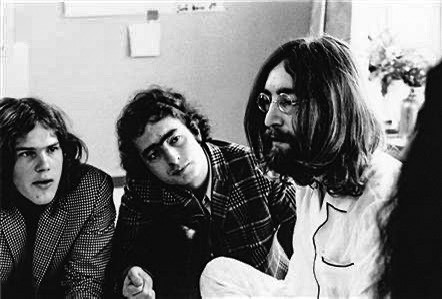
Claude Chamberlan and Dimitri Eipides with John Lennon and Yoko Ono during their Montreal Bed-In for Peace (1969). Two years later, in 1971, Chamberlan and Eipides founded the festival, originally named the Festival international du cinéma en 16 mm de Montréal.
Founded in Montreal in 1971 by Claude Chamberlan and Dimitri Eipides, the Festival du Nouveau Cinéma was created to make room for films that remained outside the usual distribution channels. Both founders shared a commitment to discovering new voices and bringing audiences closer to cinematic traditions and works that rarely found their way into commercial theaters.
Chamberlan was a central figure in Montreal’s independent film exhibition scene and an indefatigable discoverer of films and filmmakers. He believed in the importance of bringing to Quebec the works that had moved him at other festivals, and of preserving physical spaces where independent cinema could meet its audiences. Eipides, for his part, built an international career as a programmer at festivals in Montreal, Toronto, Thessaloniki, and Reykjavík. His work helped bring visibility to filmmakers and cinemas from different regions, while building connections between film communities that might otherwise never have crossed paths.
More than half a century later, the founders’ legacy invites us to look beyond the FNC’s selection of titles. The question is not simply which films it presents, but what place it gives them and how it invites audiences to encounter them.
One Program, Many Ways to Discover Cinema
The breadth of the festival program was also reflected in its different sections: the International and National Competitions, Panorama international, Les Incontournables (The Essentials), Histoire(s) du cinéma (History/Stories of Cinema), Les Nouveaux Alchimistes (The New Alchemists), Temps Ø (Time Ø), and P'tits Loups (Little Wolves), as well as Special Presentations. The RPCÉ program, dedicated to a new generation of emerging Canadian filmmakers, was another part of the lineup. Together, these sections brought different cinematic traditions into conversation, alongside experimental approaches, films for young audiences, and works from different periods in film history. The result was a festival experience that could not be reduced to a single genre or production circuit.
Four Programs, Four Experiences
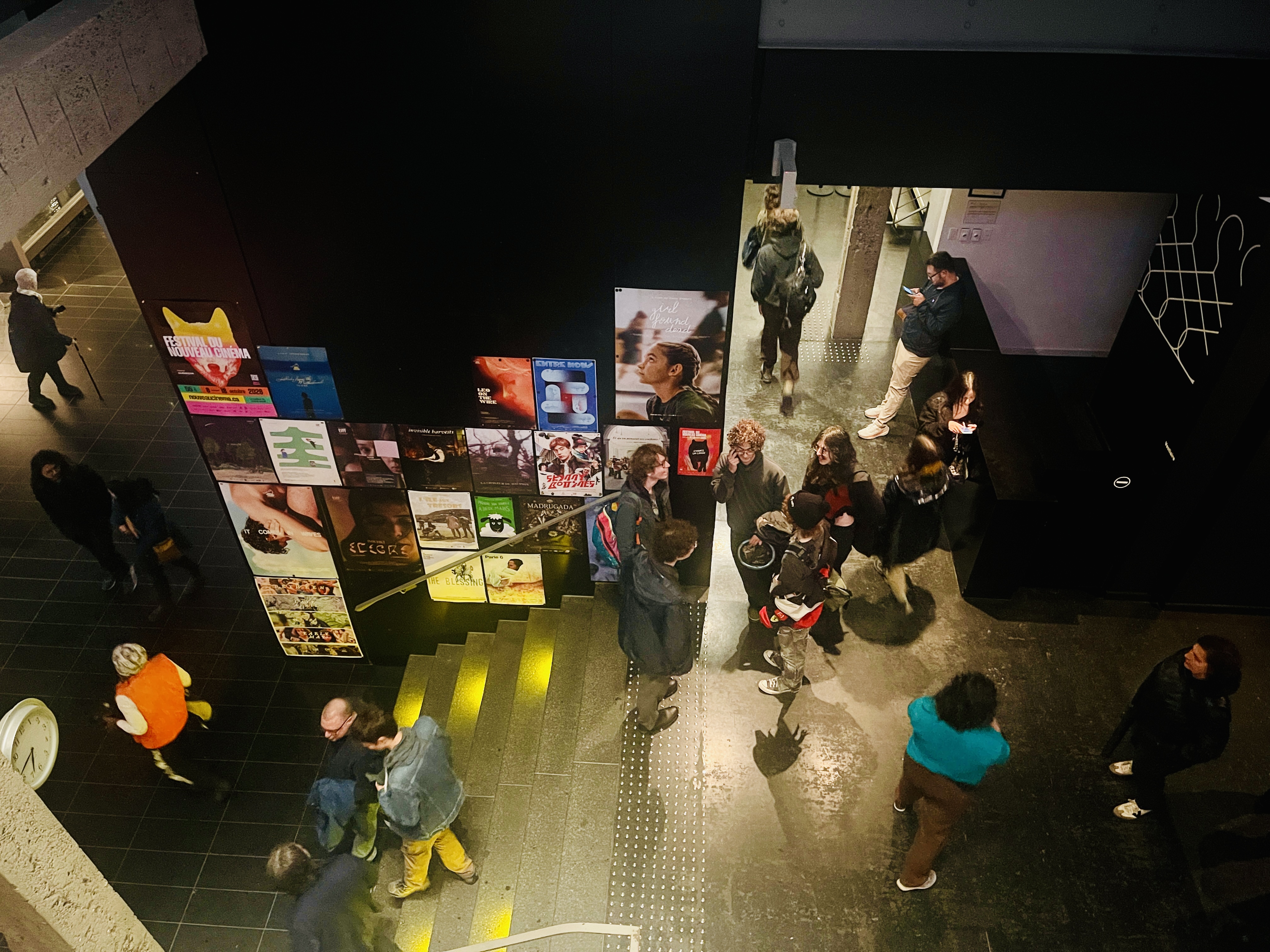
During my visit to the Cinémathèque québécoise, I attended three short-film programs in a single day. The experience was revealing precisely because there was no single way of approaching short-form cinema: each selection offered a different journey, both in its cinematic language and in the reactions it prompted in the audience.
RPCÉ: The Enthusiasm of a New Generation
One of the institutions I discovered while exploring this edition of the FNC was L'inis, short for Institut national de l'image et du son (National Institute of Image and Sound), a Montreal-based professional training center specializing in film, television, and documentary production. Its presence at the festival is connected to the RPCÉ: Rencontres pancanadiennes du cinéma étudiant (Pan-Canadian Student Film Meetings), an initiative launched by the FNC in 2014 to support emerging cinema and foster connections among film students from different Canadian schools. In addition to a student short-film competition, the RPCÉ includes workshops, talks, and professional networking activities. L'inis participates as a partner institution and host school, with its productions featured in a dedicated program within the festival selection.
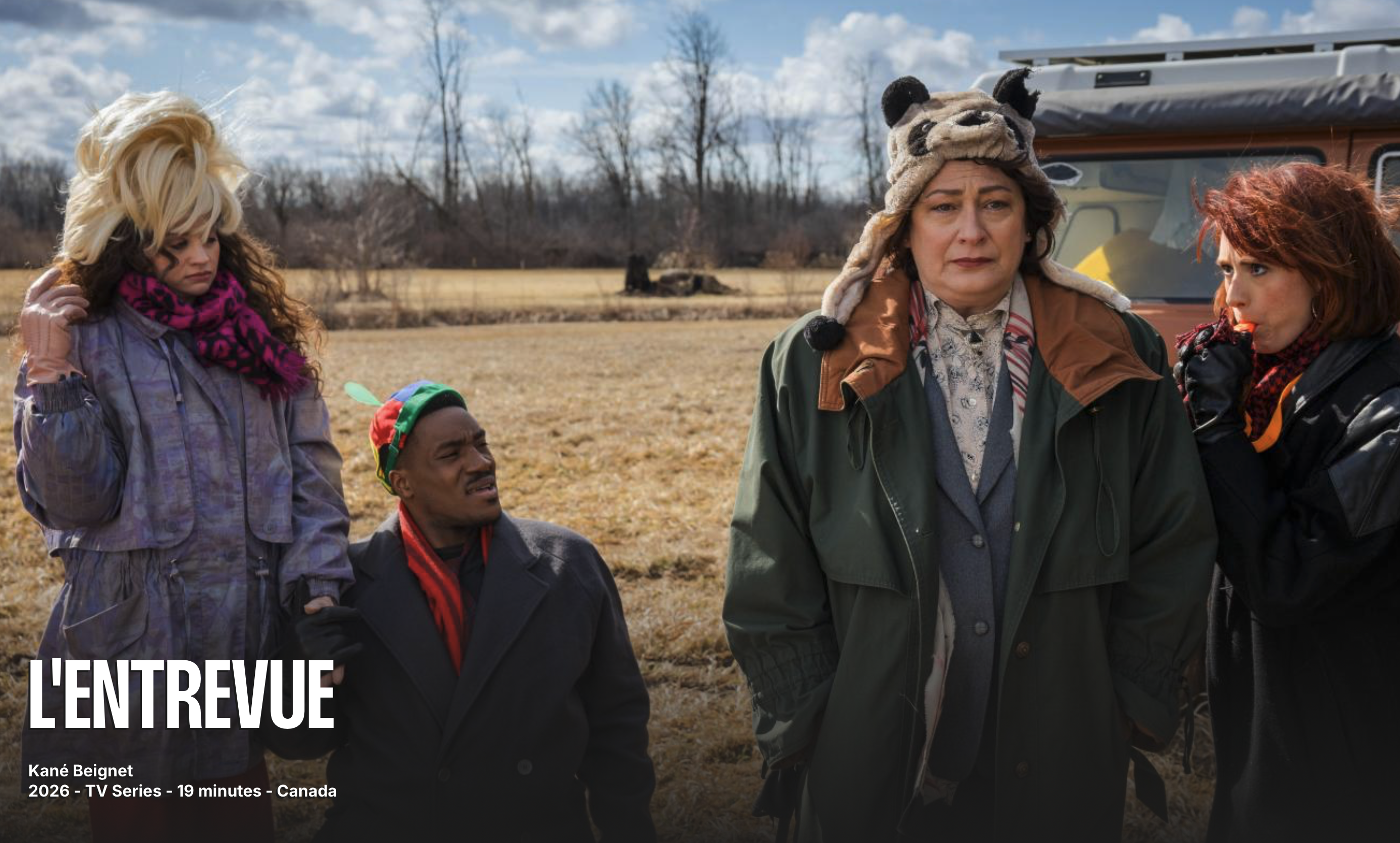
The RPCÉ program brought together six short films: Le sang n'est rien, Combustion, La Grande Cena de Fay, La dose parfaite, Noël Vert, and L'entrevue. Created to support young filmmakers and encourage exchange among film students, the program shared, despite the variety of its stories, an interest in human reactions and the tension that can emerge from them. Rather than suspense rooted in fear, it was a sense of uncertainty built around the characters’ behavior, their decisions, and the situations in which they found themselves.
There was also a noticeable shift in tone as the program unfolded. In its second half, suspense gave way in some films to a kind of farcical humor, at times slightly absurd, while three of the six films opted for happy endings. This alternation between tension, comedy, and resolution added variety to the program, without diminishing the films’ interest in the contradictions and reactions of their characters.
The audience response was particularly enthusiastic. The screening room, filled mostly with young people, came alive with applause and cheers at the end of each short film. There was something of a collective celebration in the atmosphere, making the connection between the films and their viewers unmistakable.
New Alchemists: Experimenting with Image, Time, and Sound
The tone shifted with New Alchemists Competition 4, a selection of six works that I chose precisely for their multidisciplinary approaches and the diversity of their cinematic languages. Here, cinema moved away from more conventional narrative structures, making room for formal experimentation and different ways of working with image, time, and sound.
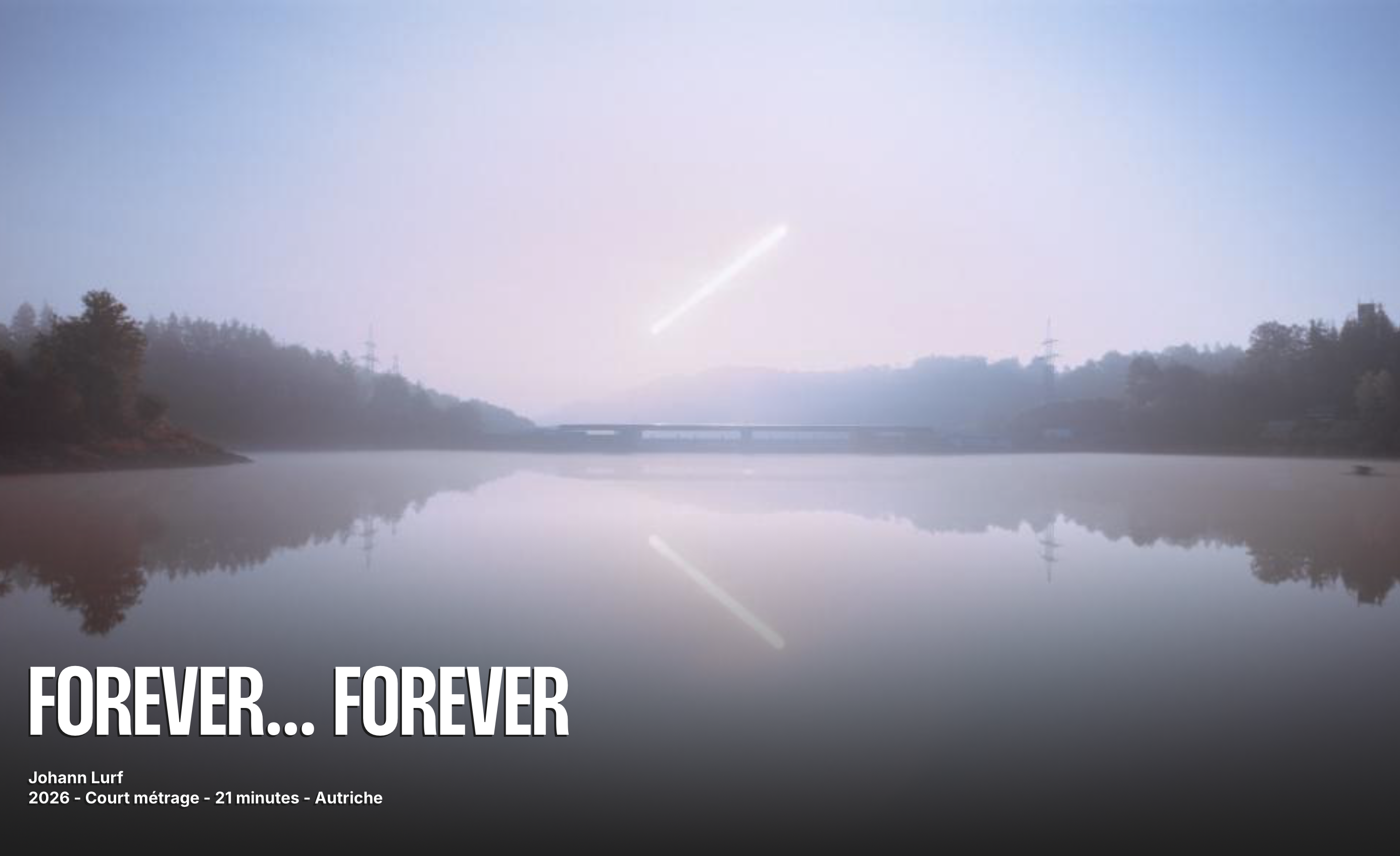
Among the films, Forever... Forever, by Austrian filmmaker Johann Lurf, stood out for its visual approach, its use of 35mm film, and its 21-minute running time. The film created a temporal experience that evoked the transition from day to night, paying particular attention to changes in light, rhythm, and sound. At one point, sound effects reminiscent of thunder prompted spontaneous expressions of surprise from the audience, followed by laughter and applause. It was one of those moments when an experimental film, without needing to explain its process, prompted an immediate reaction from the audience.
The filmmaker behind Parie 6 was also in attendance. It was one of the program’s most abstract and materially driven works. His participation had an informal, approachable quality, far removed from the solemnity that sometimes accompanies post-screening discussions. That natural atmosphere helped make the session feel like a space for exchange, rather than simply a showcase of completed works.
International Competition: Different Geographies, New Perspectives
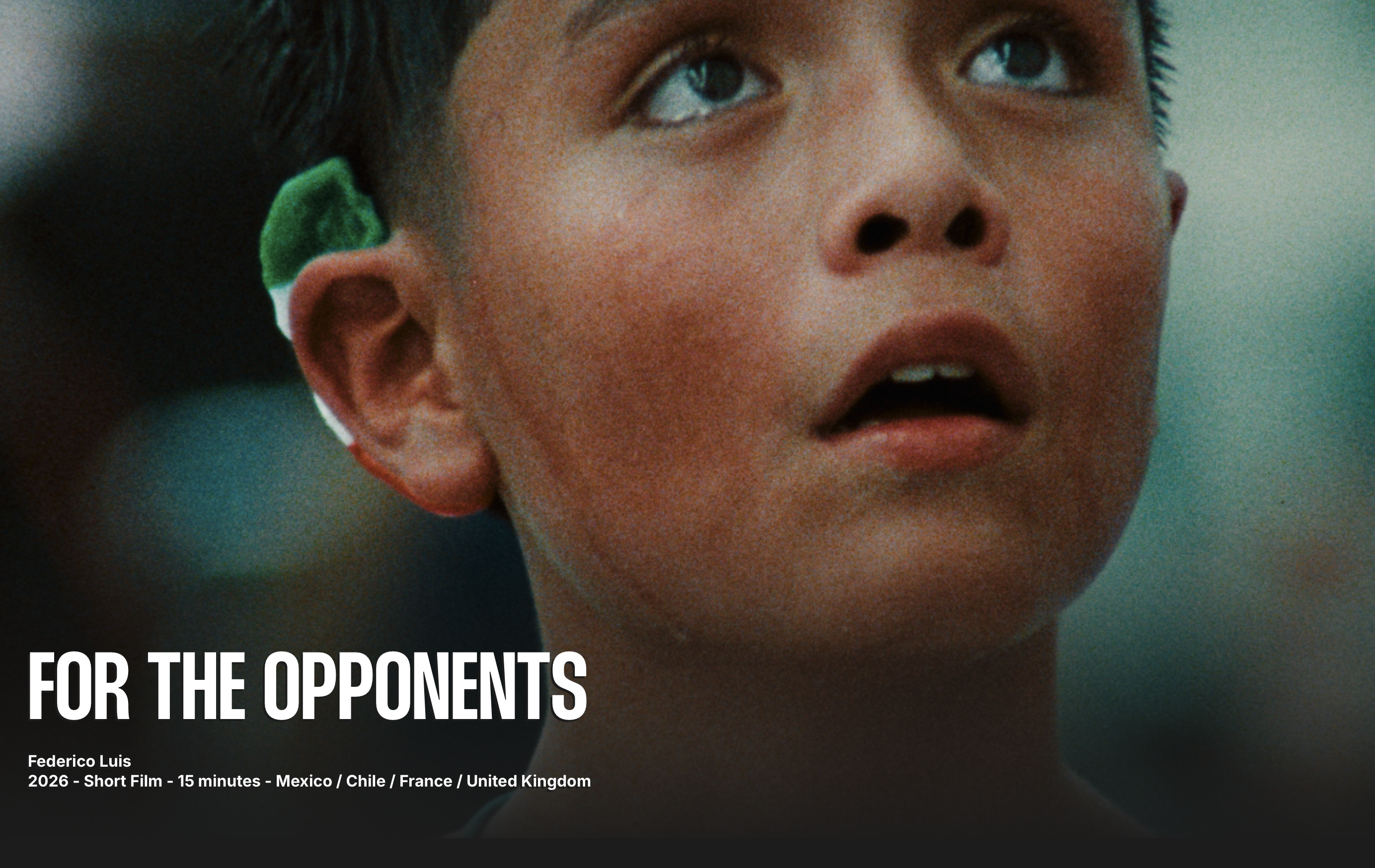
The third selection of the day, International Competition 1, brought together four short films from Mexico, Peru, Sudan, and Somalia: For the Opponents, Nobody Knows the World, Nothing Happens After Your Absence, and Whispers of a Burning Scent. Their geographic and cultural diversity was one of the program’s most evident features, although its appeal went beyond the films’ countries of origin. I found all four engaging, and relatively balanced in their ability to spark curiosity. The selection moved between different contexts without imposing a single way of representing the world or a fixed idea of what a short film should be.
Sitting next to the director of one of the Peruvian films added another dimension to the experience. The presence of invited filmmakers, also noticeable in the New Alchemists program, brought the works closer to those of us who had just watched them. The film ceased to be a distant object on the screen and became the starting point for a possible conversation.
National Competition: Humor as Common Ground
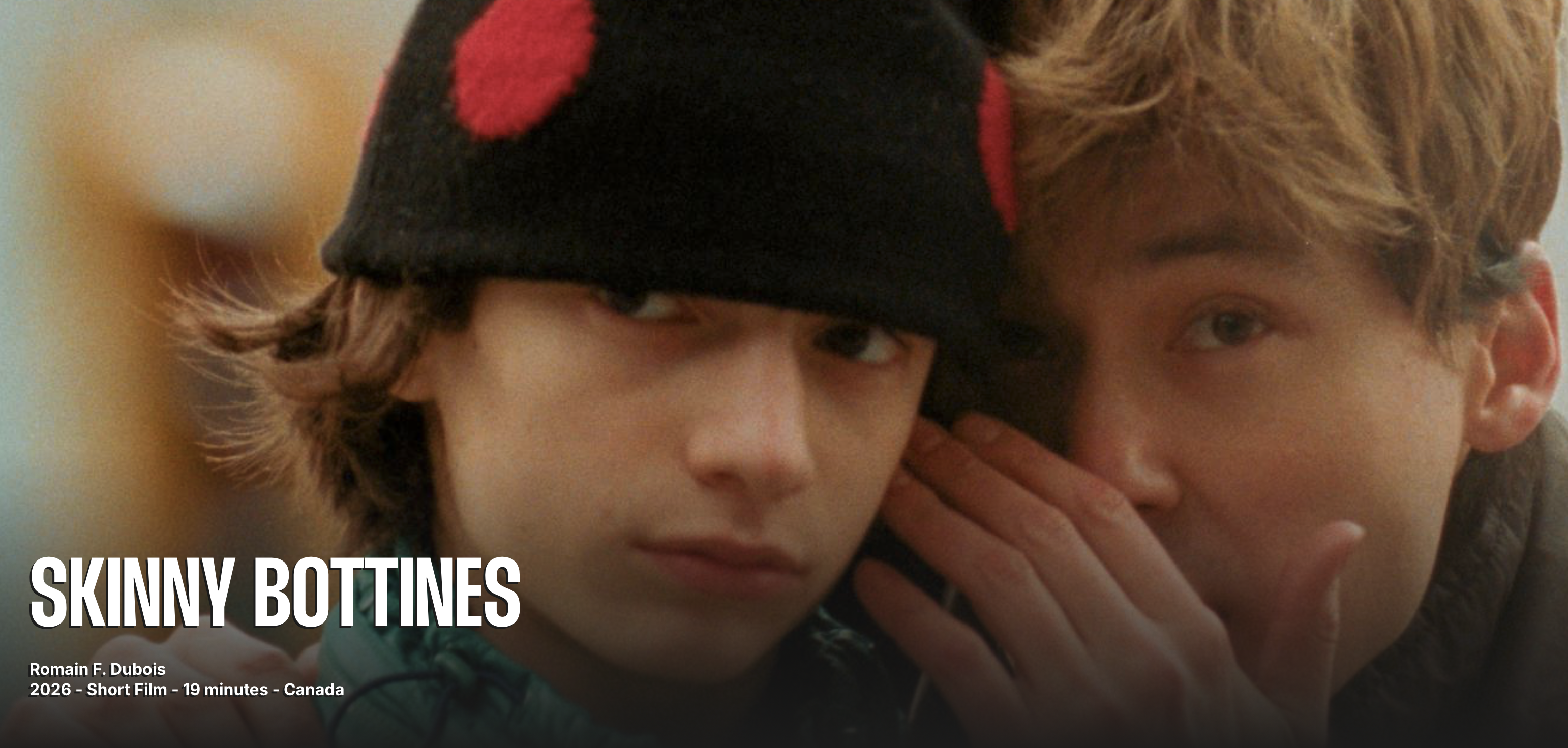
A few days later, I attended National Competition 1, which presented five short films: Pacific Spirit, Footsteps On The Ceiling, Et qu'en pensent les cochons?, Between Late April and Early May, and Skinny Bottines. The screening revealed yet another side of short-form cinema, with films that incorporated humor to varying degrees. The screening room was nearly full, and the audience, made up largely of young adults, responded enthusiastically.
Three guests took part in the post-screening discussion: one producer and two directors. I was struck by the open, informal tone of the conversation, which unfolded naturally and did not go on unnecessarily. The introductions and questions offered some insight into the films without turning the exchange into a rigid formal event or exhausting the audience’s attention.
Skinny Bottines, by Romain F. Dubois, was one of the films that seemed to resonate most strongly with the audience. I later learned that it had received the Audience Award, presented by SLA Locations, in the National Short Film Competition, a recognition that aligned with the positive response I had witnessed during the screening.
Taken together, these four programs brought twenty-one short films and four very different experiences. What mattered was not that every film appealed to me equally, but that each selection seemed to have a distinct and recognizable intention. Fiction, experimentation, and films from different cultural backgrounds coexisted without short-form cinema being relegated to a secondary category.
The Screening Room Is Part of the Festival, Too
In the screenings I attended, the audience played an active role. Audiences filled the screening rooms, with applause, laughter, and spontaneous reactions, while viewers also remained attentive to more abstract works, even without the familiar structures of conventional storytelling. These observations reflect only the screenings I attended, but they were consistent enough to become an important part of my experience of the festival.
The Cinémathèque québécoise, in particular, struck me as a place well suited to this kind of encounter. Spending an entire day there, moving between screenings and conversations with filmmakers, allowed me to experience the venue as more than just a screening location. For those hours, it seemed to become a shared meeting place for audiences, filmmakers, and people interested in exploring other forms of cinema.
I was also struck by the ease and informality of the encounters with invited guests. Not every screening needed an extended discussion to create a sense of connection. Sometimes a brief introduction, a filmmaker’s response, or a collective reaction was enough to extend the experience of a film beyond the screen. At a festival devoted to discovery, that kind of contact matters: it allows films to circulate not merely as titles in a program, but as works that can be discussed, questioned, and remembered.
Following the Wolf and the She-Wolf
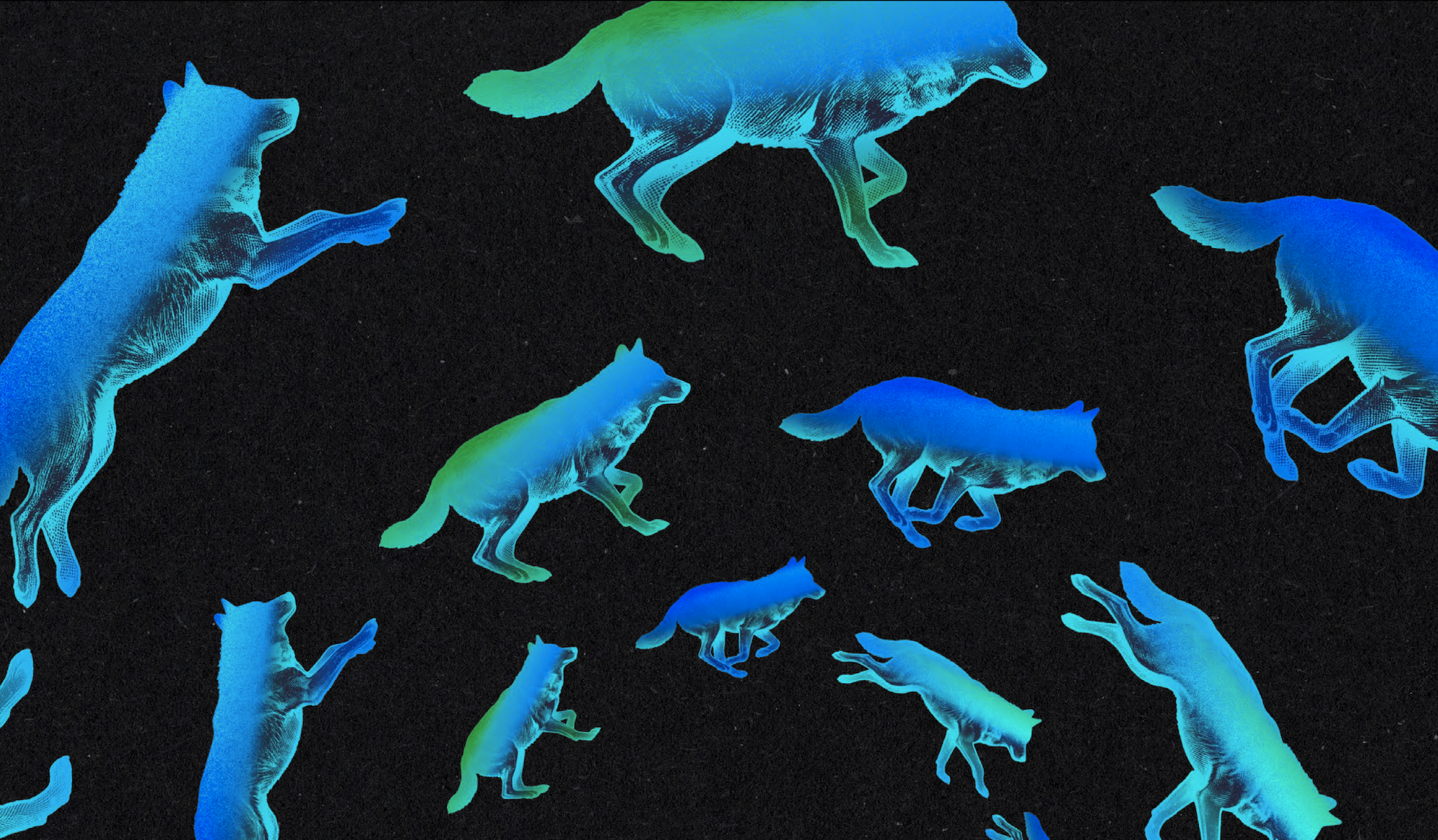
Another striking feature of this edition was its visual identity. To mark its 55th anniversary, the FNC introduced a new visual language built around the figures of the wolf and the she-wolf, bold color contrasts, and a dynamic aesthetic. At the different venues I visited, this identity was present throughout: in the logos, animations, short animated sequences, screen backgrounds, and various visual materials accompanying the screenings.
From my perspective as a graphic designer, I particularly appreciated the consistency of this approach. It was not simply a matter of having an attractive poster, but of developing a recognizable visual language that accompanied the festival across its different spaces. The image of the pack, associated with an attitude that refuses to play it safe, found expression in this edition’s motto: “Because the cinema we love has never played by the rules, neither will our image.” The statement connected the festival’s graphic identity with an understanding of cinema that is unafraid to move beyond conventions.
This invitation to discover new things also appeared in a detail I particularly enjoyed: the carousel of films and programs displayed on screen before each screening. As we waited for the films to begin, titles passed by, offering small clues: an image that sparked interest, a name worth remembering, a section whose concept invited further exploration. Rather than simply announcing what was coming next, the carousel opened up other possibilities within the program and turned the waiting time into a moment of cinematic curiosity.
An Edition in Transition
The 2026 edition took place amid a complex institutional context, marked by changes in leadership and adjustments to the festival’s organizational structure. During this period, some responsibilities were being handled on an interim basis, while artistic director Zoé Protat was on leave. Under these circumstances, it would be inaccurate to attribute the entire selection to a single person without knowing precisely how programming decisions were distributed. Programming a festival of this scale is also the result of collective work.
As an audience member, I found the program coherent and varied. The short-film selections I attended did not feel arbitrarily assembled or as though they were simply fulfilling a quota within the overall lineup. Each had its own character while contributing to a broader picture of the festival: a place where different approaches to filmmaking coexist and where audience curiosity plays a central role.
The FNC’s accreditation by the International Federation of Film Producers Associations (FIAPF), announced in March 2026, marked an important milestone for both the festival and Montreal. FIAPF operates an international program that evaluates and recognizes festivals for their organizational strength, impact, and contribution to the film industry. When the FNC joined this network, it became part of a group of 49 festivals across 29 countries and five continents; the current official list includes 50. Canada has three accredited festivals: the Toronto International Film Festival (TIFF), Hot Docs (both held in Toronto), and the FNC, the only representative from Quebec. This accreditation strengthens Montreal’s presence on the international film festival circuit.
Accreditation alone does not determine the artistic value of a festival’s programming, but it does help put the FNC’s position within the international film landscape into perspective. From what I experienced at this edition, the programs I attended reflected a commitment to diverse cinematic languages and geographical backgrounds, as well as to discovering films that invite audiences to move beyond their usual viewing habits.
Beyond the Screen: The Audience Experience
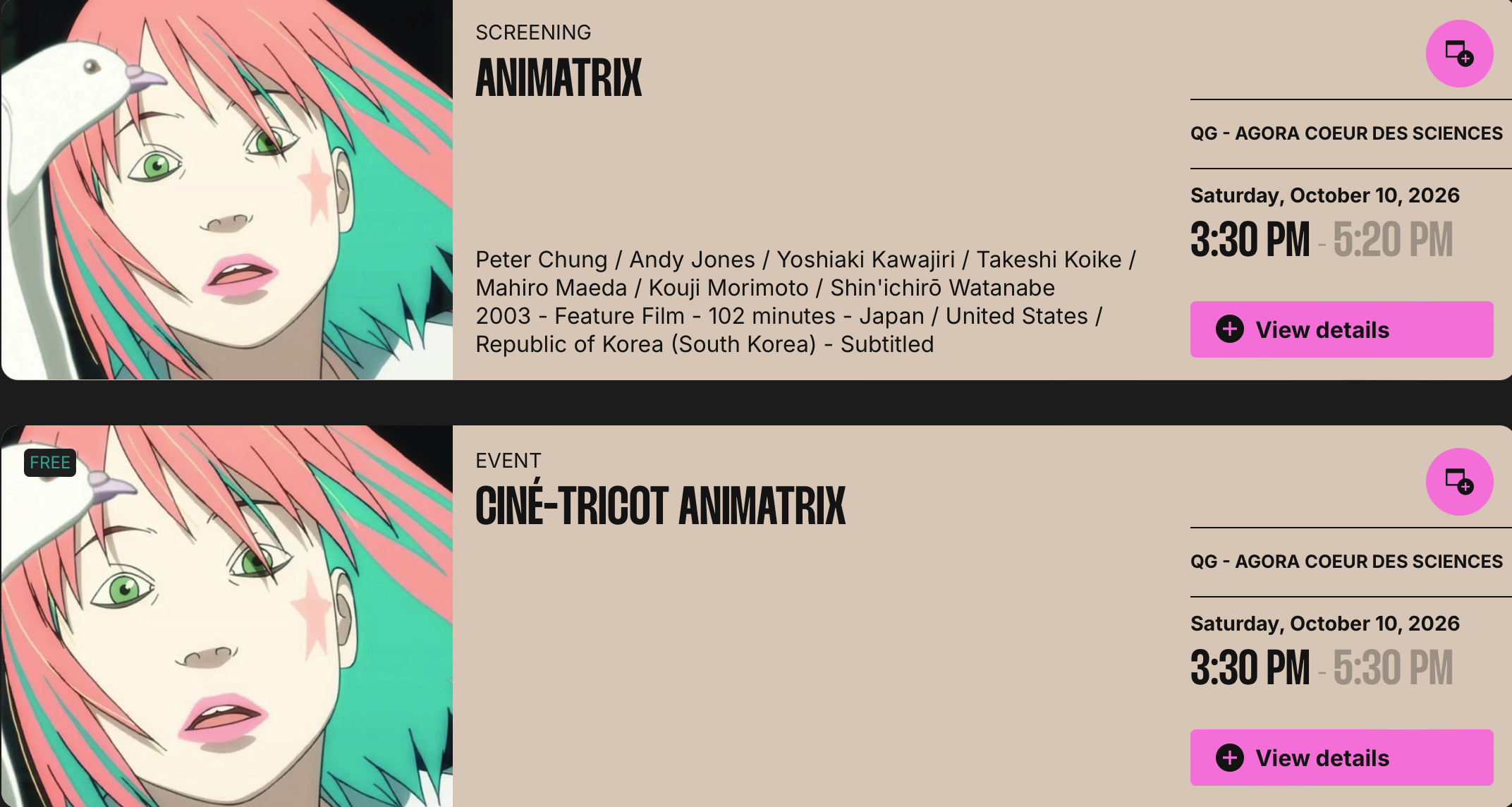
Over the eleven days of the festival, with six venues and a program unfolding across multiple locations at the same time, the FNC offered far more than anyone could take in during a single visit. While I focused on the short films, other activities were also taking place, including events connected to MOMENTA (Contemporary Art Biennale) and special events such as a night dedicated to The Matrix and a free screening of the Animatrix shorts. This range of offerings allowed audiences to engage with cinema in very different ways, beyond the usual screening experience.
Some of these activities made me reflect on the ability of festivals to turn a film into a collective experience. At the previous edition, for example, the Twin Peaks marathon and the screening of Tampopo, accompanied by ramen, stood out for the way they connected cinema with other forms of gathering. This year, the activities surrounding The Matrix seemed to follow a similar direction.
My experience at the FNC gave me a better sense of the vitality of Montreal’s film festivals and the diversity of cinematic experiences that coexist throughout the city. It is a cultural landscape that deserves time, curiosity, and exploration.
A Postcard Before the Film
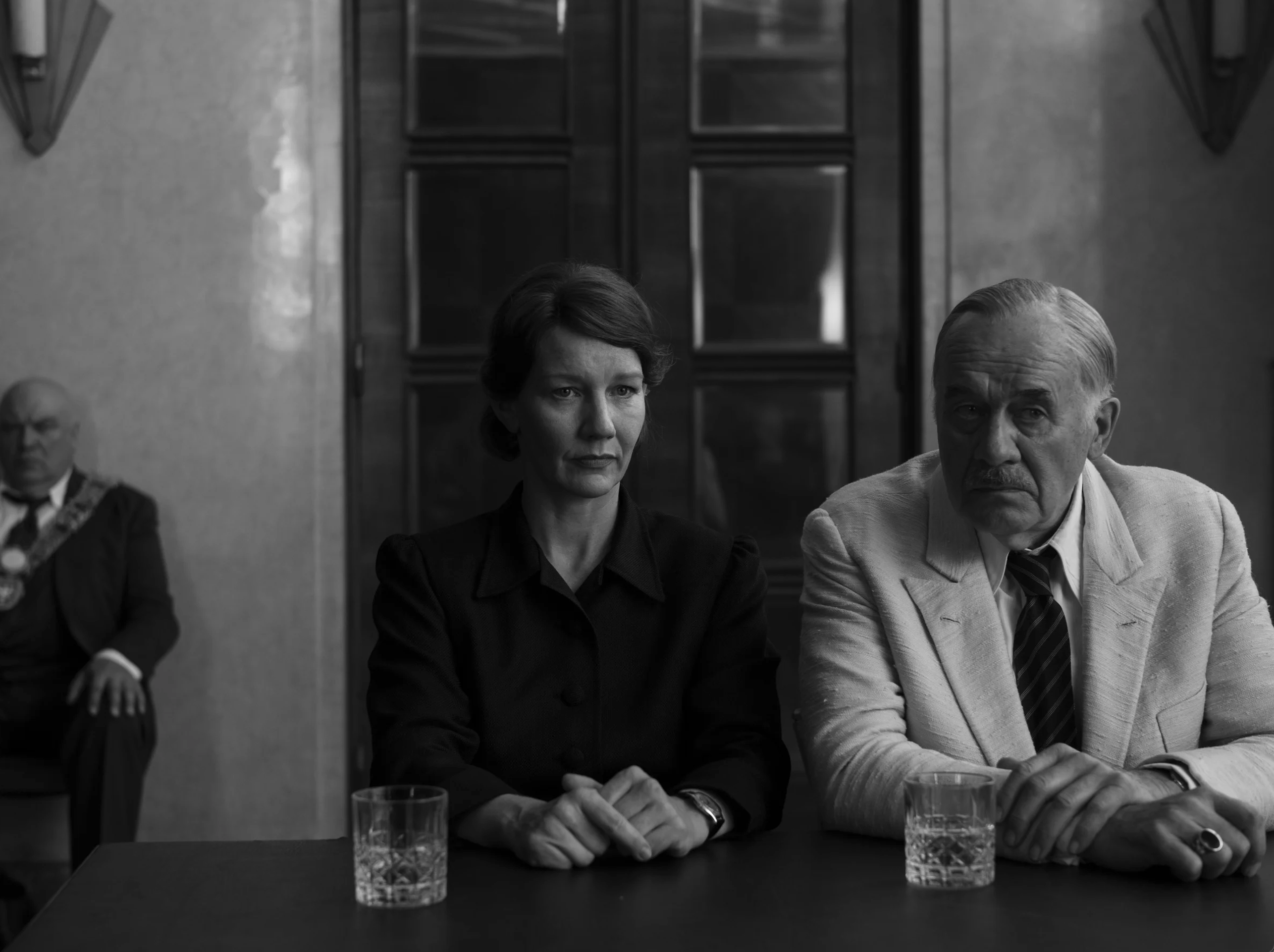
On the festival’s final day, October 18, I attended a screening at Concordia University. The film was Fatherland, by Paweł Pawlikowski, shot in black and white and scheduled to premiere on MUBI on October 30. I arrived about forty minutes early and was surprised to find a sizable line already forming outside the auditorium, a large screening space on the university’s ground floor.
As I waited, I began noticing the people around me. Beside me stood a woman holding a small book, which she read continuously. She had the air of a university professor, perhaps one of those people who seem to have spent a lifetime among books. Behind me, a young woman in her early twenties was constantly writing in a red notebook. I had no idea what the woman was reading or what the younger woman was writing, but both seemed completely absorbed in their activities, seemingly unaware of the movement around them.
For a moment, the scene brought to mind the artistic and intellectual circles of twentieth-century Paris: the waiting, the books, the red notebook, the effortless way in which each person seemed immersed in reading or writing. It was not simply a matter of appearances, but the impression of being in an environment where culture was part of everyday life, where books and intellectual pursuits seemed to extend beyond cafés and libraries and permeate daily existence.
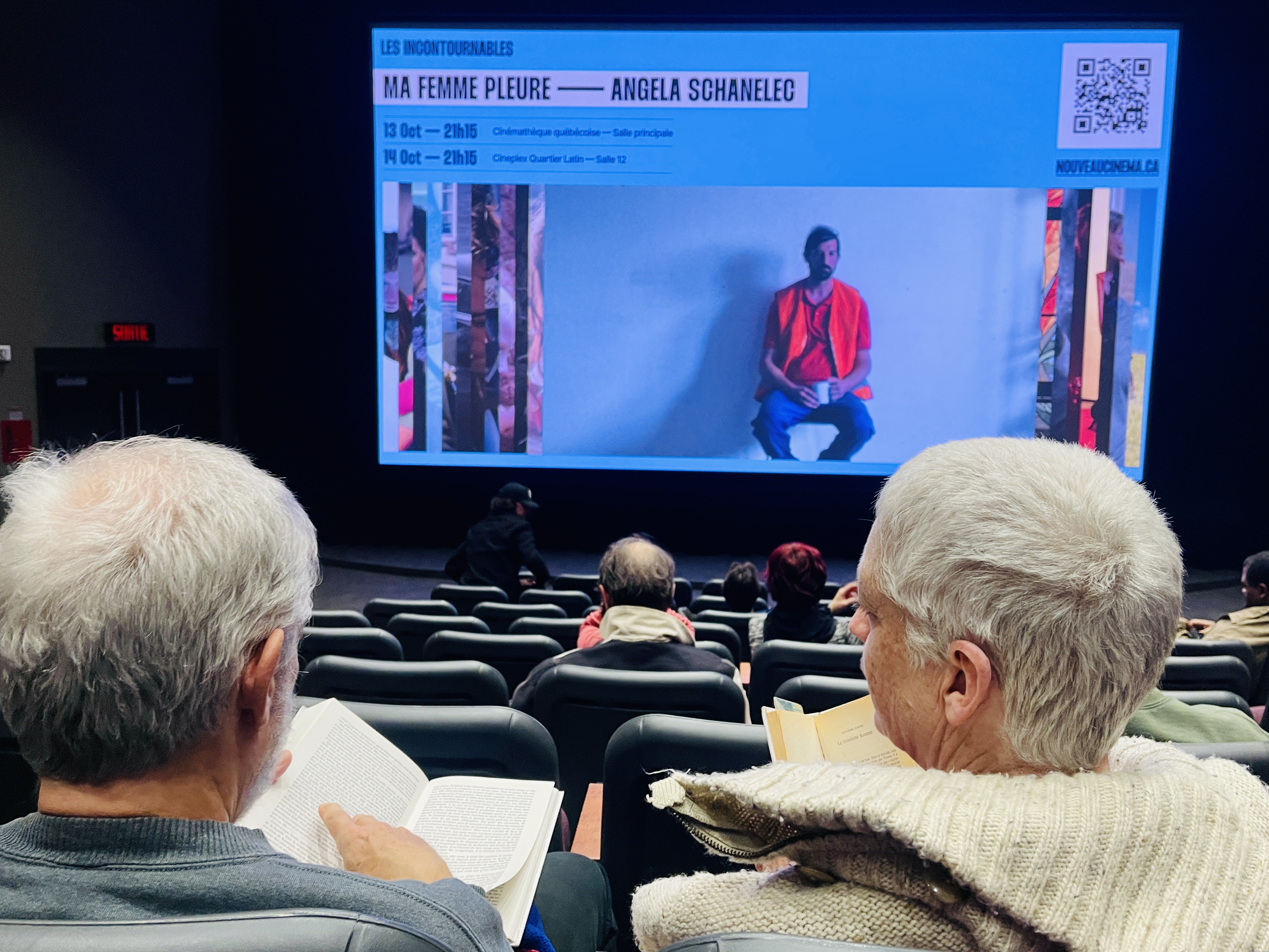
When I entered the auditorium, a couple in their sixties, both with white hair, was already seated facing the screen. Each was reading a book of their own as the room gradually filled. On the screen, the FNC logos and images from the festival program were playing, just as they had before the other screenings I attended. The sight of the couple reading, the illuminated screen, and the anticipation of the film’s beginning came together to form an image I would keep as a postcard.
Until that moment, I had not realized that the audience at this screening was predominantly French-speaking, nor did I know that the film would be shown with French subtitles. At the previous screenings I had attended, the subtitles had been in English, so I had simply assumed the same would be true here.
What stayed with me from that evening was the image of people reading before the film began. Sometimes, the experience of a film festival is also made up of these small scenes that unfold before the lights go down.
The Value of Continuing to Discover
At 55, the Festival du nouveau cinéma retains an identity rooted in exploring what lies beyond the more predictable paths of cinema. The short-film programs I encountered during this edition offered a concrete expression of that commitment: films from different backgrounds, cinematic languages ranging from fiction to experimentation, and encounters that allowed the screening experience to continue beyond the film itself.
What stayed with me most was the sense that short films occupied a space of their own within the program. They were not treated merely as a prelude to feature films or as a format included out of obligation. The selections had enough diversity and character to hold the audience’s attention in their own right, and viewers responded with an energy that extended even to the more daring works.
A festival is defined not only by the number of films it presents, its guests, or the names featured in its lineup. It is also recognized by the way it brings works into conversation, the conditions it creates for viewing them, and the openness it inspires in those who attend. In the screenings I experienced, the FNC succeeded in keeping that possibility of connection alive.
Perhaps this is one of the most tangible ways to understand its founding mission: to create a space for films that deserve to be seen and for audiences willing to be surprised. Fifty-five editions later, continuing to defend that possibility of discovery remains one way of renewing cinema.
FNC at 55: Cinema to Discover, Films to Experience